
The Achilles' Heel of Industrial Growth: Mexico's Energy Crisis
Read about the Achilles' heel of industrial growth: Mexico's energy crisis - Latest news and insights from Lider Empresarial USA
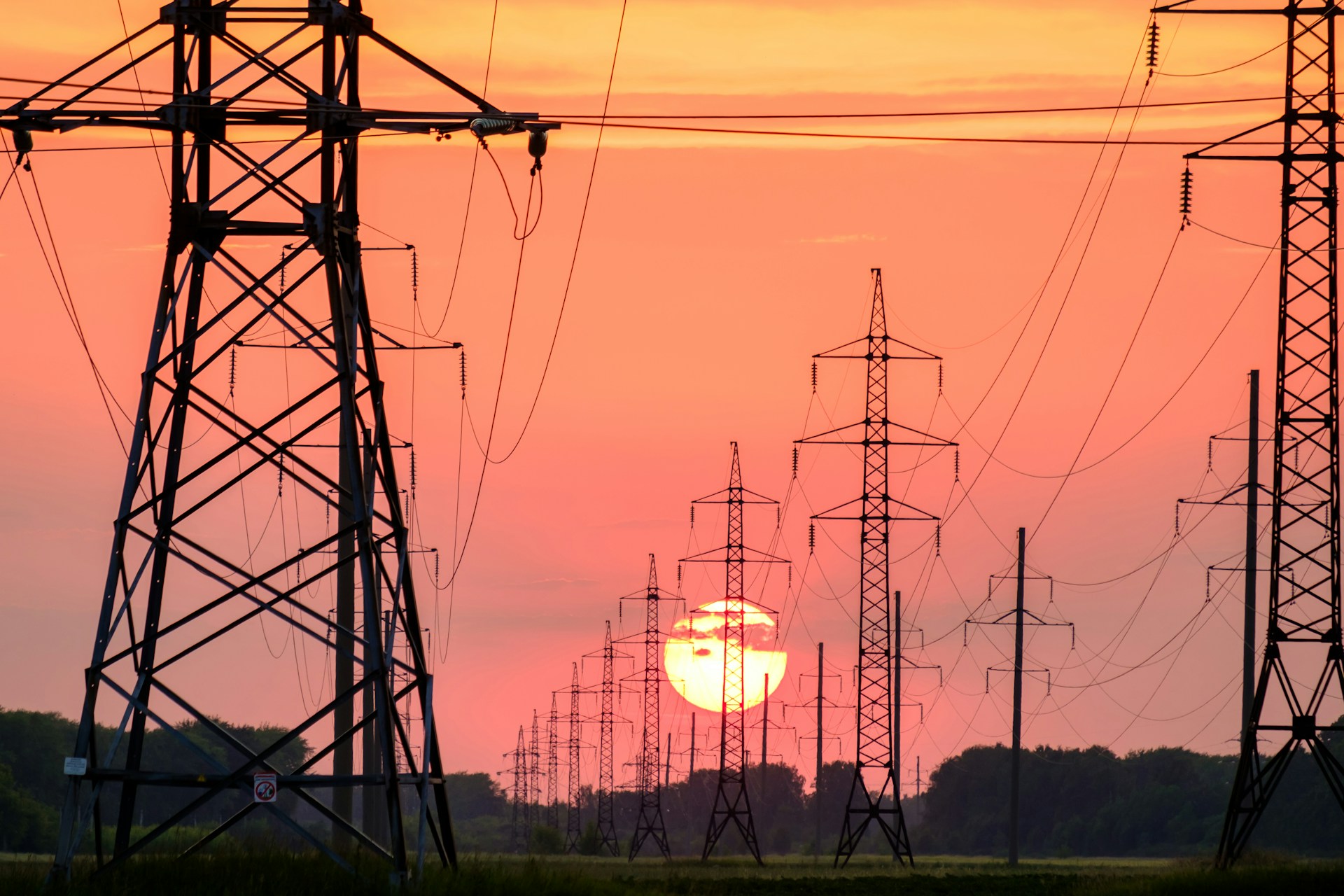
Mexico lives a paradox. While the country positions itself as one of the most attractive destinations for foreign investment, its energy infrastructure is beginning to show signs of exhaustion. Growth is advancing, yes, but not all the systems that support it are doing so at the same pace. At the center of this tension is energy.
A Historic Boost with Structural Pressure
In this context, the federal government has placed infrastructure at the heart of its economic strategy. The Infrastructure Investment Plan for Development with Well-being 2026-2030 contemplates an investment of 5.6 trillion pesos, of which more than 54% will be allocated to the energy sector, including generation, transmission, and hydrocarbon projects. This is, without a doubt, the most ambitious bet in recent years to address a historical backlog that is now becoming evident.
Furthermore, the plan introduces a significant turn in the development model: it opens the door to schemes of
, with the intention of accelerating projects without losing public oversight. Nevertheless, and despite this institutional redesign, key questions persist. Experts warn that the real challenge is not in the diagnosis but in the execution: from contractual clarity to resource availability and implementation speed. In other words, the plan recognizes the problem. But it remains to be seen if it will arrive in time.
The Invisible Limit of Industrial Growth
Meanwhile, on the ground, the industrial boom is advancing rapidly. The relocation of supply chains has triggered unprecedented demand for productive infrastructure. Consequently, industrial parks in the Bajío region operate practically at their limit, and in states like Aguascalientes, occupancy approaches 100%. However, this dynamism is starting to encounter friction. “We are receiving the largest investment flow in our history. It’s not theoretical, it’s real,” says Juan Carlos Arroyo, CEO of Strategyk. “But the question is whether we have the energy capacity to sustain it.” From there, the panorama becomes more complex. More than 90% of industrial parks have suffered electrical failures. In 2024 alone, more than 13,000 blackouts were recorded in the country. Furthermore, dozens of projects are stalled due to lack of energy supply. In this sense, industrial growth no longer depends solely on demand or available capital, but on a more basic factor: energy.
Energy: From Input to Strategic Axis
In fact, what was once just another operational component has now become a critical variable. “Energy in Mexico can be up to 70% more expensive than in the United States,” explains Arroyo.* “That means the advantage we have from trade agreements can be diluted.”* To this is added an additional element: the
In industries such as automotive or advanced manufacturing, a minimal interruption can halt entire production lines. Losses, in these cases, are not only economic but also reputational. That’s why, as Héctor Landeros, a consultant in strategic bonded warehouses, points out, the problem goes beyond cost: “The country doesn’t compete on cost; it competes on capacity. And without sufficient energy infrastructure, that capacity is compromised.”
An Infrastructure That Doesn’t Suffice
From this point, the mismatch becomes evident. Industrial growth and energy infrastructure no longer advance in sync. While the federal plan seeks to close this gap, the reality is that the speed of industrial expansion is outpacing the institutional response capacity. Consequently, companies are changing their way of operating. “Today you cannot assume that the public grid will solve your operation,” states Arroyo. “Companies that are growing are building their own energy resilience.” This change, though silent, marks a before and an after.
The Silent Transition of Industry
Faced with this reality, the private sector is beginning to take a more active role in managing its energy. Thus, technologies such as solar systems, battery storage, artificial intelligence, and energy management platforms are transforming industrial operations. This model—based on data, efficiency, and autonomy—redefines the relationship between energy and productivity. However, progress is not uniform. “The problem isn’t technology; it already exists,” insists Arroyo. “The problem is that we are not implementing it at the necessary pace.” Still, the benefits are hard to ignore:
- Savings of up to 50% in energy costs
- Return on investment in less than five years
- Greater operational stability Despite this, many companies continue to postpone decisions, either due to lack of knowledge or by prioritizing immediate cost over long-term strategy.
The Cost of Not Adapting
Now, the consequences of this inaction are not limited to the operational sphere. On the international stage, the rules of the game are also changing. More and more markets demand strict standards regarding sustainability and energy efficiency. “If you don’t meet these requirements, you’re simply out,” warns Landeros. In particular, the implementation of carbon taxes in regions like Europe anticipates a scenario where energy will be a filter for market access. Therefore, the energy backlog not only hinders growth but can also isolate companies.
A Shared Challenge
Faced with this scenario, the diagnosis is clear, but the solution is not simple. “The world demands integrated ecosystems,” says Zaira Padilla, president of the Association of Strategic Bonded Warehouses in Mexico. “It’s not enough to attract investment; conditions must be created to sustain it.” In other words, the challenge is shared. Government, private initiative, and the technological sector must coordinate to close the gap between growth and infrastructure. In fact, the government’s own plan points in that direction by incorporating co-investment schemes and
However, once again, the key will be in the execution.
Between Opportunity and Risk
Ultimately, Mexico finds itself at a crossroads. On one hand, it has a historic opportunity to consolidate itself as an industrial power. On the other, it faces an energy bottleneck that could curb that momentum. “The perfect moment doesn’t exist,” concludes Arroyo. “Technology is available today. The decision is whether we use it or not.” Thus, the fundamental question remains open: will energy be the engine of Mexico’s industrial growth or its main limit? The answer, as almost always, will depend on what is done—or left undone—from now on.
You might be interested
The post
first appeared on Líder Empresarial.
More Articles

Consumer Confidence Drops in September 2026, INEGI Reveals
Oct 6, 2026

Two Years into Sheinbaum's Administration: What Labor Reforms Have Been Approved?
Oct 1, 2026
Expo Potosí Industrial 2026: Opportunities for Suppliers in San Luis Potosí
Oct 6, 2026

Canada's Tariffs on US Goods Take Effect Today: What's the Impact on Mexico?
Sep 8, 2026

Aeroméxico Under Investigation for Potential Data Breach: What Information Is at Risk?
Sep 21, 2026

Four Out of Ten Mexican Companies to Double-Digit Increase AI Investment
Sep 18, 2026