
Financial Markets Kick Off Week with Optimism on Potential U.S.-Iran Agreement
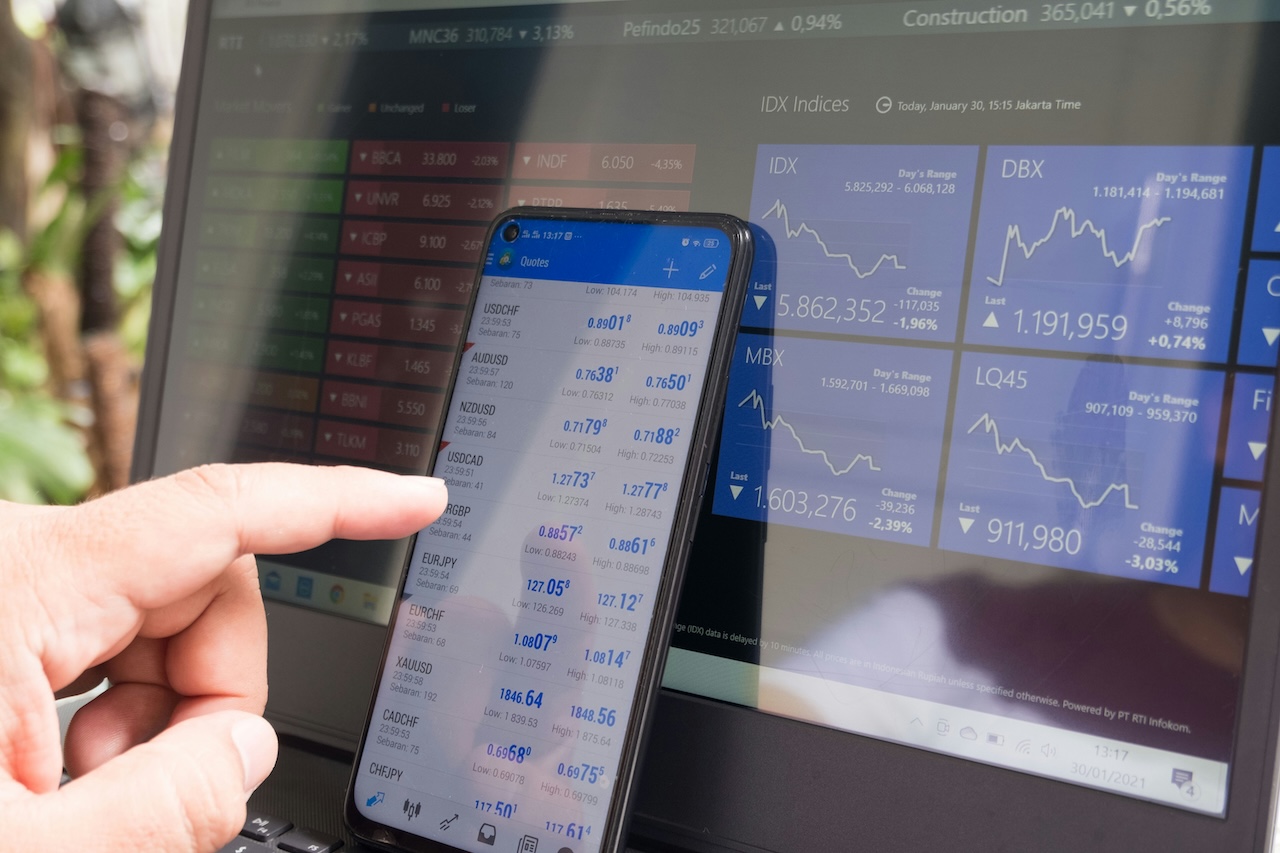
Global markets surge on hopes of a U.S.-Iran deal to reopen the Strait of Hormuz, leading to oil price drops and currency fluctuations.
Financial Markets Kick Off Week with Optimism on Potential U.S.-Iran Agreement
Financial markets began the last week of May with signs of relief and renewed optimism. After three months of geopolitical tension due to the conflict between the United States and Iran, the possibility of an agreement to allow the reopening of the Strait of Hormuz boosted international stock exchanges, weakened the dollar, and caused a sharp drop in oil prices.
U.S. President Donald Trump stated that a memorandum of understanding to move towards reopening the strait had been “largely negotiated.” Although he later noted that there was “no rush” to finalize the definitive agreement, investors reacted positively to the diplomatic progress.
has become the primary risk barometer for global markets, as approximately one-fifth of the world’s oil and liquefied natural gas trade passes through this maritime route. Therefore, any sign of de-escalation directly impacts energy prices and investor sentiment.
Consequently, the Brent crude barrel fell by 5.6% and dropped below $98, reaching its lowest level since May 7. The crude oil pullback also reduced fears of a new global inflationary episode. The financial markets’ interpretation was immediate: less energy pressure could translate into lower interest rates in the medium term and better conditions for equities.
Global Financial Markets Advance Driven by Reduced Geopolitical Tension
Risk appetite returned to international stock markets this Monday. In Europe, major indices traded with gains of nearly 1.5%, while Spain’s Ibex 35 rose around 2%, surpassing 18,300 points.
Within the Spanish selective, airlines and banks led the gains:
- IAG advanced more than 3%
- BBVA gained over 2%
- Santander registered increases exceeding 2%
- ArcelorMittal also rebounded more than 2%
In contrast, the oil company Repsol was the only major stock in negative territory, with a drop of 2.7%, pressured precisely by the collapse in oil prices.
In Asia, performance was also positive. Japan’s Nikkei index rose 3% and reached historic highs, surpassing 65,000 points for the first time. The boost primarily came from stocks linked to chips and artificial intelligence, sectors that continue to attract global capital.
Meanwhile, China’s Shanghai index advanced 0.96%. Hong Kong remained closed for a holiday, and South Korea also did not trade due to a local celebration.
The MSCI All Country World Index, considered one of the broadest indicators of global equities, advanced 0.3% and approached historical highs again.
In the United States, although Wall Street remained closed for Memorial Day, futures for the main U.S. indices rose by nearly 1%, anticipating a positive opening for upcoming sessions.
Oil and Gold Prices: How Key Assets Reacted
The fall in oil prices became the day’s main financial catalyst. However, caution still exists regarding the stability of global energy supply. Despite the optimism, negotiations between Washington and Tehran still face significant obstacles. The Iranian agency Tasnim reported that disagreements persist regarding the unfreezing of Iranian assets and other sensitive clauses.
Iranian Ministry of Foreign Affairs spokesperson Esmail Baghaei stated that a definitive agreement cannot yet be spoken of: “It is true that consensus was reached on many of the debated issues, but no one can claim that the signing of an agreement is imminent.”
Furthermore, U.S. Secretary of State Marco Rubio assured that Washington is still evaluating various diplomatic and political routes regarding Iran.
While oil prices fell, gold gained attractiveness as a safe-haven asset. The precious metal rose more than 1% this Monday:
- Spot Gold: $4,574 per ounce
- U.S. Gold Futures: $4,576
Dollar Price Today in Mexico
In Mexico, the peso started the week stable against the dollar. The exchange rate published by the Bank of Mexico stood at 17.3213 pesos per dollar this Monday, May 25, 2026. The peso’s relative stability was also favored by better international sentiment and lower pressure on energy prices.
These were the main exchange rate equivalencies reported by Banxico:
- Dollar: 17.3213 pesos
- Euro: 20.0875 pesos
- Japanese Yen: 0.1089 pesos
- British Pound: 23.2512 pesos
- Chinese Yuan: 2.5482 pesos
On the other hand, the dollar traded at some banks in Mexico as follows:
- Afirme: 16.40 buy | 17.90 sell
- Banco Azteca: 15.95 buy | 18.14 sell
- BBVA: 16.42 buy | 17.56 sell
- Banorte: 16.05 buy | 17.65 sell
- Banamex: 16.73 buy | 17.72 sell
- Scotiabank: 16.65 buy | 17.95 sell
You can also read:
The entry
appears first on Líder Empresarial.
More Articles

$300 Million and a New Plant: Bosch's Investment Details in Nuevo León
Aug 19, 2026

Arts Festival to Propel San Miguel de Allende as a Cultural Capital
Aug 4, 2026

2026 Automotive Supply Chain Forum to Strengthen Guanajuato's Supply Chain
Jul 31, 2026

Guanajuato Accelerates Electromobility with 3.9% of Hybrid and Electric Vehicle Sales in Mexico
Aug 14, 2026

How Much Announced Investment Does Nuevo León Attract in 2026?
Aug 12, 2026

Aguascalientes Ranks Fifth in Grape Production in Mexico, Confirms Viticulture Council
Jul 27, 2026