
Mexico Breaks Foreign Direct Investment Record in H1 2026: Top Performing States
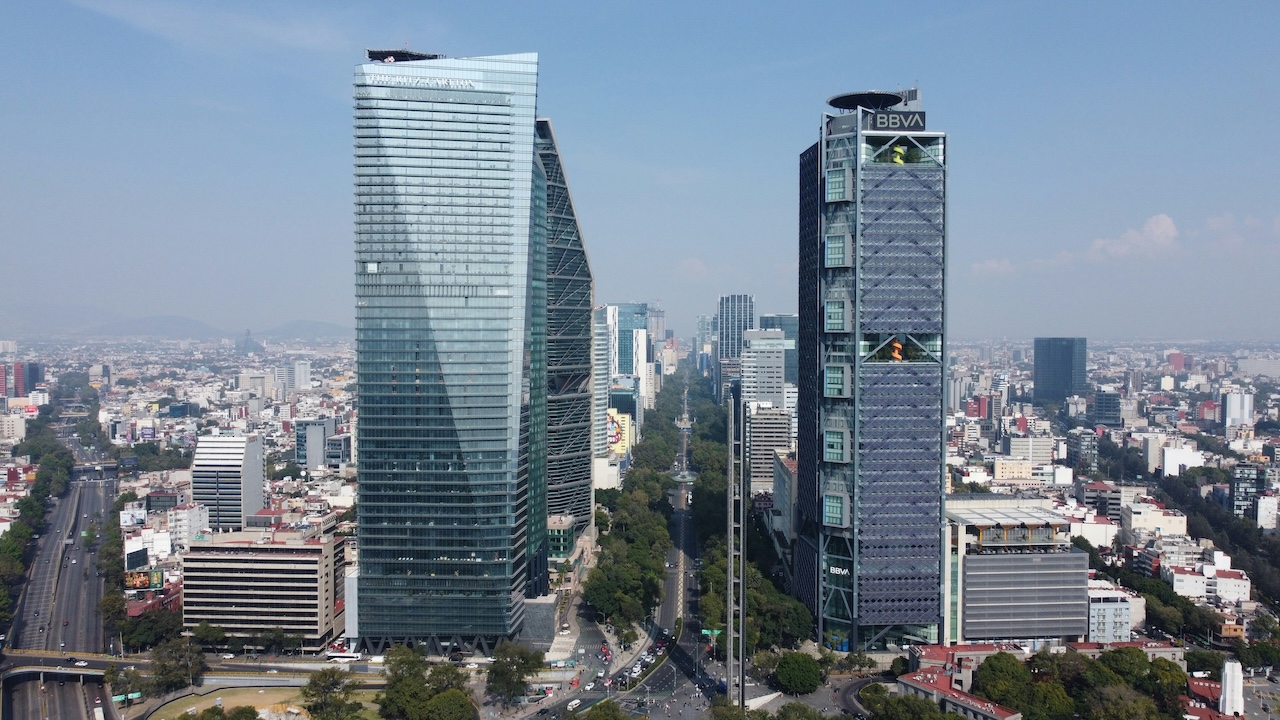
Mexico achieved record-breaking Foreign Direct Investment (FDI) in the first half of 2026, reaching $34.97 billion.
Mexico kicked off 2026 with a positive signal for its economy and the international market, as Foreign Direct Investment (FDI) in Mexico reached an all-time high for a first half, totaling $34,968 million dollars (USD) as of June. According to the Ministry of Economy, this amount represents a 2.1% growth compared to the $34,265 million USD originally recorded during the same period in 2025. The data becomes more significant when observing the behavior of
over the last five years. Between the first half of 2021 and the same period in 2026, FDI increased by 89.7%, practically doubling the flow captured by Mexico.
How Much Did FDI Grow in Mexico During the First Half of 2026?
The FDI flow of $34,968 million USD in Mexico constitutes the highest level recorded for a first half since comparable records began. The Ministry of Economy indicated that this performance reaffirms the country’s position as an attractive platform for international investment. Factors supporting this perception include strong macroeconomic and institutional fundamentals, as well as the directives established within the Mexico Plan.
The national performance also stands out against the global behavior of foreign investment. During 2025, global FDI flows grew by 6%, while Mexico registered an increase of 10.8%. With this, the country remained among the top 10 recipients of Foreign Direct Investment worldwide, even surpassing economies like India, France, Spain, and Italy.
Although the semi-annual result was historic, the quarterly behavior requires a more careful analysis. During the second quarter of 2026, Mexico attracted $10,464 million USD in FDI, compared to the $10,848 million USD originally published for the second quarter of 2025.
This represented an annual decrease of 3.5%. However, the Ministry of Economy explained that the decline is primarily due to the high comparison base of the second quarter of 2025, which saw atypical growth. In fact, the $10,464 million USD recorded between April and June 2026 represents the second-highest level for a second quarter in the last 16 years. Therefore, the data does not necessarily imply a change in the long-term trend, especially when the semi-annual cumulative reached a new historic high.
Reinvestment of Profits Dominates Foreign Capital Inflow
One of the prominent elements in the Ministry of Economy’s report is the composition of FDI. During the first half of 2026, the majority of capital corresponded to the reinvestment of profits, totaling $30,957 million USD.
This amount represented 88.5% of the total foreign direct investment captured by Mexico. Meanwhile, new investments amounted to $2,726 million USD, equivalent to 7.8% of the total, and intercompany accounts reached $1,285 million USD, or 3.7%.
The breakdown was as follows:
- Reinvestment of profits: $30,957 million USD, 88.5%.
- New investments: $2,726 million USD, 7.8%.
- Intercompany accounts: $1,285 million USD, 3.7%.
- Total FDI: $34,968 million USD.
Top Investing Countries in Mexico
By country of origin, the United States remains the primary foreign investor in Mexico. During the first half of 2026, U.S. companies channeled $16,871 million USD, equivalent to 48.2% of all FDI captured by the country. Spain ranked second with $4,954 million USD, representing 14.2%.
The list of leading countries of origin included:
- United States: $16,871 million USD, 48.2%.
- Spain: $4,954 million USD, 14.2%.
- Canada: $1,741 million USD, 5.0%.
- Australia: $1,698 million USD, 4.9%.
- Germany: $1,647 million USD, 4.7%.
Collectively, these five economies accounted for 77% of the total FDI flow received by Mexico during the first six months of the year. Notably, the United States and Canada represented 53.2% of the total, a proportion that reflects the depth of integrated value chains in North America.
States with the Most Foreign Direct Investment in Mexico in 2026
The foreign investment map also shows significant concentration in five federal entities. Mexico City remained the primary destination for FDI in Mexico during the first half of 2026, with $16,862 million USD, equivalent to 48.2% of the national total. While a substantial portion of this investment is related to corporate and financial activities, its statistical weight places the capital in a clearly dominant position.
Following Mexico City is Nuevo León, which attracted $3,712 million USD, equivalent to 10.6% of the total. The state maintains a strategic position thanks to its industrial, manufacturing, and logistics ecosystem, in addition to its proximity to the United States. The third place went to the State of Mexico, with $2,114 million USD and a 6% share. Baja California followed with $1,743 million USD, equivalent to 5% of the national total. Finally, Jalisco attracted $1,406 million USD, with a 4% share.
The top five destinations accounted for 73.9% of all FDI captured by Mexico during the first semester. The state ranking was as follows:
- Mexico City: $16,862 million USD, 48.2%.
- Nuevo León: $3,712 million USD, 10.6%.
- State of Mexico: $2,114 million USD, 6.0%.
- Baja California: $1,743 million USD, 5.0%.
- Jalisco: $1,406 million USD, 4.0%.
Manufacturing, Finance, and Logistics Concentrate Capital
By economic activity, the manufacturing industry was the main recipient of FDI during the first half of 2026. The sector received $13,482 million USD, equivalent to 38.6% of the total flow, representing a 9.3% increase compared to the same period in 2025.
In second place were financial and insurance services, with $10,150 million USD, equivalent to 29% of FDI and a 10.9% annual growth. The third notable sector was transportation, postal services, and warehousing, whose investment practically quadrupled.
In this case, FDI increased by 287% compared to the first half of 2025, reaching $2,650 million USD. The sectoral composition identifies three areas driving economic activity linked to foreign capital: industrial production, financial services, and logistics.
Within manufacturing, specific branches also stand out. Growth was primarily driven by an increase of $1,174.5 million USD in the manufacturing of computer equipment, communication equipment, and electronic components. Additionally, there were increased flows to basic metal industries and the manufacturing of machinery and equipment, with a significant combined increase contributing to the manufacturing performance.
You may also be interested in:
The entry
first appeared on Líder Empresarial.
More Articles
How Financial Markets Opened Today: Peso Recovers, Oil Declines
Oct 5, 2026

Weekend Recap: Key Global and Mexican Business Developments September 12-13
Sep 14, 2026
Expo Potosí Industrial 2026: Opportunities for Suppliers in San Luis Potosí
Oct 6, 2026
What Medical Specialties Are Most in Demand in Mexico?
Sep 22, 2026

Guanajuato Household Spending Snapshot: Families Allocate $16,500 Monthly, INEGI Reveals
Oct 2, 2026
Mexico's Industry Grows Faster Than Its Operational Capacity
Oct 2, 2026