
What Progress Did Nuevo León's Metro Lines 4 and 6 Achieve in 2025?
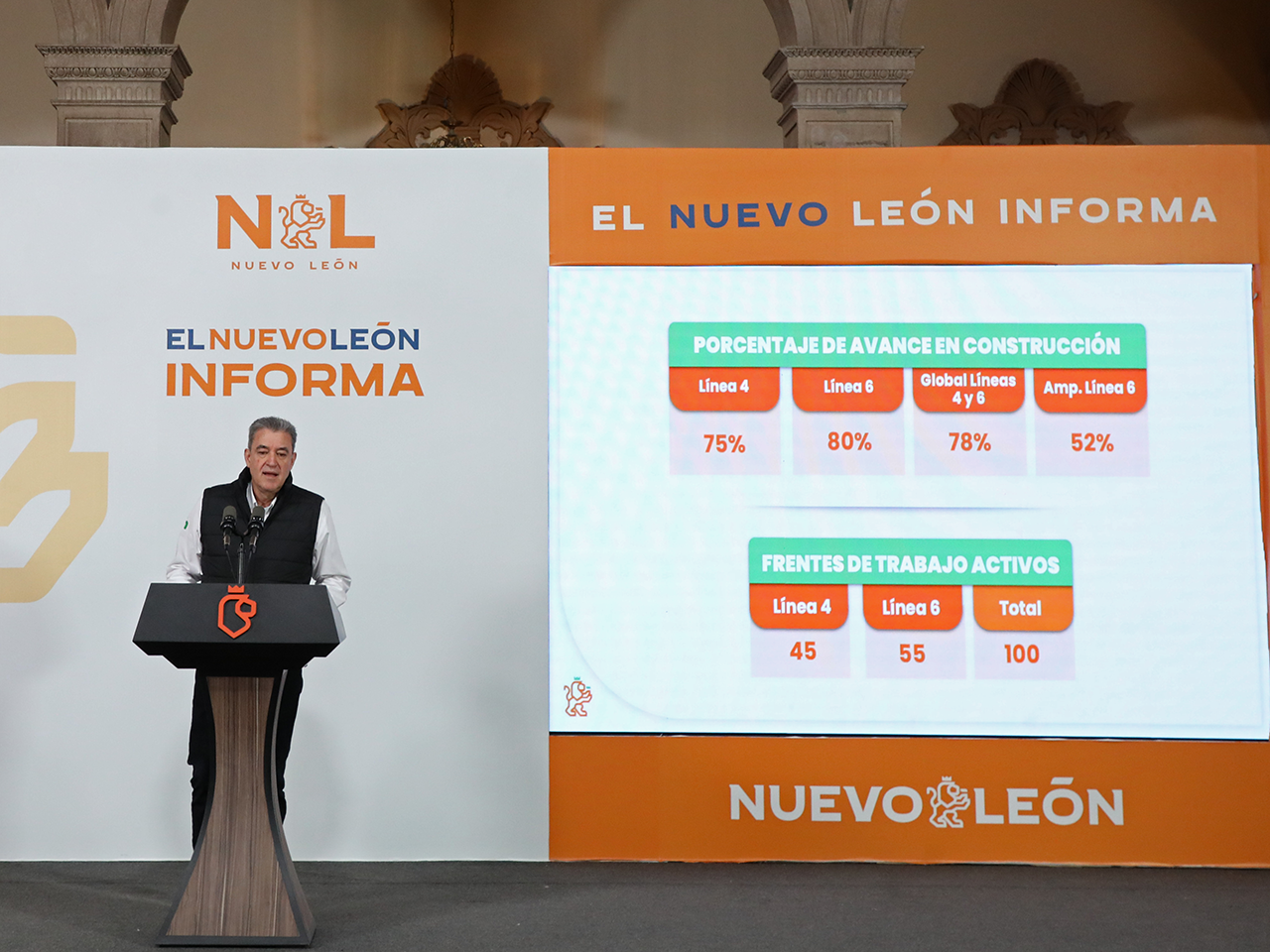
Nuevo León's Metro Lines 4 and 6 achieved 78% overall progress by 2025, significantly enhancing urban connectivity and regional economic development.
The progress of Nuevo León’s Metro Lines 4 and 6 marks a pivotal point for the state’s urban infrastructure. During 2025, both projects achieved an overall progress of 78 percent, according to the Secretariat of Mobility and Urban Planning. This expansion of the
system aims to improve metropolitan connectivity, reduce travel times, and strengthen regional economic development. Currently, the project operates with 100 active work fronts, enabling simultaneous execution of tasks at various points along the route. In the field, 3,813 workers are participating, supported by over 500 machines and construction equipment.
Progress of Metro Line 4
Metro Line 4 shows 75% progress as of the latest official report. Currently, work is focused on the relocation of induced infrastructure, as well as the construction of substructures, columns, and capitals. Furthermore, work continues on vestibules and platforms of strategic stations. In parallel, the project is advancing with the assembly of Vierendeel-type girders and the pouring of slabs, allowing for the completion of full sections of the structure. Significant progress is also reported at the Avenida Juárez interchange and at stations such as Serafín Peña, which are considered key nodes for the
network.
Progress of Metro Line 6
On the other hand, for Metro Line 6, the average progress reaches 80%, reflecting a steady pace in civil works. Tasks include the removal of interferences, deep and shallow foundations, as well as the pouring of slabs at stations such as Torre, Churubusco, and Paseo La Fe. Furthermore, the installation of the metal roof at Churubusco Station has already begun, a significant milestone within the timeline. However, the extension of Line 6 towards the Airport shows 52% progress, indicating a distinct development stage, though aligned with the general plan.
What Complementary Works Strengthen Urban Mobility?
Beyond the Metro, the mobility strategy includes complementary works. The linear park on Constitución Avenue shows 22% progress, while the construction of new pedestrian bridges and the rehabilitation of circuits in Morones Prieto continue. These actions aim to integrate public transportation, urban space, and pedestrian mobility. Thus, Nuevo León promotes a comprehensive vision of mobility, aimed at improving the quality of life and metropolitan competitiveness. Collectively, the progress of Metro Lines 4 and 6 confirms one of the state’s most significant infrastructure projects, with a direct impact on connectivity, urban development, and economic efficiency.
You might be interested in:
The entry
first appeared on Líder Empresarial.
More Articles
San Luis Potosí Prepares New Public Transportation App: SCT Analyzing Data
Sep 29, 2026

Can Guanajuato Convert Medical Tourism into a New High-Value Industry?
Sep 21, 2026
Aguascalientes Explores New African Markets Following Business Summit
Oct 5, 2026

Jalisco Surges in Exports by 130.8%, Securing Second Position Nationally in Mexico
Sep 30, 2026

Toyota Corolla 2027 in Mexico: Pricing and Key Features Revealed
Sep 26, 2026

Tequila: Why Was It Cheaper to Toast in September?
Oct 8, 2026