
Aguascalientes Inaugurates New Nixtamalization Laboratory; Aims to Revolutionize the Corn Industry
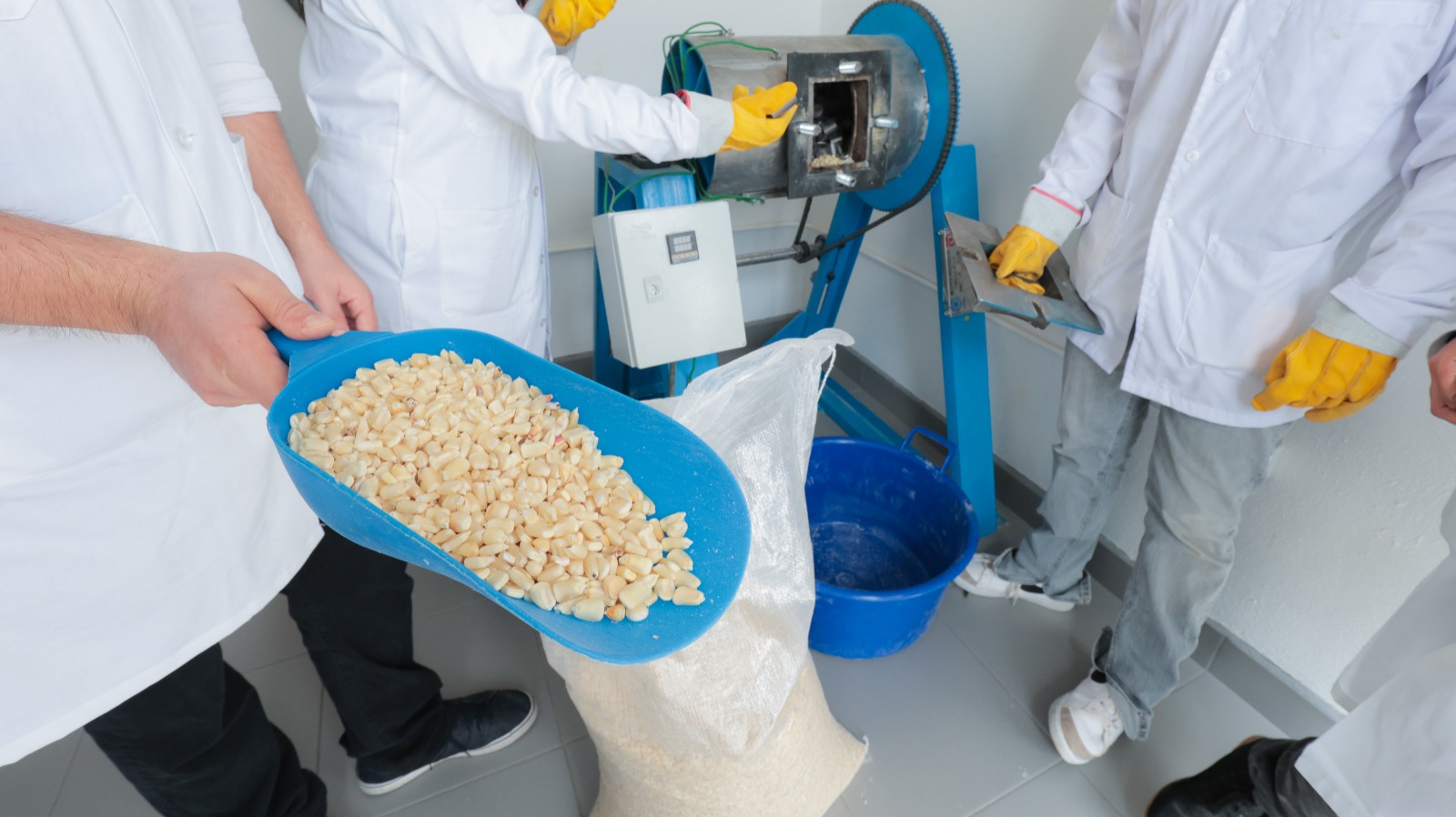
The UAA's new nixtamalization lab in Aguascalientes aims to transform corn processing, reducing water consumption, processing time, and fossil fuel use while fostering industry innovation.
The Autonomous University of Aguascalientes (UAA) has taken a decisive step in food innovation with the inauguration of the Nixtamalization Laboratory, a pioneering facility in the state located at the Center for Agricultural Sciences. This project not only marks an academic milestone but also offers a technological solution to drastically reduce the environmental impact of tortilla production.
Initially, the initiative titled “Scaling of High-Energy Nixtamalization” successfully attracted an investment of 2.3 million pesos, standing out among 94 national projects. This funding originates from the Secretariat of Science, Humanities, Technology, and Innovation, marking the first federal resource of this magnitude obtained by the Department of Food Sciences.
Following this, the laboratory, under the leadership of researcher
, operates a prototype that adapts a high-energy mill to process the grain. Regarding the competitive advantages of this technology, the research team highlighted: «The process simulates traditional nixtamalization but with substantial advantages: reducing water consumption—which typically reaches two to three liters per kilogram of corn—and shortening processing time from up to 18 hours to just three or four.»
Continue Reading
Furthermore, in addition to optimizing water and time resources, the project boasts a strong component of energy sustainability by diverging from conventional combustion methods. Consequently, it aims for a direct and positive impact on the state’s commercial sector. «The use of fossil fuels is eliminated by operating with electrical energy, potentially from clean sources, thus advancing technological maturation with a view to transferring this innovation to tortilla factories and flour milling companies.»
Finally, it is important to consider that with a national production exceeding 41 million tons of corn in 2024, the relevance of this laboratory transcends academic settings. The ultimate goal is, therefore, to bridge university knowledge with the resolution of real-world challenges in the flour milling industry.
Regarding nutritional properties and food safety, university specialists highlighted a potential health market: «Its consumption is widely safe for the population, as it is not associated with common allergies such as those related to gluten or lactose, which opens opportunities for the development of new food products.»
You May Also Read
The post
first appeared on Líder Empresarial.
More Articles

Electronics and Petroleum Drive Mexican Manufacturing
Mar 18, 2026

The Cost of Global Conflict for Mexico: High Energy Prices, Inflation, and Business Pressure
Mar 30, 2026

State Financial Institution Drives Taxi Renewal in Guanajuato with Loans Up to 500,000 Pesos
Mar 20, 2026

El Bajío Industrial Construction Sees 20% Growth in Early 2026
Mar 12, 2026

How Nuevo León Strengthens Its Security Strategy in 2026
Mar 19, 2026

Mexico, United States, and Canada to Begin Negotiations for a Trilateral Agreement in the Franchise Sector
Mar 11, 2026