
Automakers Shift Strategy; Suppliers Must Adapt: SLP Automotive Cluster
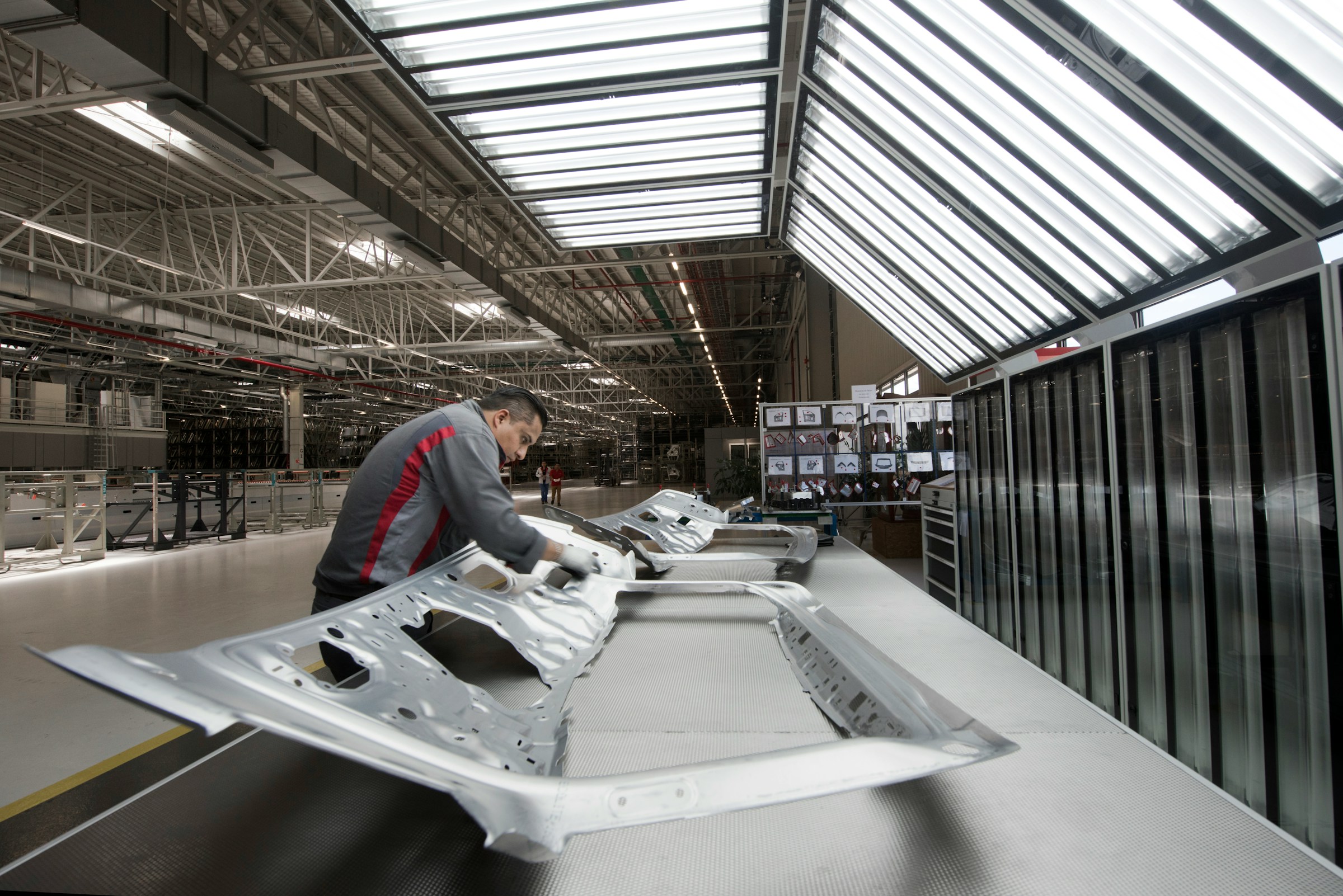
Automotive sector in San Luis Potosí faces strategic shifts by automakers, emphasizing flexibility, regional integration, and higher margins over production volume.
The automotive industry companies must prepare for a new way of working from automakers, where flexibility, resilience, and regional integration will carry more weight than production volume. This was stated by Alberto Rosales Reyna, president of the Automotive Cluster of San Luis Potosí, referring to recent production movements announced by companies like Toyota, Nissan, and Mazda. The leader urged a in-depth analysis of these changes to avoid alarmist interpretations solely tied to the T-MEC review. “The reality is that they do represent a change, but in the global context, automakers are undergoing restructuring,” he affirmed.
Toyota, Nissan, and Mazda Automakers Adjust Operations in Mexico
Nationally, the automotive industry landscape is undergoing a period of reordering. Toyota announced an investment of $3.6 billion to expand its plant in San Antonio, Texas, where it will gradually transfer some production of the Tacoma, currently assembled in Baja California. The new line will begin operations in 2030. Nissan also confirmed a manufacturing restructure in Mexico. The company relocated production from its CIVAC plant in Morelos to its Aguascalientes complex as part of its global plan to improve efficiency and profitability. In the case of Mazda, the sector is observing adjustments in export volumes and potential modifications in production lines and autopart sourcing, in an environment where rules of origin, costs, and tariffs increasingly influence manufacturing decisions.
It’s No Longer Just About Volume, But Margin
Rosales Reyna explained that major companies no longer base their decisions solely on production volume. They now evaluate which programs offer better margins, greater viability, and less exposure to commercial risks. “We must keep that firmly in mind, because what it will lead us to is work with greater flexibility, with resilience, where we can integrate and adapt to these changes,” he stated. This reconfiguration obliges supplier companies to strengthen their capabilities. Producing large volumes is no longer sufficient; they must also respond more quickly, adapt to new models, meet regional standards, and address increasingly specific automaker requirements.
T-MEC Remains Valid Despite Annual Reviews
Now, the president of the Automotive Cluster acknowledged that the
have generated “noise” in the industry. However, he stressed that the trade agreement remains in effect and that Mexico maintains a relevant position within the North American automotive supply chain. The trade discussion occurs amidst pressure from tariffs and rules of origin. In an interview with El País, Rogelio Garza, executive president of the Mexican Association of the Automotive Industry (AMIA), noted that as long as sector-specific tariffs exist, the conversation about rules of origin with the United States becomes more complex. For the Automotive Cluster of San Luis Potosí, the immediate task will be to support companies in strengthening their supply chains and reducing risks. “Our work as a Cluster is centralized on continuing to provide companies with the tools to strengthen their supply chain, and that’s where we are making a difference,” Rosales pointed out.
Regional Content Will Be Key to Competitiveness
Thus, the factor that will make a difference in the North American market will be the capacity to integrate more local components. Rosales Reyna believes that companies must advance in import substitution to increase the regional content of vehicles. This will allow compliance with T-MEC rules and operation with lower tariff costs in the United States. For San Luis Potosí, this challenge also presents an opportunity. The state has an automotive and autopart base that can gain ground if it manages to develop specialized supply, competitive processes, and greater integration with automakers and Tier 1 companies. In this new phase, companies that successfully adapt to higher-margin programs, regional content, and more resilient supply chains will be in a better position to remain on the North American automotive map.
You May Also Read
The entry
first appears on Líder Empresarial.
More Articles
San Luis Potosí Prepares New Public Transportation App: SCT Analyzing Data
Sep 29, 2026

Dollar and Oil Today: What's Moving Financial Markets?
Oct 12, 2026

ITESO: Jalisco's Formal Employment Enters Zone of Pressure
Oct 1, 2026
Aguascalientes Explores New African Markets Following Business Summit
Oct 5, 2026

What Medical Specialties Are Most in Demand in Mexico?
Sep 22, 2026

Can Guanajuato Convert Medical Tourism into a New High-Value Industry?
Sep 21, 2026