
Jalisco's Electrical Demand: State Requires an Additional 4,000 MW
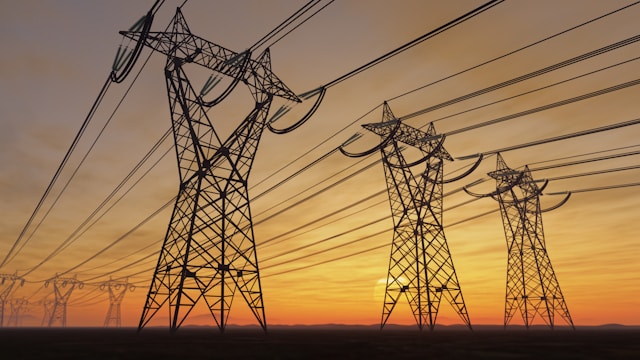
Jalisco's energy sector faces a growing demand for 4,000 MW, alongside initiatives to address energy poverty and promote renewable energy generation.
Jalisco’s Electrical Demand: The State Requires an Additional 4,000 MW
Identifying households with the greatest energy needs and expanding Jalisco’s electrical capacity are among the topics presented by the Secretariat of Sustainable Energy Development (SEDES) during the review of the Second Government Report before the State Congress. Manuel Herrera Vega, head of the agency, announced that the quantitative phase of the Energy Poverty Index has concluded. This instrument, developed in collaboration with the Western Institute of Technology and Higher Education (ITESO) and the University of Guadalajara (UdeG), is the first of its kind in Mexico.
Before the Commission for Competitiveness, Economic Development, Innovation, and Labor, chaired by Valeria Guadalupe Ávila Gutiérrez, he explained that the next phase will be qualitative and will aim to understand how energy deficiencies impact families’ daily lives. With the results from both phases, SEDES will create a map to pinpoint areas with concentrated needs and guide the design of public programs. During the appearance, legislators proposed allocating resources to facilitate the acquisition of photovoltaic panels and solar water heaters for households facing the most significant energy poverty.
Municipal Diagnoses to Reduce Electrical Expenses in Jalisco
Regarding energy efficiency, Herrera Vega reported that the Secretariat has engaged with 70 municipalities and completed 60 electrical consumption diagnostics. These studies help identify facilities where incorporating solar panels would be beneficial and opportunities to reduce electricity costs associated with water pumping.
The official also noted that Jalisco is the country’s third-largest electricity consumer and that, according to the incremental demand study, the state requires an additional 4,000 megawatts (MW). This figure underscores the challenge of expanding supply and strengthening the necessary infrastructure to meet the needs of households, services, and productive activities. By the end of the first half of 2026, he added, Jalisco maintained its national leadership in distributed generation. Approximately 1,000 MW from solar projects under development would be added to this capacity, which, upon their commissioning, would triple the state’s photovoltaic capacity. The secretary also informed that a budget has already been approved for projects on electrical transmission grids, a crucial component to support generation growth and meet demand.
Produce at Least the Electricity Consumed
Long-term planning will be concentrated in the Jalisco Energy Development Plan, scheduled for presentation on December 3rd during the Guadalajara International Book Fair. Among its objectives is for the state to generate, at a minimum, a volume of electricity equivalent to what it consumes. Furthermore, it proposes that at least 60% of this generation come from renewable or clean sources.
Regarding the 500 MW combined cycle power plant that the Federal Electricity Commission (CFE) plans to build in Acatlán de Juárez, Herrera Vega indicated that the Government of Jalisco has requested that it operate exclusively with reclaimed water. According to the secretary’s statements, the State Water Commission (CEA) has determined that there is sufficient availability to supply the project, and the volume of treated water available more than doubles its requirements.
Biomethane, Waste, and Data Centers on the Energy Agenda
During the appearance, projects and proposals to diversify energy sources were also discussed. Herrera Vega reported that SEDES assisted BRIMEX in obtaining the permit to commercialize biomethane, noting it was the first company in the country to achieve this. Additionally, the possibility of generating energy from waste in Tepatitlán through thermovalorization processes was raised.
Moreover, the Secretariat is working on a regulatory proposal for data centers interested in establishing operations in Jalisco to generate their own electricity. This initiative links the arrival of this type of technological infrastructure with the energy supply requirements inherent in its operation. The topics presented during the review highlight two lines of work for the state’s energy policy: identifying inequalities in household energy access and usage, and expanding generation and infrastructure to address growing electrical demand.
The post
More Articles

Lula Wins Brazilian Elections: What is the Connection with Sheinbaum?
Oct 26, 2026

San Luis Potosí Residents to Save Up to 1,200 Pesos with New Free IMSS-Bienestar Clinics in SLP
Oct 22, 2026

Viva Aerobus Launches Aguascalientes-Monterrey Route with Four Weekly Frequencies
Nov 5, 2026

Jalisco's Economy Advances: Investment, Exports, and Strategic Sectors
Nov 11, 2026
San Luis Potosí Suburban Train to Streamline North-to-Industrial Zone Commutes in the Capital
Oct 19, 2026

Aeroméxico to Launch 3 New Routes from Mexico City to the United States: When and Where?
Oct 27, 2026