
Gasoline in Mexico: A Decade of Price Hikes, Fiscal Mitigation, and Persistent Dependency
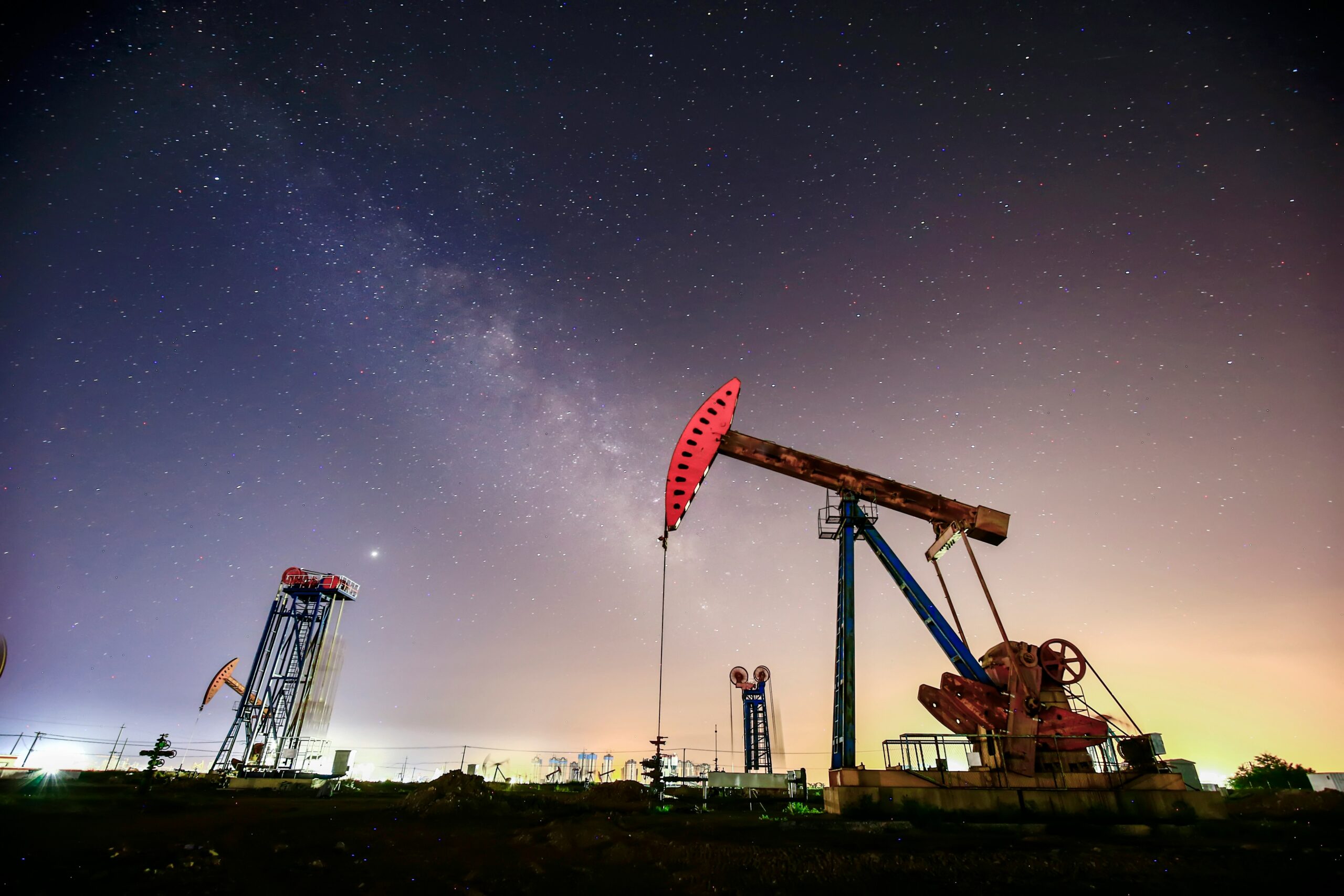
An analysis of Mexico's gasoline market over the past decade, exploring rising prices, government's fiscal interventions, and the country's persistent reliance on imports.
In the week of April 14-20, 2026, the Federal Consumer Protection Agency (Profeco) reported that regular gasoline averaged 23.67 pesos per liter nationwide, with an active fiscal stimulus of 15.6% on the Special Tax on Production and Services (IEPS). Without this support, the price at the pump would exceed 28 pesos. The four pesos that drivers do not see on their receipt originate in the Strait of Hormuz: since February 28, 2026, the escalation between the United States, Israel, and Iran has driven Brent crude towards $110, and the Mexican Export Blend touched $97.46 per barrel by April 23.
This is not the first time Mexico has faced this challenge. Over the past ten years, gasoline prices have fluctuated between international market volatility and government intervention. The result, according to data from the Energy Regulatory Commission (CRE) compiled by GlobalPetrolPrices, is a ten-year average of 21.59 pesos per liter, with a historical low of 13.95 pesos in May 2016 and a high of 28.08 pesos registered on April 13, 2026. Despite the increase, Mexico remains below the global average: the average global price during the same period was 33.16 pesos.
The persistent question is not how much gasoline costs today, but whether the model with which Mexico has managed this variable is sustainable. With structural import dependence, an increasingly volatile international market, and a treasury where subsidies and extraordinary revenues almost balanced out in 2022, the room for maneuver going forward is narrower than the relative calm at the pump suggests.
The Decade That Changed the Price at the Pump
The history of gasoline prices in Mexico has a formal turning point in January 2017. Until then, the federal government discretionarily set prices and adjusted them month-to-month to shield consumers from international fluctuations. The Center for Economic and Budgetary Research (CIEP) documented that in December 2016, regular gasoline cost 13.98 pesos per liter: the international reference price contributed 7.19 pesos, the profit margin 1.83 pesos, and taxes, net of the existing fiscal stimulus, accounted for the rest.
In January 2017, this scheme changed. The Ministry of Finance and Public Credit (SHCP) liberalized prices through Resolution RES/2508/2017, which established an explicit formula: the maximum sales price would be the sum of the international reference price plus storage costs, logistics, station margin, and taxes. According to CIEP, “the price of gasoline has always depended on various factors, some internal and others external. The main external factor is the reference price, which depends on the international oil price and the exchange rate.”
The “gasolinazo” price hike that January was not just a price increase: it was the formalization that the price in Mexico would henceforth depend on crude oil and the exchange rate. By 2018, a liter of gasoline reached 19 pesos. In 2020, the COVID-19 pandemic depressed global crude demand, and prices receded. It was a temporary pause.
April 2021: The Turning Point
Researcher Edgar Iván Faustino Cruz, affiliated with the Energy Regulatory Commission and the National Autonomous University of Mexico, precisely identified the moment when price dynamics shifted regime: “the increase in both inflation and gasoline prices began in April 2021.” The post-pandemic economic recovery boosted global energy demand, the reference price rose, and regular gasoline exceeded 20 pesos per liter for the first time. Inflation reached 6.5%.
The government responded immediately with the only instrument at its disposal: increasing the IEPS stimulus. During 2020, this percentage had been practically non-existent, with an annual average of 0.40%. In 2021, it soared to an annual average of 43%. By September, the stimulus was 53.55%, which kept the price of regular gasoline at 20.55 pesos per liter. In December, the support was 47.38%, with the price stable at the same level.
This commitment had explicit political backing. The National Development Plan 2019-2024 literally stated that “there will be no real tax increases or increases in fuel prices above inflation.”
How Gasoline Prices Are Formed
To understand why what drivers pay goes up or down, it is necessary to disaggregate the price structure. The SHCP formula, documented by CIEP, establishes that the maximum sales price is: Pmax = Pref + AC + Log + Margin + IEPS + Others, where Pref is the average of Unleaded 87 gasoline quotes on the U.S. Gulf Coast, converted to pesos at the daily exchange rate.
CIEP documented that in 2017, at the beginning of liberalization, taxes represented 35.9% of the final price of regular gasoline in Mexico City, equivalent to 5.87 pesos per liter. The reference price and taxes together accounted for 79.5% of the cost. The remaining 20.5% depended on infrastructure, logistics, and the margin set by each service station.
The IEPS is the adjustable link in this chain. According to Faustino Cruz (an economist with extensive experience in energy regulation and data analysis), stimuli on this tax have two objectives: “to reduce variation in final gasoline prices caused by external factors, such as exchange rate volatility or international quotations,” and to generate a larger margin for marketers to offer more competitive prices.
The Bank of Mexico (Banxico) warned as early as 2013 that these adjustments have measurable effects on general inflation. In an analysis of the 2010-2013 period, the institution documented that the cumulative contribution of gasoline price changes reached 55 basis points in general inflation.
2022: The Year That Cost the Treasury Nearly 400 Billion Pesos
On February 24, 2022, Russia invaded Ukraine. The impact on crude markets was immediate, along with pressure on gasoline reference prices. The SHCP escalated IEPS stimuli to unprecedented recent levels: in January, the discount was 66.42%; in April, it reached 100% for diesel. Despite international pressure, the price of regular gasoline averaged 21.73 pesos that April. In September of that year, the price was 21.94 pesos, sustained by a 73.2% stimulus.
The cost was historic. According to CIEP’s analysis, “in 2022, the cost of stimuli reached 395.4 billion pesos and practically offset additional oil revenues (394.5 billion pesos)” that the same increase in crude prices had generated for public finances. Mexico gained extra revenue from expensive oil and returned it, almost entirely, by subsidizing gasoline.
The same analysis warned that history could repeat itself: “if the average oil price closes the year at $90 per barrel, additional oil revenues would reach approximately 406 billion pesos. However, this benefit could be reversed if the federal government reactivates IEPS stimuli to contain inflation in gasoline prices, as occurred in 2022.”
The Price Trajectory, Year by Year: 2021-2025
The weekly “Who’s Who in Prices” reports published jointly by the federal government through Profeco, Sener, and the Ministry of Economy allow for precise reconstruction of the trajectory:
- 2021. The year began with prices between 17.70 and 20.50 pesos. By May, the national average for regular gasoline was 20.48 pesos; in September, it reached 20.55 pesos with an IEPS stimulus of 53.55%; in December, the same price was maintained with a 47.38% stimulus.
- 2022. The most volatile year. The stimulus started at 66.42% in January and reached 100% in April, when regular gasoline averaged 21.73 pesos. In September, the price was 21.94 pesos with a 73.2% stimulus that absorbed the pressure of the war.
- 2023. Stimuli were withdrawn as international prices receded. In June, the price averaged 22.30 pesos, and by December, the IEPS stimulus was 0%, with regular gasoline at 22.53 pesos.
- 2024. No stimulus for most of the year. The price was 23.48 pesos on May 20, 23.83 in September, and 23.97 in December.
- 2025. January brought a brief return of the stimulus (-14.4% of IEPS), with the price at 24.25 pesos. From March onwards, the support disappeared, and the price stabilized between 23.56 and 23.80 pesos throughout the year, closing December at 23.58 pesos with a 0% IEPS stimulus.
Regional variation is persistent. Sonora consistently registers the lowest regular gasoline prices in the country, while in some areas of Puebla, diesel can exceed 30 pesos, a difference explained by logistics costs and local competitive conditions. In early 2025, President Claudia Sheinbaum signed an agreement with the business sector to set a ceiling of 24 pesos for regular gasoline during that year.
Mexico Imports More Than Half of What It Consumes
The entire fiscal architecture that supports gasoline prices rests on a structural vulnerability: Mexico does not produce enough gasoline to cover its demand.
The Sectoral Energy Program 2025-2030 (PROSENER), published by the Presidency of the Republic, documented that at the beginning of the first government of the Fourth Transformation, in 2018, national gasoline and diesel imports totaled 917 thousand barrels per day. By 2024, this figure had been reduced to 729 thousand barrels, thanks to the startup of the Olmeca refinery and the rehabilitation of facilities within the National Refining System (SNR). “This fact is strategic due to the significance of these petroleum resources in national consumption,” the official document noted.
Even so, dependence does not disappear. Sener’s operational reports for the close of 2025 indicate that Mexico continues to import about 60% of the gasoline it consumes, primarily from the United States.
The Mexican Institute for Competitiveness (IMCO) warned in its report “The Energy We Want” that “even if the Dos Bocas refinery operates at its maximum capacity, it will not be enough to fully offset petroleum product imports.” The institution noted that globally, 70% of new refining capacities are located in net fuel-exporting countries, which is not the case for Mexico.
This import dependence is the primary transmission channel between international markets and the price at the pump: if crude oil rises, the reference price in dollars increases; if the peso depreciates, that price becomes even more expensive in local currency. These are the two factors that the government does not control and that largely determine what the driver pays.
What the Experts Say
The academic and public policy debate on gasoline prices in Mexico converges on some points and diverges on others.
CIEP documented the price structure and identified that the main uncontrollable factor is the international reference price, while the IEPS is the available domestic adjustment instrument. From a fiscal perspective, the institution noted that when faced with high international prices, the government faces a concrete dilemma: protect consumer pockets or safeguard public finances.
IMCO, from a competitiveness perspective, proposed that to reduce the structural vulnerability of prices, it is necessary to “resume and increase the frequency of bidding rounds for hydrocarbon exploration and extraction,” develop storage infrastructure, and facilitate fuel import permits. The organization argued that achieving energy markets with reliable energy and competitive prices requires “legal certainty that promotes an investment climate” with the participation of both state-owned and private operators.
Points of Agreement:
Gasoline prices and inflation are linked. Faustino Cruz, in a study published in 2024 covering the 2017-2023 period, used Markov regime-switching econometric models to identify two distinct stages. The first was one of low prices and stability, extending until 2021; the second, marked by volatility, in which gasoline exceeded 20 pesos and inflation climbed to 8.3% in September 2022. The study’s conclusion was precise: “fiscal stimuli on the final price of gasoline granted by the federal government have a direct impact on inflation containment.” The researcher warned, however, that the results have limitations and that the fiscal costs of this policy must be weighed.
The federal government’s stance was articulated in PROSENER 2025-2030: between 2018 and 2024, “the accumulated amount benefiting consumers through government subsidies was 833,403 million pesos.” The policy was defined as an instrument to protect purchasing power against international volatility.
The 2026 Strait of Hormuz Crisis and the Path Forward
The Strait of Hormuz crisis in 2026 brought the discussion back to the center of the energy debate. With the Mexican Blend trading around $97 per barrel at the end of April, the federal government reactivated stimuli: in the week of March 28 to April 3, regular gasoline had a 23.12% stimulus, equivalent to 1.54 pesos per liter. For diesel, the stimulus reached 70.28%. Without this support, the price of regular gasoline would have already exceeded 28 pesos.
The mechanism worked, but at a cost that CIEP’s analysis puts into perspective: if crude oil prices remain high, the extraordinary oil revenues the government receives could be neutralized by subsidy expenditure, as occurred in 2022.
Looking ahead to the medium term, Sener published the Crude Oil and Petroleum Products Outlook 2023-2037, which contemplates gradual increases in the SNR’s refining capacity to reduce import dependence. PROSENER 2025-2030 set a goal to maintain PEMEX’s production between 1.6 and 1.8 million barrels per day and to raise natural gas production to five billion cubic feet per day by 2030, with the purpose of “reducing strategic dependence on natural gas and petroleum product imports.”
The federal budget for the energy sector in 2025 amounted to 1.08 trillion pesos, equivalent to 3% of GDP and 11.7% of the total budget, according to CIEP’s analysis. However, it represented a reduction of 4.6% compared to 2024, with a 20.9% cut in Sener’s direct budget.
Gasoline as an Economic Policy Barometer
The price of gasoline in Mexico is not just the cost of filling a tank. It is the barometer of the relationship between the State, the international market, and public finances. Over the past ten years, this relationship has followed a consistent pattern: when the international price rises, the government absorbs the shock via subsidies; when it falls, it withdraws support and lets the price follow the market.
The mechanism has functioned as consumer protection. The 833 billion pesos in accumulated subsidies between 2018 and 2024 translated into cheaper gasoline than the market would have imposed in the absence of intervention. But the 2022 episode, in which subsidies practically balanced out with extra oil revenues, illustrates the limits of the model. The government cannot subsidize indefinitely without compromising other spending priorities.
Import dependence is the underlying risk that no fiscal instrument fundamentally resolves. As long as Mexico does not produce the bulk of the gasoline it consumes, any external shock will pressure prices and force a decision: absorb the cost or pass it on to the consumer. IMCO has argued that expanding private participation in exploration and production would reduce this vulnerability; the federal government has opted for strengthening PEMEX and new refining capacity. Both positions agree, at least, on the diagnosis: import dependence is the knot that conditions the price at the pump in the long term.
The Price That Is More Than Just a Number
In the last decade, a liter of regular gasoline went from costing 13.98 pesos to averaging 23.67 pesos nationwide. The increase is real, though less than what the market would have imposed without intervention. Between 2021 and 2025, the federal government dedicated hundreds of billions of pesos to sustain this differential, with the 2022 peak being the most expensive year of the analyzed period.
The persistent question is not how much gasoline costs today, but whether the model with which Mexico has managed this variable is sustainable. With structural import dependence, an increasingly volatile international market, and a treasury where subsidies and extraordinary revenues almost balanced out in 2022, the room for maneuver going forward is narrower than the relative calm at the pump suggests.
The Strait of Hormuz crisis in 2026 served as a reminder that this equilibrium can break at any moment, and each time it does, the bill comes, sooner or later, either to the treasury, the driver, or both simultaneously.
You may also read:
The entry
first appeared on Líder Empresarial.
More Articles
Automotive Parts Industry Proposes Strategic Agenda to Strengthen USMCA and Automotive Competitiveness
Jul 2, 2026

Banxico Mandates Banks to Streamline Mobile Transfers
Jul 15, 2026

Mexico's Productivity Surges, Outpacing OECD Average According to New Report
Jul 7, 2026

Nissan Develops e-4ORCE, an Electrified All-Wheel Drive Control System
Jul 29, 2026

From Digital AI to Physical AI: Humanoids
Jul 10, 2026
BBVA Mexico Announces Board Leadership Transition; Eduardo Osuna to be Proposed as New Chairman
Jul 29, 2026