
Artificial Intelligence Concerns the Vatican: Pope Leo XIV's Stance
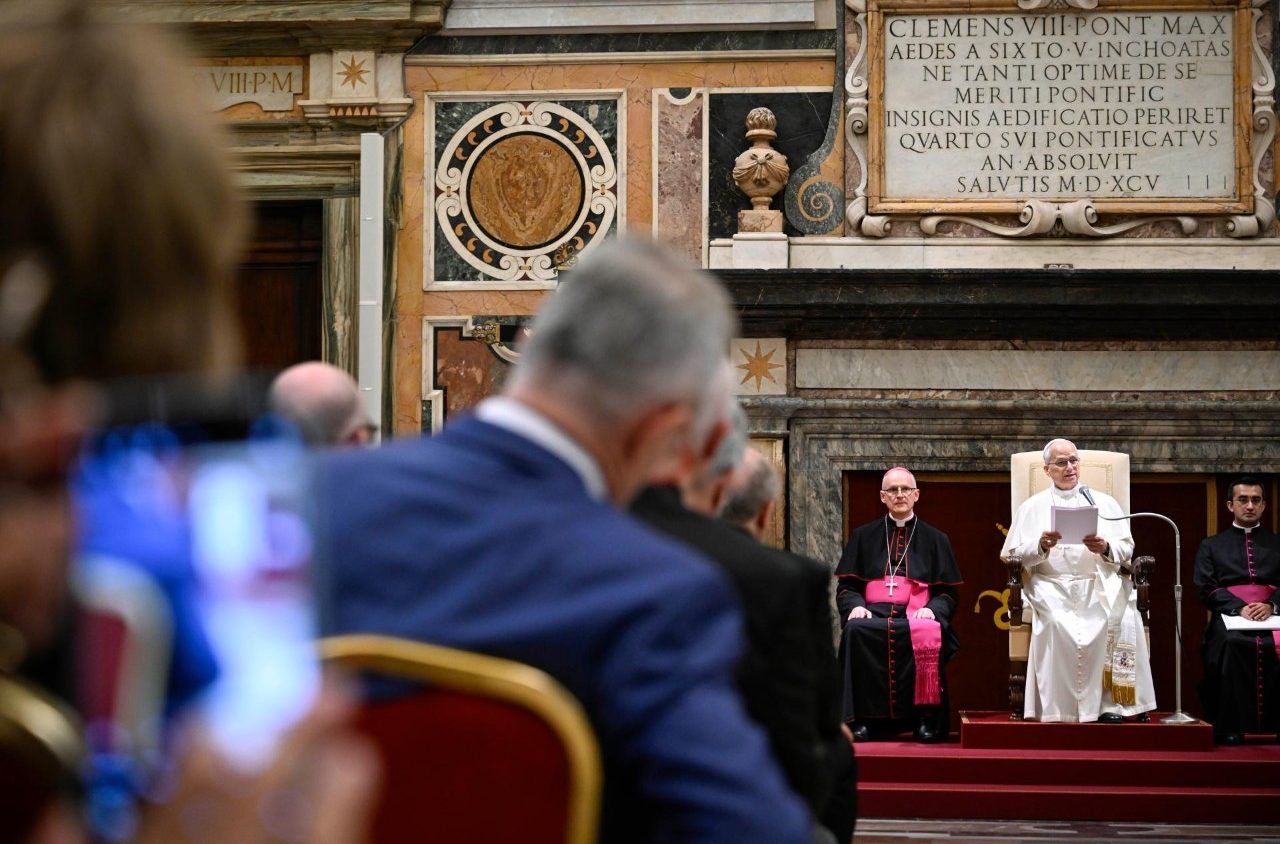
Pope Leo XIV addresses the risks of AI, including surveillance, autonomous weapons, and environmental impact, at a Vatican event.
Artificial Intelligence Concerns the Vatican: What Did Pope Leo XIV Say?
Artificial Intelligence can be used for surveillance, manipulation, and discrimination, in addition to posing new risks to international security when incorporated into autonomous weapon systems without adequate controls, warned Pope Leo XIV during a meeting with members of the Pontifical Academy of Sciences in the Vatican.
During the plenary session The Future of Science in a Changing World, the pontiff acknowledged that digitalization, robotics, and Artificial Intelligence can also accelerate scientific discoveries, improve medical diagnoses and treatments, strengthen food and energy systems, and expand research possibilities.
However, Leo XIV emphasized the risks associated with these technologies. “Precisely because these advances hold such promise, we must also recognize the risks that accompany them,” he stated. Among these, he mentioned the use of AI systems for surveillance, manipulation, and discrimination. He also warned about the development of advanced computing capabilities and autonomous weapons that operate without sufficient safety measures and human control. For the Pope, these scenarios can generate new dangers to international security and peace.
The Vatican’s concern also extends to the environmental cost of Artificial Intelligence. Leo XIV noted that current systems require large amounts of energy and water, in addition to contributing to carbon dioxide emissions and intensively consuming resources. “Technological progress is never simply a technical matter,” he affirmed.
According to the pontiff, every technology reflects a certain conception of the person, society, and the future. Therefore, he argued that scientific advancement must be accompanied by a responsibility equivalent to its capacity to transform the environment. “The greater our power to transform the world, the greater must be our capacity” to discern which decisions serve human dignity, govern responsibly, and attend to those who may face the most severe consequences, he proposed.
Leo XIV linked this discussion to another challenge: climate change. He recalled that phenomena such as heatwaves, droughts, floods, storms, and forest fires are occurring with greater frequency and intensity, disproportionately affecting communities with fewer resources to adapt. In this regard, he maintained that the response cannot be limited to intervening after an emergency and called for strengthening prevention and preparedness for its effects.
The Pope also considered greater interdisciplinary collaboration to be necessary. He pointed out that scientists, engineers, economists, doctors, and sociologists must work together with local communities and public policy makers to address problems that transcend sectoral and national borders.
At the close of his message, Leo XIV called for fostering a scientific culture that is “ambitious yet humble, rigorous yet open to dialogue, innovative yet responsible,” with particular attention to populations facing the greatest risks.
The entry
first appears on Líder Empresarial.
More Articles
How the "Super Peso" Could Pressure San Luis Potosí's Agribusiness Exporters
Aug 27, 2026
What Medical Specialties Are Most in Demand in Mexico?
Sep 22, 2026
2027 Economic Package: Coparmex Jalisco's Proposal to Drive State Growth
Sep 8, 2026

Querétaro Surpasses 10% Growth in Automotive Parts Production
Sep 8, 2026

Electronics and Petroleum Lead Manufacturing Growth in Mexico
Sep 17, 2026
Geopolitics Pressures Logistics Industry, Redefining Supply Chains
Sep 11, 2026