
2026 World Cup: Guadalajara's Investment Strategy, FIFA Criteria, and Urban Benefits
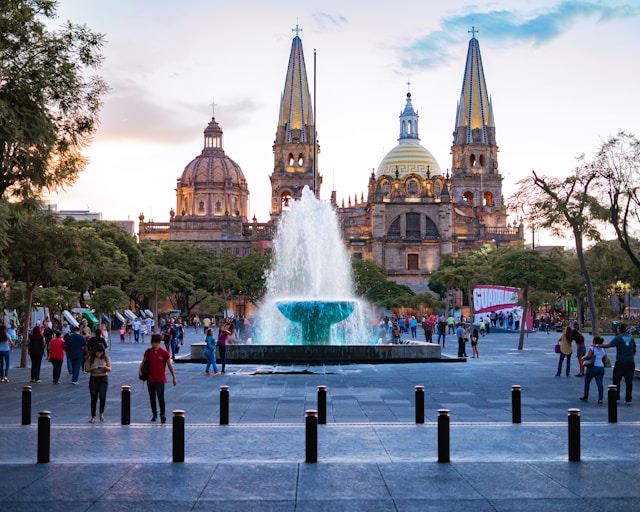
Guadalajara is strategically leveraging the 2026 FIFA World Cup for long-term urban and business development, investing in structural improvements rather than just temporary event preparations. Aligning with FIFA's criteria, the city enhances its competitiveness, tourism, and quality of life, anticipating significant economic benefits.
With less than half a year until the start of the FIFA World Cup 2026™, host cities are working to consolidate their competitive advantages. Guadalajara** is not only preparing to welcome fans from around the world, but also to transform the event into a long-term urban and business development platform**, according to local authorities.
For Nadine Cortés Calzada, Director of International Relations and Migrant Affairs for the municipality of Guadalajara, the strategy has been clear: invest for the city that endures, not just for the event.“All the investment being made is not for the World Cup; it is for the populace… When it is structural and remains for the benefit of the citizenry, it is an investment,” she states.
The FIFA World Cup 2026™ will be the largest in the tournament’s history, featuring 48 national teams and 104 matches distributed across Canada, the United States, and Mexico. Guadalajara is listed as one of the 16 official host cities, and the Akron Stadium will host four group stage matches.
According to the document 2026 FWC Hosting Requirements, FIFA does not select venues arbitrarily; its technical criteria for a host city include: Eligibility rules also set minimum stadium capacities** of 40,000 spectators** for most matches, a technical threshold that Guadalajara meets with its World Cup venue.
Guadalajara and the state of Jalisco have not allocated a specific budget item labeled “World Cup Expenses.” The municipal budget for 2026 totals 13.016 billion pesos, with 2.4 billion pesos allocated to security, and additional resources directed towards mobility and public works. These decisions reflect a sound rationale: to enhance the city’s structural competitiveness and its conditions for business, tourism, and quality of life.
“Investing solely for an event is the riskiest approach for a city. That decision was off the table from the outset,” states Cortés Calzada.
At the metropolitan level, state and private authorities have announced investments exceeding 23 billion pesos, combining public and private resources, for road infrastructure, hotel expansion, and improvements in airport and urban infrastructure.
2026 World Cup: Mexico on the Path to Becoming a Sports Event Powerhouse, According to KPMG
Guadalajara has not had to build its preparation from scratch. Several of its competitive advantages were already established:“We have the capacity in accommodation, mobility, and quality public transport… that advantage already existed,” explains the official.
These strengths position Guadalajara to compete not only with other World Cup host cities, but also with high-level international tourism and business destinations.
Cortés Calzada emphasizes that the organization of the World Cup translates into permanent benefits for the city’s residents. This includes investments in security, public transport, and intermunicipal coordination.
“There are coordinated action mechanisms at all levels—state, local, with other municipalities in the metropolitan area—to guarantee services and security,” she says.
Furthermore, the city is preparing for related events such as the FIFA Fan Festival, which attract fans throughout the tournament and extend the economic impact beyond match days.
Nationally, the 2026 World Cup is expected to have a significant economic impact. Mexico anticipates the arrival of over 5.5 million visitors during the tournament, with an estimated economic spillover of between 1.8 billion and 3 billion dollars, resulting from tourism, consumption, and expenditure during the event.
Although Guadalajara does not publish disaggregated sectoral figures, its inclusion in the group of Mexican host cities implies participation in this economic dynamism, also generated by the creation of temporary jobs in services, logistics, commerce, and tourism, as well as investment opportunities for local suppliers.
The municipal vision, expressed by Cortés Calzada, is clear: Guadalajara aims to capitalize on the World Cup to consolidate a more competitive, connected city with greater business value added, not merely to leverage a high-profile global event.
“Guadalajara is prepared. Not just for a World Cup, but for anyone who wishes to visit at any time,” she concludes.
This commitment aligns with FIFA’s own criteria: robust infrastructure, efficient services, and a long-term vision, requirements that not only benefit a sporting competition but also foster continuous urban and business development.
More Articles

How Many Investment Projects Are Underway in Nuevo León?
May 5, 2026
Labor Power in Mexico: Who Hires, Who Manages, and Who Works
May 18, 2026
Aguascalientes Strengthens International Presence in Washington; Tere Jiménez Receives Bilateral Recognition
May 20, 2026
Between Two Giants: The Trump-Xi Summit and Its Impact on Mexico
May 13, 2026
Government Announces Agreement with Steel Industry: How Will It Propel the Sector?
Apr 29, 2026
What is the Investment Behind the GNP Guadalajara Coliseum?
Apr 30, 2026