
TecnoManagement 2026: How to Leverage Technology for Competitive Advantage
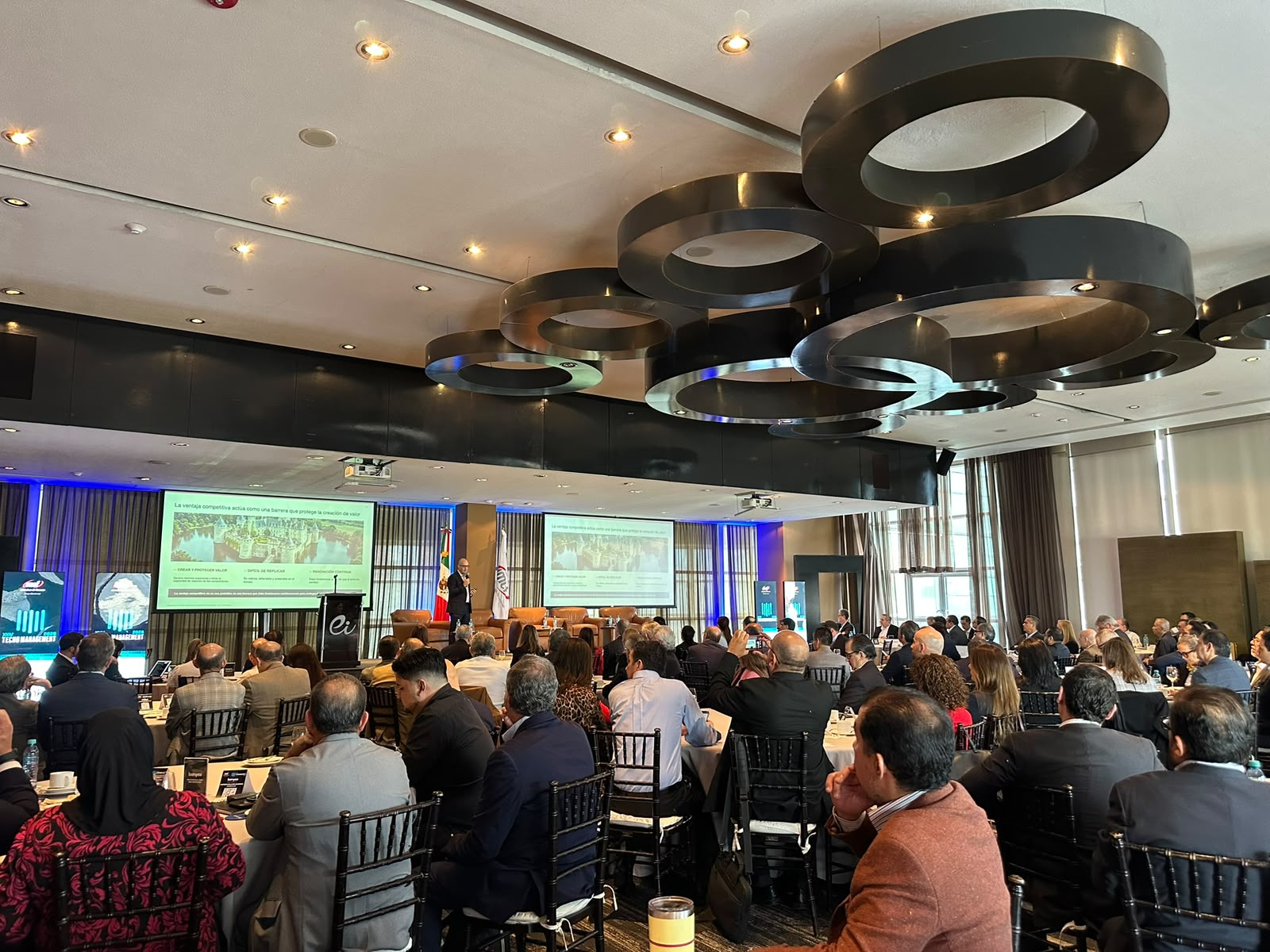
Experts at TecnoManagement 2026 discuss how businesses can transform technology into a competitive edge through strategic integration and informed adoption.
TecnoManagement 2026: How to Leverage Technology for Competitive Advantage
The XXIV TecnoManagement 2026, organized by IMEF Grupo Monterrey, brought together executives and specialists to analyze how technology is transforming business decision-making. During the welcome remarks, the organization highlighted the need for companies to incorporate cutting-edge tools, accelerate their technological adoption, and utilize
as a daily component of financial management. It was also emphasized that the CFO must play a more active role in these changes.
The event was structured around the theme “Leadership and Strategy for Better Decision-Making in the Digital Age.” Furthermore, it underscored the importance of combining innovation, technological governance, and a more humanistic vision within organizations.
Finance as a Competitive Advantage
The first keynote was delivered by José Carlos Pons de la Garza, Director of Administration and Finance at Grupo Lamosa. His presentation focused on how financial departments can contribute to building and renewing competitive advantages.
Pons explained that the CFO’s role has significantly evolved. Previously, their function primarily involved control, accounting, liquidity, and profitability. Now, they must also manage
, international operations, risks, political volatility, and fiscal changes.
Additionally, a survey presented during the conference indicated that 35% of the CFOs consulted stated they now share leadership responsibilities with the CEO.
For Pons, the new financial role can be summarized by three core capabilities:
- Anticipating changes.
- Mobilizing decisions and resources.
- Adapting rapidly.
He also highlighted that technology can enhance these capabilities by detecting signals, evaluating scenarios, and monitoring outcomes. https://www.liderempresarial.com/la-ia-ya-reduce-hasta-70-el-tiempo-de-respuesta-ante-ataques/
Technology to Fortify the Company
In an interview with Líder Empresarial, José Carlos Pons de la Garza elaborated on the challenges currently facing Grupo Lamosa. The executive noted that one of the primary challenges is environmental volatility. Therefore, he believes finance must help prepare the company for various scenarios.
Pons asserted that no one can predict the future with absolute certainty. However, companies can leverage information to construct scenarios and develop response plans. He also affirmed that technological tools are now essential for competitiveness.
“If you don’t use them, you fall behind,” he stated during the conversation.
When Intelligence is No Longer Scarce
On another note, the second keynote was presented by Miguel Pasohondo, Associate Partner of Artificial Intelligence and Data at EY Mexico. His presentation addressed how artificial intelligence is democratizing access to knowledge.
Pasohondo pointed out that value no longer resides solely in having information or expertise but in knowing how to apply it for sales, production, growth, and better decision-making.
However, he also cautioned that 75% of artificial intelligence initiatives do not reach a productive environment, meaning many investments fail to translate into tangible returns. Among the key factors, he highlighted data quality, emphasizing that AI requires validated, governed, and reliable information to produce useful results. Furthermore, he explained that it’s not always advisable to use AI; in some processes, traditional automation may be sufficient and more cost-effective. https://www.liderempresarial.com/dra-concepcion-del-alto-hernandez-que-papel-juega-el-imef-en-la-agenda-empresarial-de-monterrey/
Adopting AI Without Chasing Trends
Subsequently, in an interview, Miguel Pasohondo shared insights on how companies can select useful tools and avoid investments driven solely by trends. The specialist explained that the choice depends on each organization’s level of digital maturity. He also noted that companies don’t always need to choose from multiple AI models; integrated enterprise platforms can facilitate access based on each company’s specific needs. Pasohondo also emphasized the importance of talent.
“Artificial intelligence should complement, not replace us,” he affirmed.
Therefore, he recommended focusing on training, change management, data governance, and adoption. He warned that without these foundational elements, AI can become a growing expense with insufficient business value.
Technology, Strategy, and Talent Define the New Business Landscape
In this manner, the various presentations at TecnoManagement converged on a single point: incorporating technology alone does not guarantee a competitive advantage. Value emerges when companies successfully connect tools, strategy, data, and talent. For financial departments, this entails evolving from a control function to a more active participation in decisions, risks, and transformation. Simultaneously, for organizations, it means avoiding the adoption of artificial intelligence as a mere trend and focusing on use cases where it can genuinely generate value.
Ultimately, the business challenge is no longer solely about accessing new tools but about using them judiciously, measuring their impact, and translating them into better decisions.
You May Be Interested In:
The post
appeared first on Líder Empresarial.
More Articles

Oil Hits Five-Month High: Will Gasoline Prices Rise in Mexico?
Oct 20, 2026

San Luis Potosí's Hybrid Vehicle Fleet Grows 56%, Leading Bajío Corridor
Sep 24, 2026

Guanajuato Promotes Dual Training for the Leather-Footwear Sector
Sep 30, 2026

Capgemini Mexico Recognized on Most Ethical Companies Ranking 2026
Sep 24, 2026

Mexico Accelerates in E-commerce: Consumer Packaged Goods Online Sales Grew 35%
Oct 2, 2026

Consumer Confidence Drops in September 2026, INEGI Reveals
Oct 6, 2026