
Autonomous Vehicles to Gain Prominence by 2030: Is San Luis Potosí's Automotive Industry Ready?
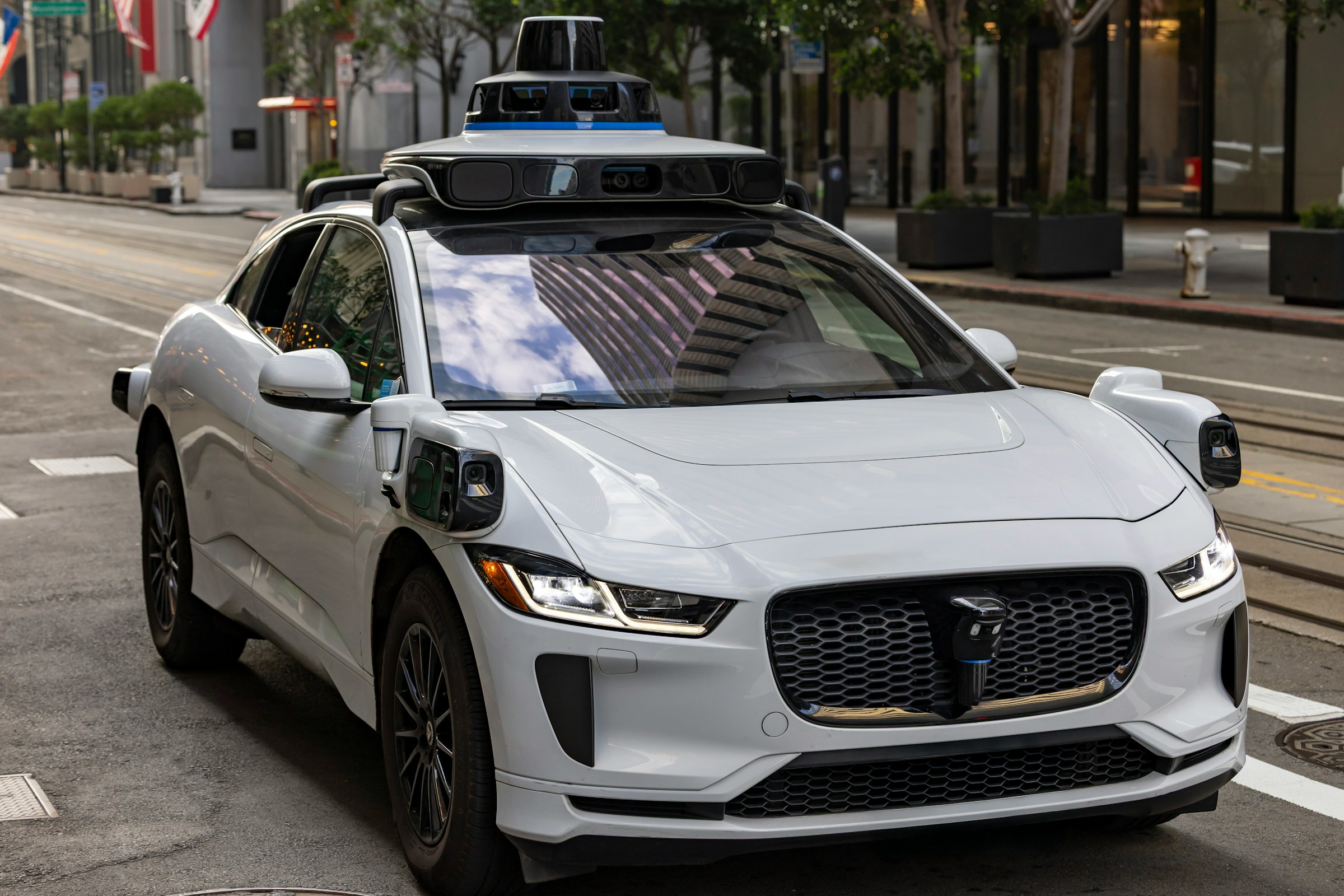
An analysis of San Luis Potosí's automotive sector's readiness for the rise of autonomous vehicles and evolving mobility trends towards 2030.
The next transformation for San Luis Potosí’s automotive industry will not depend solely on engines, transmissions, and chassis. Sensors, software, and artificial intelligence are beginning to reshape vehicle functionality and manufacturing requirements.
In light of this evolution, autonomous vehicles represent one of the main technological challenges for the automakers and supplier companies established in the state looking towards 2030. In this regard, Alberto Rosales Reyna, president of the San Luis Potosí Automotive Cluster, anticipates that autonomous driving and shared mobility models will be two relevant market trends over the next five years.
During an interview conducted as part of
, held on November 11th and 12th, the business representative explained that manufacturers are incorporating increasingly complex digital systems, while consumer mobility needs are evolving. He also noted that the industry is seeking to develop more accessible and functional vehicles, following a phase marked by the integration of enhanced technological features.
However, international projections distinguish between the expansion of driver-assistance systems and the mass commercialization of vehicles capable of operating completely without a driver.
Autonomous Vehicles Towards 2030: 52% of New Vehicles to Feature Level 2 Assistance
The automation of driving is progressing through technologies that allow vehicles to perform certain functions, although they still require varying degrees of human intervention. According to the study “The Automotive Software and Electronics Market Through 2035”, published by McKinsey in January 2026, cars equipped with Level 2 advanced driver-assistance systems could represent 52% of global new vehicle sales by 2030. These systems can simultaneously control speed and steering under specific conditions but require constant driver supervision.
SAE International’s classification establishes six levels of automation, from 0 to 5. While the lower levels incorporate assistance functions, the higher levels allow the system to take on increasingly complex driving tasks. At Level 3, the vehicle can drive under specific conditions, but a human must be available to retake control when prompted. In contrast, Level 4 allows for operation without human intervention within predefined conditions, such as certain urban areas. Level 5 contemplates full automation.
McKinsey estimates that Level 3 vehicles could account for 16% of global new unit sales by 2035, while Level 4 or higher vehicles would represent approximately 1%. These forecasts indicate a progressive transition towards greater automation capabilities, without necessarily eliminating human driving within the next decade.
Alberto Rosales Identifies an Opportunity for San Luis Potosí in Autonomous Vehicles
Technological evolution is not limited to electric vehicles. A vehicle with an internal combustion engine can also incorporate sensors, digital systems, and automated driving functions. Precisely, during his interview at Automotive Connection Potosí 2026, Alberto Rosales highlighted that these technologies can be developed independently of the powertrain type. “That is the key for the state.”
His approach broadens the perspective of automotive transformation, as industrial opportunities are not exclusively concentrated in new electric models. Automation could also be incorporated into gasoline-powered vehicles, hybrids, and other platforms, implying new needs for electronic components, control systems, and connectivity.
Rosales also emphasized the potential of shared mobility through vehicles that can operate without a driver under specific conditions. This way, transportation services could evolve towards models where a single unit serves multiple users through digital platforms. However, the expansion of these services will depend on factors such as technology cost, regulation, and the infrastructure conditions of each market.
Over 20 Cities Already Offer Autonomous Vehicle Services
Operation without human intervention is already part of some commercial transportation services. The International Energy Agency (IEA) notes in its Global EV Outlook 2026 that Level 4 robotaxis are operating commercially in over 20 cities worldwide, primarily in China and the United States. The agency also estimates that commercial fleets of these vehicles reached approximately 8,000 units during 2025.
Robotaxis use cameras, sensors, navigation systems, and artificial intelligence to identify environmental conditions and perform maneuvers within authorized areas. Their operation also relies on computer systems that process information and enable the vehicle’s capabilities to be updated. However, the IEA warns that full Level 5 autonomous driving does not yet have a near-term commercialization prospect. Furthermore, the adoption of Level 4 vehicles remains concentrated in specific services and delimited territories. For the automotive industry, this evolution presents opportunities related to sensors, semiconductors, electronic control units, and software development.
San Luis Potosí Has 360 Companies in its Automotive Ecosystem
Technological transformation is significant for San Luis Potosí due to its participation in international vehicle and auto parts manufacturing supply chains. According to the Mapping of the Automotive Industry in San Luis Potosí 2026, developed by Cluster Industrial B2B, the state has 360 companies linked to the sector, including automakers, component manufacturers, suppliers, and specialized service companies. The study also identifies 171 plants corresponding to Tier 1, Tier 2, and Tier 3 supplier companies.
In terms of production activity, General Motors and BMW jointly manufactured 352,669 light vehicles during 2025. By the end of 2026, the mapping projects a production of 362,498 units. This industrial capacity represents a foundation for participating in new manufacturing opportunities, although the integration of autonomous driving technologies requires different knowledge and processes. Vehicles with higher levels of automation require components capable of detecting obstacles, interpreting information, and executing specific driving functions. Key among these elements are cameras, radars, LiDAR sensors, processors, electronic systems, and computing platforms.
Therefore, auto parts manufacturers face new demands related to technological integration, quality, and component safety. The presence of companies specialized in industrial automation offers useful capabilities for modernizing manufacturing processes. However, manufacturing technology for autonomous driving involves additional requirements for design, validation, and functional safety.
BMW and General Motors Advance Towards a New Technological Generation
The two automakers established in San Luis Potosí are already participating in global digital transformation strategies and the development of vehicles with enhanced technological capabilities.
In the case of BMW Group, the company announced that its San Luis Potosí plant will begin to
from the Neue Klasse platform during 2027. This project is part of an 800 million euro investment aimed at incorporating new production and high-voltage battery assembly capabilities. Furthermore, BMW is developing advanced driver-assistance systems and integrating new electronic architectures into its vehicles. Although these projects involve distinct technological processes, they demonstrate how electrification and digitalization are modifying automakers’ production requirements.
Meanwhile, General Motors (GM) announced new advancements in its autonomous driving strategy for passenger vehicles in October 2026. The company plans to introduce on-road autonomous driving functions starting in 2028, initially through the Cadillac Escalade IQ. Subsequently, it intends to expand these capabilities to other models, including SUVs and pickups. GM is also developing a centralized electronic architecture to integrate software functions, artificial intelligence, and driving assistance. These strategies highlight the technological evolution of both companies, although they do not represent announcements of fully autonomous vehicle manufacturing at their San Luis Potosí facilities. Opportunities for the local industry will depend on the platforms assigned to the plants and the supply contracts associated with new developments.
Automotive Software and Electronics to Reach $469 Billion by 2035
The growth of digital functions is also reshaping the global automotive components market. McKinsey estimates that the value of the automotive software and electronics market could grow from $294 billion in 2025 to $469 billion by 2035. New opportunities encompass programming, electronic systems, component integration, and technology verification and validation services. In particular, advanced driver-assistance systems require increasingly sophisticated processors, sensors, and software programs. These trends open business possibilities for companies specializing in automotive electronics, engineering, software development, and functional testing. For suppliers in San Luis Potosí, participating in these segments means strengthening technological capabilities, investing in equipment, and meeting international requirements. Additionally, the incorporation of new components could modify hiring and training needs within manufacturing companies.
The Automotive Cluster Aims to Develop Technology from San Luis Potosí
Beyond component manufacturing, the challenge for the San Luis Potosí industry also involves its capacity for knowledge and innovation development. During Automotive Connection Potosí 2026, Alberto Rosales participated in the panel Driving the Future: Vision 2030 and Competitiveness, alongside representatives from General Motors, BMW, Bosch, and Valeo. The event provided a platform to address the new technological and commercial demands facing automotive supply chains.
In his inauguration speech, Rosales emphasized the need to strengthen regional innovation capabilities and stated an aspiration for the sector: “We must become a region that develops technology.” This statement is particularly relevant given the global market transformation and the demands faced by traditional suppliers. In addition to maintaining quality, cost, and delivery time standards, companies will need to expand their digitalization, collaboration, and technological development capabilities to compete for new projects.
The preparation of specialized talent is also part of this transformation. Engineering degrees in electronics, mechatronics, automation, and computer systems are becoming crucial for developing, integrating, and operating new automotive technologies. Likewise, companies will require technical personnel trained in electronic diagnostics, industrial programming, and automated equipment maintenance.
The San Luis Potosí Automotive Cluster aims to strengthen ties with educational institutions and expand supplier development programs by 2027. Technological adaptation will depend on these capabilities, in addition to the investments and projects that companies can attract in the coming years.
Autonomous vehicles by 2030 represent a new era for the global industry, but also a challenge for manufacturing regions. San Luis Potosí must therefore strengthen its technological specialization if it seeks to expand its participation in the manufacturing of future vehicles.
You may also be interested in reading
The post
first appeared on Líder Empresarial.
More Articles

Jalisco's Electrical Demand: State Requires an Additional 4,000 MW
Nov 12, 2026

Conasami Prepares Minimum Wage Increase for 2027: What Are Employers and Unions Proposing?
Nov 18, 2026

Choosing the Right Samsung Smartwatch for Your Needs
Nov 23, 2026

Road Blockades Today, November 17: States and Points Affected by Farmer Protests
Nov 17, 2026

Mercedes-Benz Aguascalientes: 25 Years of a Star That Transcends Generations
Nov 18, 2026

Leading Causes of Death in Mexico in 2025
Nov 10, 2026