
How Jalisco is Preparing its Industrial Parks for the USMCA Review
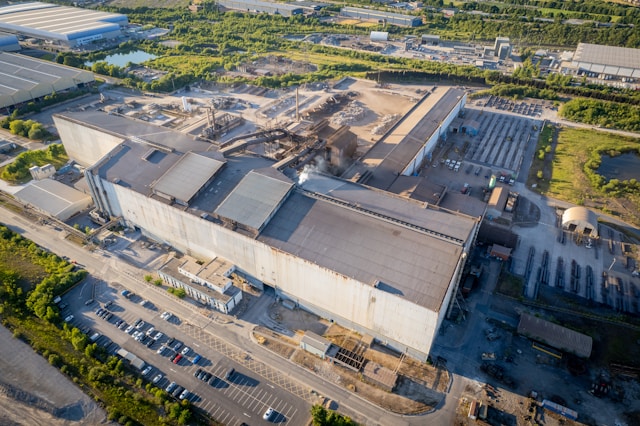
Jalisco is proactively enhancing its industrial infrastructure and streamlining regulations to attract investment amidst ongoing USMCA reviews.
The review of the United States-Mexico-Canada Agreement (USMCA) has not halted industrial expansion plans in Jalisco. On the contrary, the state continues to prepare for new investments by developing specialized infrastructure, simplifying regulations, and implementing a strategy focused on strengthening competitiveness in the new North American trade landscape.
This was stated by Bruno Martínez, President of the Association of Industrial Parks of the State of Jalisco (APIEJ) and CEO of Campus Desarrollos, who asserted that the organization maintains an optimistic outlook on the treaty’s future and believes its greatest legacy will be the consolidation of more regional supply chains.
“We view the United States’ decision not to cancel the treaty, but rather to continue reviewing it, very positively. We see it with optimism because it signifies a willingness to continue strengthening the commercial relationship between both countries,” he stated.
Industrial Parks Accelerate Investments Despite Trade Uncertainty
Although the USMCA review is prompting adjustments in business strategies, Martínez explained that industrial developers are continuing to expand their real estate offerings to meet the demand from new companies.
Currently, 800,000 square meters of industrial construction are underway in Jalisco, representing approximately $600 million in investment.
“Right now, there are 800,000 square meters under construction, representing about $600 million in investment. The goal is to have available spaces and options for companies to arrive,” he explained.
The leader clarified that the
“We have no involvement in Free Trade Agreement negotiations; it indirectly affects us because it impacts companies coming into the state, but our job is to be ready to receive them.”
USMCA Review Necessitates a New Industrial Strategy
From APIEJ’s perspective, the current phase marks a profound shift in how international trade is understood. Martínez believes that the old concept of free trade is evolving into a more regulated model, where competitiveness will depend less on tariffs and more on regional production capacity.
“I always put it this way: we are no longer talking about free trade as before. Today, we must adapt to new international trade rules.”
However, he maintains that Mexico will continue to possess advantages over other regions globally.
“We will have certain comparative advantages over other countries because we will continue to face lower tariff rates. This will make us very competitively strong for exports to the United States.”
The True Legacy Will Be Local Supply Chains
Beyond the specific outcomes of the USMCA review, the APIEJ President believes the most significant transformation stems from the strengthening of regional supply chains, driven by the nearshoring phenomenon. For the leader, the growth of local suppliers represents the most important economic opportunity this new trade era will leave.
“From our perspective, the most important thing nearshoring leaves is the development of local supply chains.”
He added that this strengthening will enable Mexican companies to diversify their export markets.
“Local supply chains will not only serve the U.S. market; they can also serve Europe, South America, and even Asia. That is the true value this transformation is generating.”
Jalisco Simplifies Permits to Attract More Investment
To respond more quickly to the demand for new investments, the association, in collaboration with the Government of Jalisco and various municipalities, has promoted a strategy to standardize administrative processes related to industrial development. The agreement aims to reduce the time required to obtain permits without altering legal requirements.
“We reached an agreement with the State Government and some municipalities to standardize permits and procedures so that parks can be built faster, more simply, and more efficiently, always in compliance with all regulations.”
Martínez explained that the intention is to offer greater certainty to companies considering establishing production operations in the state.
Infrastructure Ready for a New Manufacturing Era
The leader asserted that Jalisco maintains favorable conditions for receiving new investments resulting from the reorganization of global production chains. While acknowledging that the trade landscape will continue to change as USMCA reviews progress, he believes the state has the infrastructure, connectivity, and a growing supply of industrial spaces.
“We are indeed ready to receive more production lines,” he emphasized.
He added that decisions made by Mexico and the United States during periodic reviews should be interpreted as part of a natural evolution of regional trade.
“The treaty has already evolved; now we must adapt and see how we can unlock all these opportunities to strengthen industry and continue growing,” he concluded.
The post
appears first on Líder Empresarial.
More Articles
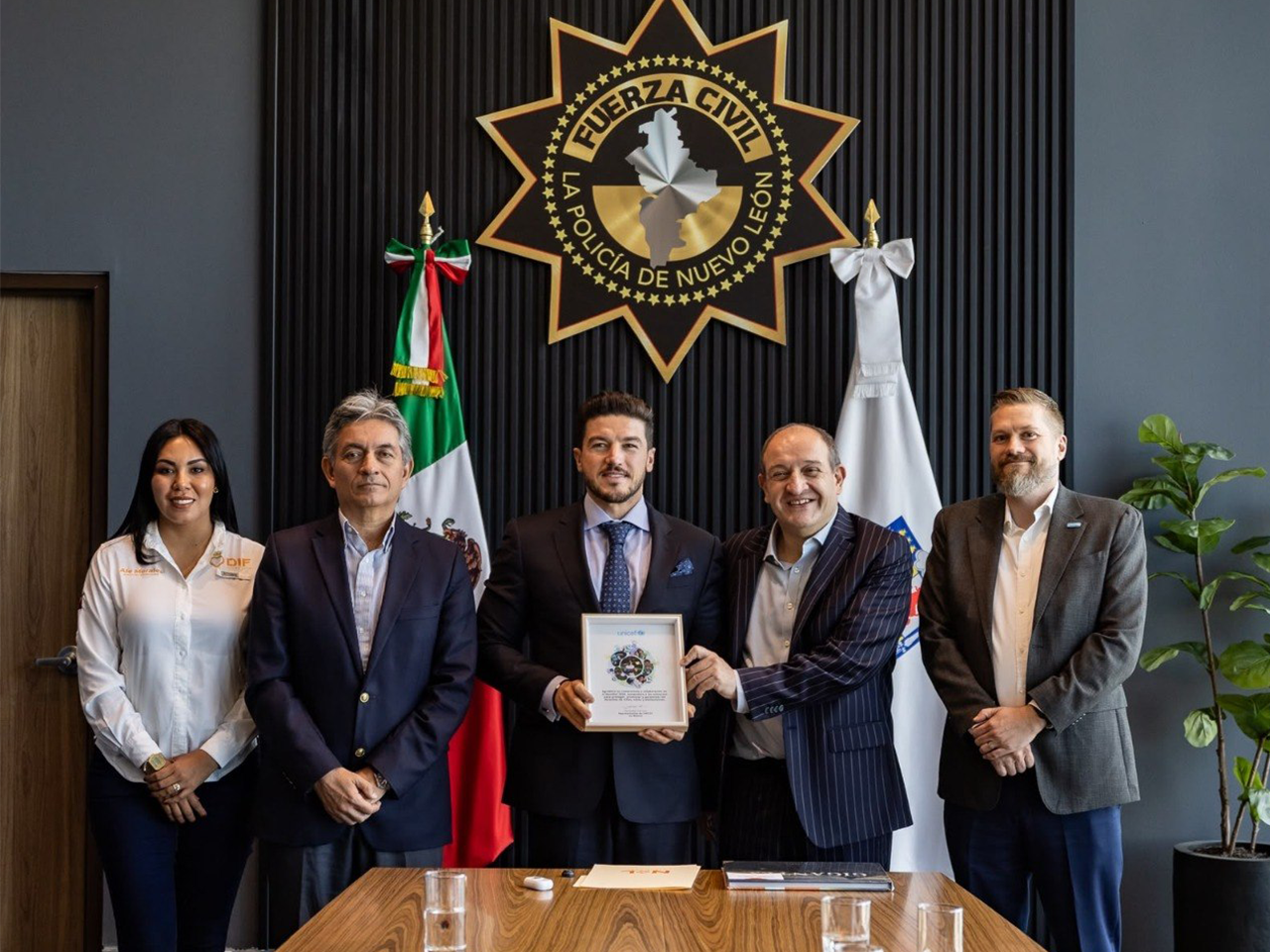
Nuevo León and UNICEF: Why Childhood is Key to Economic Future
Sep 24, 2026
IMSS Workers to March on October 13: Routes and Blockages in CDMX
Oct 12, 2026

Artificial Intelligence Concerns the Vatican: Pope Leo XIV's Stance
Sep 24, 2026
Guanajuato Gas Stations Pause Diesel Sales Amid Cost and Price Pressures
Sep 29, 2026
Most In-Demand Medical Specialties in Querétaro
Sep 22, 2026

ITESO: Jalisco's Formal Employment Enters Zone of Pressure
Oct 1, 2026