
Company Closures Hinder Formal Employment in Mexico: BBVA
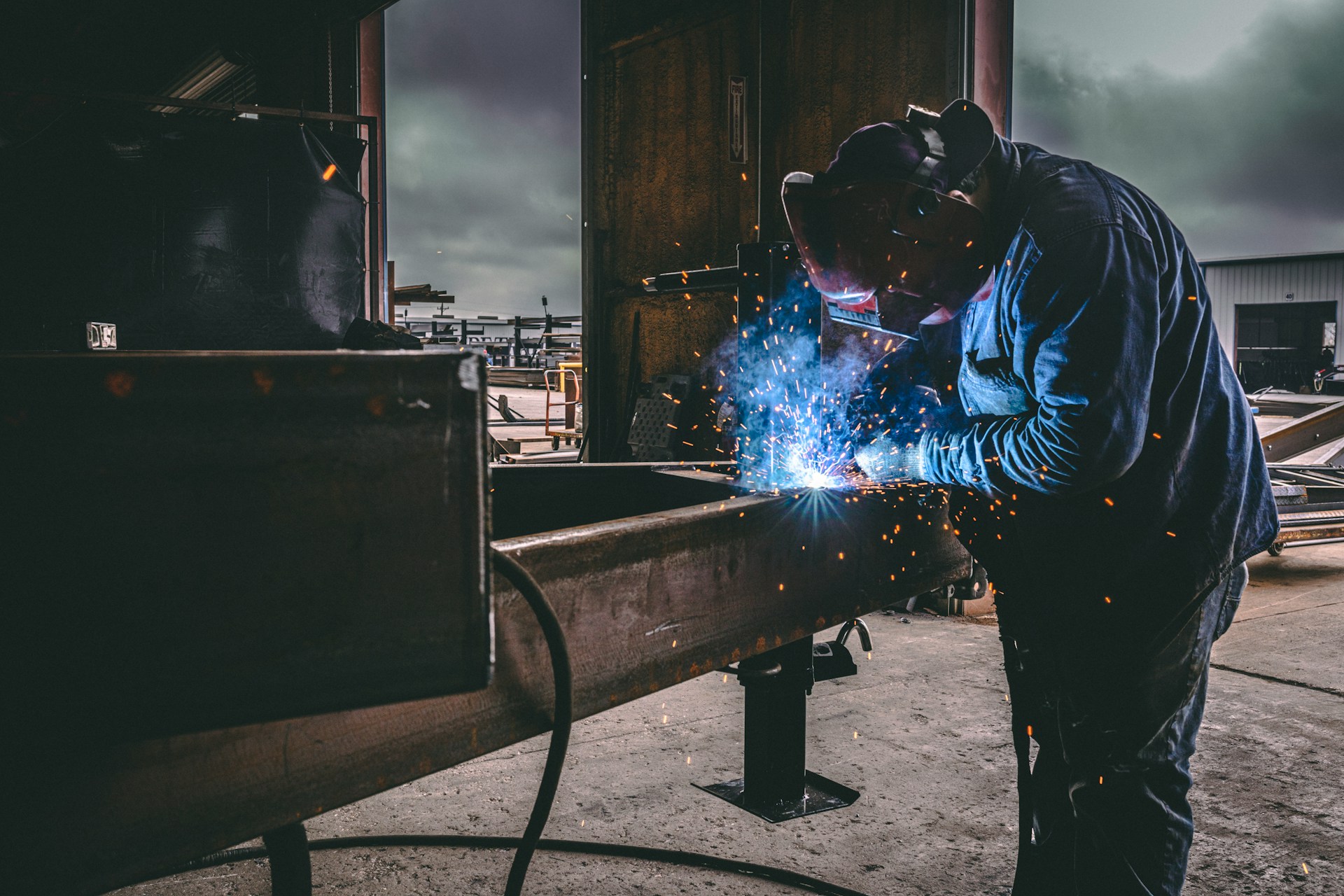
Company closures, reduced investment, and weak business confidence are slowing formal job growth in Mexico, as per BBVA's report.
Formal employment in Mexico began 2026 showing clear signs of deceleration, amidst a context marked by lower investment, company closures, and weakened business confidence. According to BBVA Research’s Employment Report for April 2026, the growth of the
maintains some resilience but with limited capacity to generate new positions, especially given the deterioration of the business fabric and the rise of conditions favoring informality.
Formal Employment Growth Records Its Weakest March in Over a Decade
According to BBVA data, during March 2026, IMSS-affiliated jobs recorded a seasonally adjusted monthly variation of just 0.04%, equivalent to 32,930 new jobs, the lowest growth for a March month since 2010. In the first quarter cumulative, 207,604 formal jobs were generated, a figure 8.4% lower than the same period in 2025. Although annual formal employment growth was 1.2%, excluding digital platform workers, the expansion shrinks to just 0.5%, demonstrating a deeper structural weakness in the Mexican labor economy. This behavior is closely related to the decline in gross fixed capital formation, which showed an annual contraction of -2.2% in January, as well as a business confidence environment that has been below the expansion threshold for 13 consecutive months.
Closure of Over 49,000 Companies Reveals Deterioration of Formal Employment in Mexico
One of BBVA’s study findings is the sustained reduction in the number of employers registered with the IMSS. Since December 2022, Mexico has lost 45,279 micro-businesses and 3,845 small formal businesses. During the first quarter of 2026, the number of formal employers fell by 1.9% compared to the previous year’s average, while employers in the informal sector showed growth. BBVA notes that, while the increase in the minimum wage has strengthened real income, it could also be generating higher labor costs for micro and small businesses in a low economic growth environment, limiting their viability and disincentivizing formalization.
Manufacturing, Trade, and Agriculture Show Weakness: BBVA
BBVA’s analysis reflects that manufacturing, one of the sectors with the greatest weight in national employment, recorded an annual contraction of -2.1%, accumulating 15 consecutive months in negative territory. Meanwhile, trade also showed weakness, with a monthly decline of -0.49%, while the agricultural sector accumulated 31 consecutive months of decline, with an annual decrease of -3.9%. In contrast, the services sector consolidated itself as the main support for formal employment in Mexico, with an annual growth of 1.9%, while construction showed a partial recovery, though still maintaining negative annual figures.
Labor Gaps Within Formal Employment in Mexico
The generation of formal employment also shows significant territorial contrasts. The Metropolitan region led national growth, with Mexico City advancing 4.9% and the State of Mexico 5.5% annually. On the other hand, states in the northeast and southeast face greater difficulties. Guerrero registered a fall of -6.7%, Campeche -5.1%, and Coahuila -2.8%, reflecting deep structural differences in productive capacity, investment, and regional development.
Wages Grow, But No Longer Offset Weakness in Formal Employment
In March, real wages grew 2.4% annually, their lowest level since the post-pandemic recovery. Real wage mass increased by 3.6%; however, this advance is primarily explained by wage improvements rather than the creation of new positions. This implies that, although incomes maintain some strength, employment expansion is losing momentum, which could limit internal economic growth if business investment does not recover.
Investment Will Be Essential to Prevent Further Labor Deterioration
BBVA concludes that the evolution of formal employment will directly depend on a more robust recovery in investment, business confidence, and productive activity. Without an environment that strengthens the permanence and expansion of formal companies, Mexico could face greater obstacles to consolidating sustained improvements in labor conditions. The outlook for 2026 shows that the Mexican formal labor market maintains relative stability but faces structural pressures that could deepen if economic weakness, business uncertainty, and the closure of micro, small, and medium-sized enterprises (MSMEs) persist. The post
first appeared on Líder Empresarial.
More Articles

Sheinbaum Submits Digital Payments Reform to Chamber of Deputies: What is it About?
Sep 9, 2026

Querétaro Surpasses 10% Growth in Automotive Parts Production
Sep 8, 2026

COMCE 2026 Congress: How Will It Boost Nuevo León's Foreign Trade?
Sep 2, 2026

San Luis Potosí Faces Sharp Increase in Business Delinquency in 2026
Sep 2, 2026

Guanajuato Ranks in the Top 5 for the Meetings Industry: What Strengthens Its Position?
Sep 14, 2026

Aguascalientes Budget to Rise 7.2% from 2026; Among the Nation's Largest Increases
Sep 10, 2026