
Between Two Giants: The Trump-Xi Summit and Its Impact on Mexico
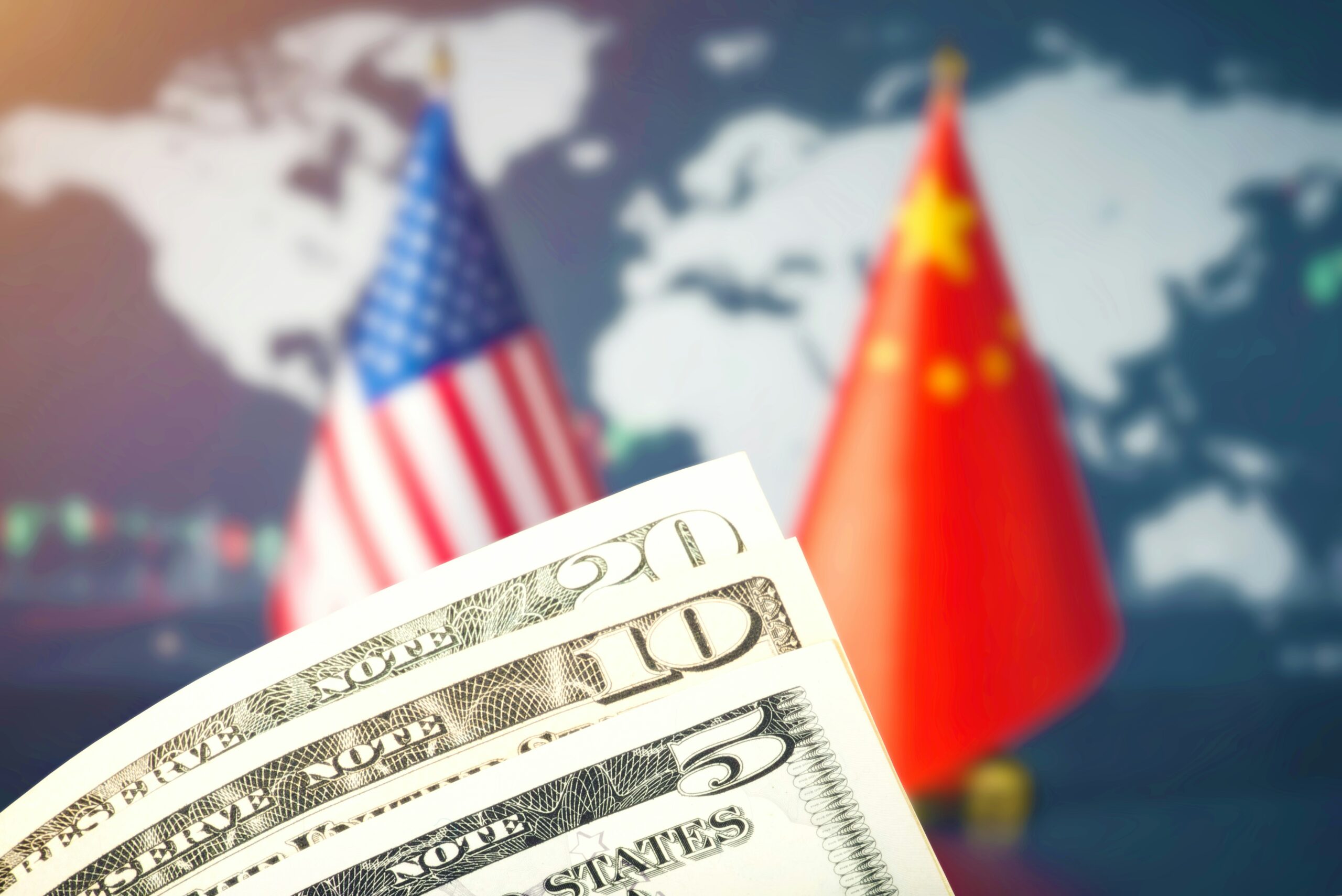
Mexico's economy is at the forefront of discussions between the US and China, despite not being directly involved in the summit.
Between Two Giants: The Trump-Xi Summit and Its Impact on Mexico
In a Beijing meeting room, without Mexican representation but with direct consequences for Mexico, two leaders are redefining the rules of global trade. Donald Trump and Xi Jinping are meeting this week in China for what marks the first state visit of a U.S. president to that country in nearly a decade. Whatever they agree upon, or fail to agree upon, has the potential to shift supply chains, investments, and jobs in a country that was not invited to the conversation but depends on it.
The Summit Shaping the Direction
Trump arrived in China this Wednesday with a delegation including administration officials and business executives, for what the Council on Foreign Relations (CFR) described as high-stakes talks on trade and international security. According to the White House, the bilateral meeting with Xi will take place Thursday morning in Beijing, followed by a state banquet that evening and a joint lunch on Friday.
The agenda is broad. According to Bloomberg Línea reports, Trump will press Xi on China’s role in the conflict with Iran, seek progress on establishing a new bilateral trade board to manage economic affairs between the two countries, and urge Beijing to increase its purchases of American products like soybeans and aircraft.
However, the CFR cautions that the most likely outcome will not be a structural agreement. What is expected, according to their analysis, is an extension of the trade truce, a modest de-escalation of tensions on export controls, the resumption of shipments of Chinese rare earth minerals, and symbolic purchases of U.S. products. Real advancements in Chinese industrial subsidies or Beijing’s manufacturing overcapacity are, according to the same source, unlikely.
The asymmetry of objectives between the two leaders is a key factor in understanding what can and cannot emerge from this summit. As the CFR points out, Trump arrives in Beijing seeking headlines and visible results before the midterm elections; Xi, on the other hand, is playing a long-term game, betting on strategic patience over substantive concessions. China’s objective is to buy time to consolidate its technological and industrial position; the United States’ objective is to secure symbolic victories rather than structural reforms to the Chinese economic model.
The Uninvited Partner: Mexico and the Weight of Foreign Trade
Mexico does not have a seat at that table, but its economy is on the board. The country has been the United States’ top trading partner since 2023, surpassing Canada and China, and 83.1% of its total exports are destined for the U.S. market, according to data from the Bank of Mexico and INEGI. Between 2020 and 2024, Mexican exports grew from $417 billion to $617 billion, an increase of nearly 48%.
This dependency has a double-edged interpretation. According to a Monex analysis, any disruption in Mexico’s trade relationship with the United States would have a profound impact on its economy. For the United States, however, trade with Mexico represents barely 2.1% of its GDP, making the costs of any potential trade tension manageable from Washington’s perspective. This structural imbalance defines Mexico’s position in relation to any agreement involving its two major partners.
How the 2018 Trade War Already Transformed Mexico
To understand the potential impact of the current summit, it is necessary to review what happened the last time Washington and Beijing openly clashed. When the first Trump administration imposed tariffs on Chinese products between 2018 and 2019, Mexico was one of the major beneficiaries of the subsequent global reconfiguration.
According to a Federal Reserve Bank of Dallas analysis, the U.S.-China trade war generated a trade diversion effect that increased Mexico’s GDP by up to 1.08% in the long term. Demand for products previously supplied by China was redirected to Mexico and other alternative suppliers.
A study by the International Monetary Fund (IMF) estimates that this phenomenon injected approximately $75 billion in additional Mexican exports to the United States between 2017 and 2023, equivalent to 45% of the country’s total export growth during that period.
The main channel for these benefits was companies integrated into global value chains (GVCs), operating in Mexico under the IMMEX program. According to a study by researchers Hale Utar, Alfonso Cebreros, and Luis Torres, it was the subsidiaries of foreign multinationals, directly affected by the tariffs, that most boosted Mexican export performance during that trade dispute.
Nearshoring, or the relocation of supply chains to North America, accelerated this process. According to the IMF, Mexico’s geographical proximity, its membership in the USMCA, and its competitive costs positioned it as a natural destination for companies seeking to move production away from China. However, the Dallas Fed itself warns that internal inefficiencies, such as lagging productivity, reversed reforms in the energy sector, and security levels, limited the full capture of these benefits.
The Double Dependency: Exports to the North, Imports from the East
Mexico’s trade map reveals a peculiar position: the country is deeply dependent on the United States as a destination for its exports, but at the same time relies on China as a source of imports and industrial inputs.
According to data from the Bank of Mexico, China is Mexico’s second-largest trading partner, with bilateral trade growing 4,432% between 2000 and 2024, from $3 billion to nearly $140 billion. Imports from the Asian country accounted for 20.8% of Mexico’s total imports in 2024.
In 2024, Mexico exported $9.19 billion to China versus imports of $128.5 billion, resulting in a historic deficit of $119.313 billion. In other words, Mexico bought 14 times more than it sold to the Asian country.
What makes this deficit more complex is that Chinese inputs are a fundamental part of Mexico’s export success. According to a Monex analysis, of the 10 chapters with the largest share in Mexico’s total exports, China provides essential inputs in 6 of them, with an average share of 24.6% of imports corresponding to those chapters.
Washington views this dynamic with suspicion. For years, U.S. officials have pointed out that Chinese companies use Mexico as a platform to assemble components and access the U.S. market through the USMCA, thus evading the tariffs they face directly. Industrial zones like the Hofusan industrial park in Nuevo León host more than 20 Chinese manufacturers and continue to expand, according to an analysis by the Center for China-Mexico Studies (CeChimex) at UNAM.
Chinese Investment Slows Amid Uncertainty
This tension between China’s interest in Mexico and Washington’s pressure is already leaving its mark on investment flows, even before the Beijing summit produces results.
According to the Chinese Investment Monitor in Latin America from CeChimex-UNAM, Chinese foreign direct investment (FDI) in Mexico fell 80% in 2025, from $3.017 billion in 2024 to just $588 million last year.
The decline is not due to a lack of interest from Chinese companies. Enrique Dussel Peters, coordinator of CeChimex, noted that business interest remains high, especially in the automotive sector, which accounted for 43% of Chinese investment in Mexico over the past two years. What slowed down the flows was U.S. pressure to limit this participation, combined with the uncertainty stemming from the USMCA review.
Between 2020 and 2025, Mexico attracted $11.567 billion in Chinese FDI, positioning itself as the second-largest regional destination in Latin America, behind only Brazil, and the leader in the number of projects with 98 registered transactions.
Chinese Investment Slows Amid Uncertainty
It should be noted that actual figures could be considerably higher. CeChimex warns that Chinese investment is underreported in official statistics because the Ministry of Economy measures FDI by the last country of origin, obscuring Chinese capital entering through third territories. The monitor estimates that its figures could be up to 4.5 times higher than official ones.
The Mexican government, through Secretary of Economy Marcelo Ebrard, has rejected the narrative describing Mexico as China’s platform, stating that both the United States and Canada have a greater relative presence of Chinese capital. Similarly, Undersecretary Luis Rosendo Gutiérrez assured at the APEC forum that there are no instructions to distance Mexico from China and that cooperation with that country remains active.
Scenarios: What Happens If Trump and Xi Reach an Agreement
The possible outcomes of the Beijing summit present scenarios with concrete consequences for Mexico that are worth analyzing.
If Trump and Xi consolidate a lasting extension of the trade truce or mutually reduce their tariffs, the incentive that led companies to relocate their production from China to Mexico would weaken. The logic of nearshoring was largely built on the premise that exporting from China to the United States incurred high tariff costs. If that cost decreases, the investment equation changes for multinationals evaluating where to establish productive capacity.
If the two leaders advance in the creation of the bilateral trade board they are expected to announce, Mexico could face a body that sets the rules for economic relations between the world’s two largest economies without Mexican participation, but with direct consequences for the functioning of the USMCA and the rules of origin that determine which products can enter the U.S. market duty-free.
The most probable scenario, according to the CFR, is one of limited and symbolic agreements: purchases of U.S. products by China, working groups on trade and artificial intelligence, and rhetoric of “responsible competition.” This scenario would maintain uncertainty for Mexico but would not resolve the structural problem: the country would continue to be an economy that exports almost everything to the North and depends on inputs from the East, navigating between two powers negotiating their relationship without Mexico having a voice in that conversation.
Mexico at a Crossroads
The ongoing review of the USMCA is the concrete mechanism through which the results of the Trump-Xi summit could have a stronger impact on the Mexican economy. As an IMCO analysis points out, Mexico faces the decision of adopting a defensive stance, seeking to preserve the treaty and eliminate existing tariffs, or a proactive stance that turns the USMCA into a tool for competitiveness in the new global order.
What is at stake is Mexico’s position as a North American manufacturing platform in an era of geo-economic fragmentation. The 2018 trade war strengthened it. A broad agreement between Washington and Beijing could constrain it. And all of this is being decided, this week, in a city to which Mexico was not invited.
This entry was first published on Líder Empresarial.
More Articles
Company Closures Hinder Formal Employment in Mexico: BBVA
May 2, 2026

Will Federal Transportation Fares in Jalisco Drop to 11 Pesos? Here's What We Know
Apr 29, 2026
Trump Invites Key Business Leaders to Meeting with Xi Jinping in China
May 12, 2026
Aguascalientes Creates 611 Formal Jobs in April 2026; Reaches 2,554 New Workers with IMSS
May 11, 2026

Tere Jiménez: Mexico's Top-Ranked Governor
Apr 30, 2026

Diesel Price Outcome After Meeting Between Fuel Retailers and Sheinbaum
Apr 22, 2026