
Foreign Direct Investment in Mexico Rises in 2025: Ebrard
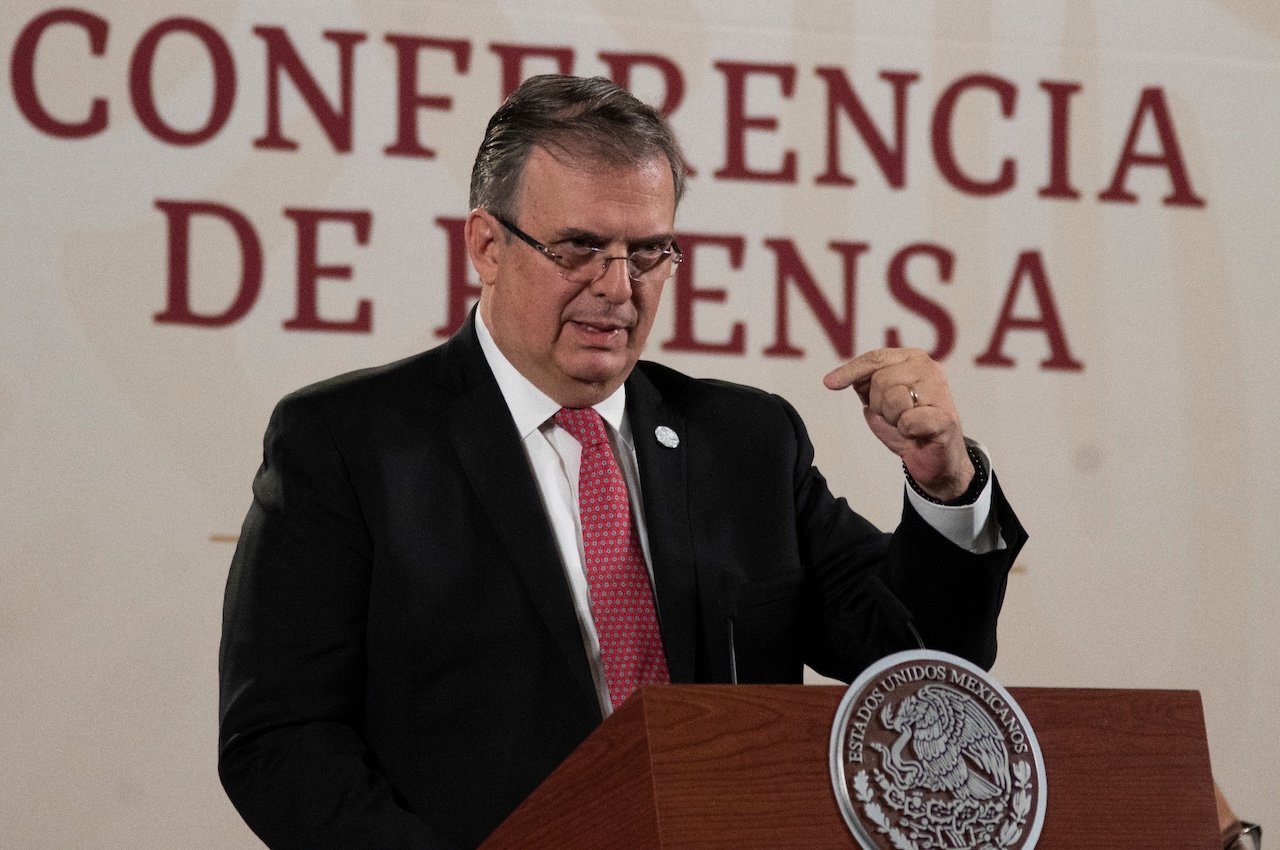
Marcelo Ebrard announces Mexico's Foreign Direct Investment will reach a record-breaking $41 billion by Q3 2025, surpassing growth expectations.
Marcelo Ebrard, Head of the Ministry of Economy, presented an economic outlook this Wednesday which, according to his own words, contains “four pieces of good news” for the country. In this regard, the Secretary announced that Foreign Direct Investment (FDI) by the third quarter of 2025 will reach almost 41 billion dollars, a historical record for a similar period. He also affirmed that this surpasses all growth expectations projected for the year. The country’s economic narrative shifted this year. Far from the deceleration some analysts anticipated for 2025, the flow of
showed a “positive surprise,” Ebrard stated during the conference led by President Claudia Sheinbaum.
Key Developments in Foreign Direct Investment by Q3 2025
- A 15% increase in total FDI compared to the same period in 2024.
- Extraordinary 218% growth in new investments, rising from 4.503 billion dollars to record levels.
- Dynamism in strategic sectors such as:
- Manufacturing (37%)
- Financial services (25%)
- Construction (5%)
- Strengthened export environment, with a 48% increase between 2020 and 2024. Ebrard emphasized that this inflow comprises both reinvestments of established capital and fresh capital, an indicator reflecting business confidence: “The pace of foreign investment demonstrates that investors worldwide are deciding to bet on Mexico to a greater extent than we had anticipated.”
Where Does Investment Come From, and Which Sectors Drive It?
The Ministry of Economy published a report in recent months providing a detailed overview of FDI performance during the first two quarters of the year. Key figures for the first half of the year indicate that:
- Mexico attracted 34.265 billion dollars, a 10.2% increase compared to the same period in 2024.
- This performance marks a historical high for the fifth consecutive year, consolidating a long-term trend aligned with the relocation of production chains (nearshoring).
- The composition of FDI was distributed as follows:
- 84.4% reinvestment of profits.
- 9.2% new investments.
- 6.4% intercompany accounts. While reinvestment showed a slight decline after several years of continuous growth, its share of the total remains dominant. In contrast, new investments soared by 246%, rising from 909 million dollars in 2024 to 3.149 billion dollars in 2025. This represents the largest growth recorded in 12 years.
Countries with the Highest Foreign Direct Investment in Mexico in 2025
In the analysis by country of origin, the United States remains the primary investment partner. However, the report revealed significant changes in the composition of foreign capital. These are the main findings:
- The United States accounted for 42.9% of total flows and increased its investments by 986 million dollars.
- Spain experienced an unprecedented rebound, rising from -219 million dollars in 2024 to 5.943 billion dollars in 2025.
- Canada reduced its participation by 657 million dollars.
- Germany also showed a decrease of 456 million dollars.
- Japan maintained constant levels.
- Together, the top five countries represented 73.3% of FDI in Mexico.
States Concentrating FDI
The geographical distribution of FDI also reveals structural trends in the country’s economic development:
- 79.2% of the total was concentrated in five federal entities.
- Mexico City leads significantly, with 56.4% of received investments.
- Capital directed to the capital increased from 14.184 billion to 19.312 billion dollars, a 36.2% rise.
- Nuevo León and the State of Mexico also showed increases of 31.6% each.
- Baja California, in contrast, experienced a 12.8% decline.
Manufacturing, Financial Services, and Construction Set the Nearshoring Trend
2025 reaffirms Mexico as an international hub for advanced manufacturing. Companies continue to integrate higher value-added processes, automation, and emerging technologies, strengthening the country’s competitiveness. FDI by sector was distributed as follows:
- 36% manufacturing (main driver of nearshoring).
- 26.7% financial services, driven by technology platforms and banking expansion.
- 7.6% construction, primarily industrial infrastructure.
- 7.2% mining, to supply global supply chains for auto parts, electromobility, and clean energy.
You can also read:
The post
first appeared on Líder Empresarial.
More Articles

IMMEX 4.0: What Changes is the Private Sector Proposing for Mexican Manufacturing?
Jul 7, 2026
Guanajuato Recognized for Industrial Policy and Investment Attraction
Jul 9, 2026

Middle East Conflict Brings Mexican Oil Closer to Japan
Jul 15, 2026
Emerging Technology Companies Growing in Querétaro
Jul 29, 2026
Mexico's Productivity Surges, Outpacing OECD Average According to New Report
Jul 7, 2026

KIA to Invest $649 Million in Mexico for Electric Vehicle Production: The Winning State
Jul 29, 2026