
Geopolitics Pressures Logistics Industry, Redefining Supply Chains
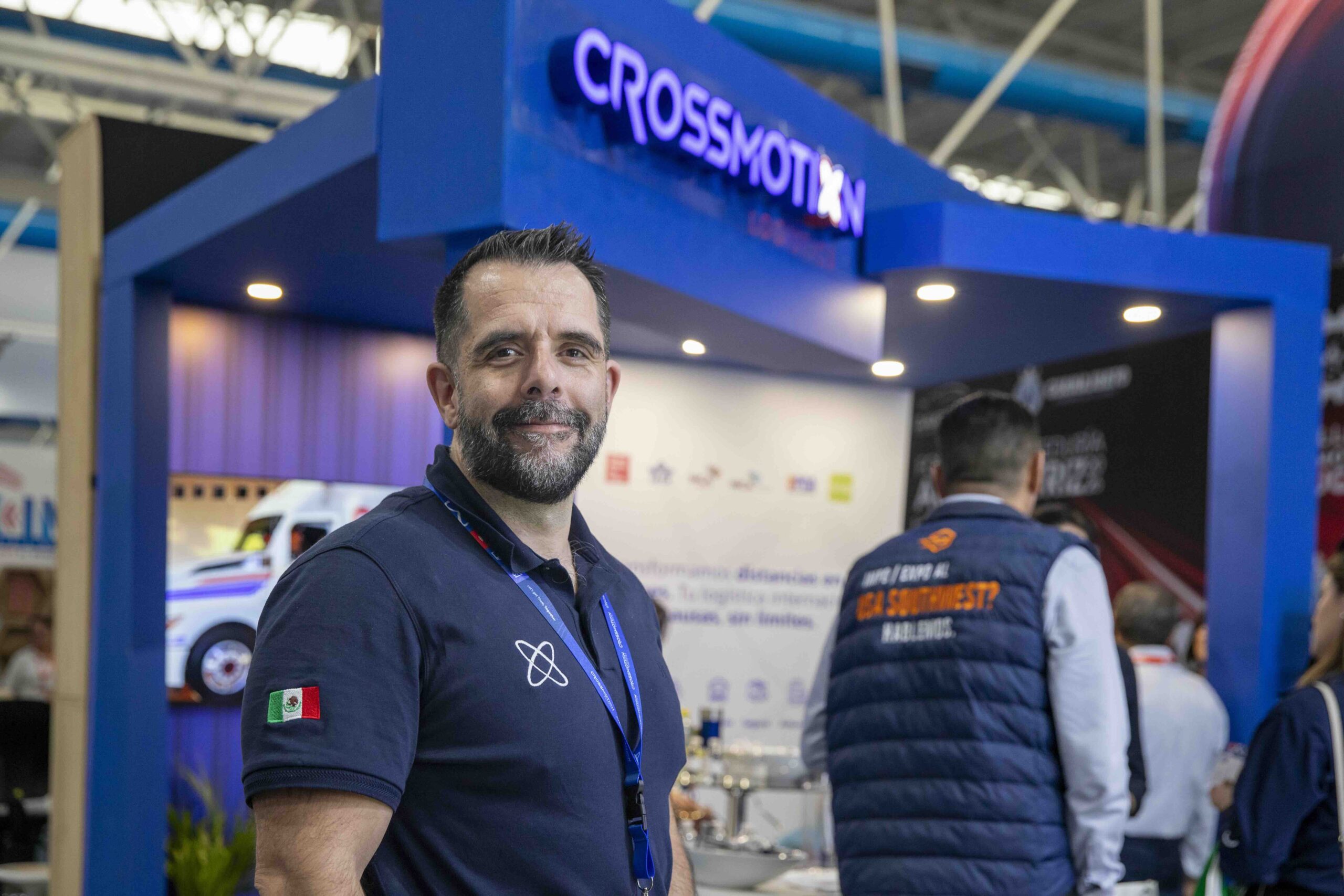
Geopolitical shifts are significantly impacting Mexico's logistics sector, forcing a re-evaluation of supply chain strategies, routes, and investments.
Geopolitics is already impacting Mexico’s logistics industry, extending beyond supply chains to alter routes, rates, maritime space, inventory, and investment decisions. This was explained by Mauricio Arredondo Ramón, CEO of CrossMotion, in an interview with Líder Empresarial during the
event held in Guanajuato. The executive noted that decisions made by national leaders directly affect the automotive sector. He also believes this phenomenon has intensified over the past two years.
International Decisions Reach Bajío Plants
CrossMotion provides land, sea, and air transportation services, in addition to warehousing, distribution, and logistics consulting. Its primary strength lies in imports, for which the company maintains agents in various regions worldwide. From this perspective, Arredondo Ramón explained that the main current challenge is not solely operational logistics. Geopolitical decisions are reshaping the conditions under which international trade operates. “Everything geopolitical is what we are facing,” stated the executive. In his view, Mexican logistics maintains well-studied processes but is now confronting external factors that are more difficult to control. The impact directly reaches the automotive industry. A change in Asia, a port, or a border can end up affecting production at a plant in Guanajuato.
Automotive Industry Prioritizes Service Over Price
For automotive companies, cost reduction is not always the primary priority. Arredondo Ramón explained that time and operational continuity can be more valuable than a low rate. The reason lies in the cost of halting a production line. According to the executive, an automotive plant can lose millions of dollars per minute when operations are interrupted. Therefore, companies must find a balance between price and reliability. In maritime transport, various rate structures exist, from market conditions to negotiated rates. However, an economical rate loses its appeal if it does not guarantee the required service. Consequently, companies must evaluate costs, transit times, routes, and availability before making decisions.
Climate Phenomena Also Disrupt International Routes
Logistical vulnerability increases when external phenomena coincide. Arredondo Ramón cited the example of two recent typhoons in Asia, which affected areas like Shanghai and Ningbo. Merchandise accumulation caused delays in departures. According to the interviewee, some shipments scheduled for one week ended up departing in the third week. When a critical part does not arrive on time, the automotive industry faces an immediate decision. The alternative may be to transport the goods by air to avoid halting a production line. Therefore, a regional disruption can generate additional costs thousands of miles away. Logistics needs to anticipate to reduce the impact on production operations.
Technology Enables Scenario Anticipation and Contingency Planning
In this scenario, information acquires greater strategic value. Arredondo Ramón explained that technological tools allow for earlier prediction of market behavior. This facilitates the development of Plan B, C, and D, based on different scenarios. Companies can evaluate favorable and adverse conditions before a disruption impacts their operations. The executive also recommended prioritizing certain goods during periods of uncertainty. This strategy allows for identification of which shipments require more attention and which can wait. Furthermore, planning must consider peak and off-peak seasons. An organized company can anticipate its needs and reduce exposure to international delays.
Redefined Maritime Routes Increase Transit Times and Reduce Space
One of the most significant impacts mentioned during the interview concerns the reconfiguration of maritime routes. Arredondo Ramón explained that shipping lines have modified their routes due to geopolitical conditions. This change forces certain vessels to undertake longer journeys. It also creates pressure on the availability of ships and containers. The consequence also reaches Mexico. According to the CEO of CrossMotion, the country has lost approximately 40% of its maritime shipping space. The executive attributed this reduction to commercial decisions by shipping lines, which seek to deploy their capacity in markets considered more profitable. Thus, Mexico faces a double challenge: longer transit times and reduced space availability. Both factors can increase costs for importers and exporters.
Route Profitability Also Redefines Priorities
Shipping lines need to monetize their services. Therefore, they may reallocate space to countries with better commercial conditions. Arredondo Ramón noted that this dynamic directly affects Mexico. The reduction in available space can complicate planning for automotive companies. Additionally, longer transit times necessitate inventory adjustments. Companies must decide whether to expedite purchases, use alternative routes, or resort to airfreight. Consequently, logistics is no longer just a transportation operation. It now also functions as a tool for managing geopolitical and financial risks.
Uncertainty Also Affects Investment Decisions
The impact of geopolitics does not stop at the ports. It also influences decisions of companies considering establishing new operations in Mexico. During the interview, Arredondo Ramón stated that legal and political uncertainty presents an obstacle to attracting new projects. The executive indicated that a significant portion of current investments comes from companies already present in Mexico. In contrast, new investments face greater unknowns. In his view, certainty could strengthen as the definition of the new North American trade framework progresses. However, the current context maintains caution among some investors.
Automotive Industry Faces Pressure from Competition and Technological Transformation
International uncertainty coincides with structural changes within the automotive sector. Arredondo Ramón highlighted the growing presence of Chinese manufacturers in various markets. The executive noted that these vehicles have improved in quality and technology. Furthermore, some models offer considerably lower prices compared to traditional brands. This competition also poses a challenge for established manufacturers in Mexico. Simultaneously, it alters the needs for supply, transportation, and inventory. The scenario is further complicated by the transition to electric and hybrid vehicles. Arredondo Ramón questioned the available infrastructure to support the accelerated growth of electric vehicles. To illustrate, he pointed out the difficulties a driver would face traversing routes between Aguascalientes, San Luis Potosí, Guadalajara, and Mexico City.
Automotive Market Also Faces Signs of Slowdown
International pressure occurs while some automotive companies adjust their operations. Arredondo Ramón mentioned closures, relocations, and cutbacks within the sector. He also recalled comments from business leaders regarding an approximate 20% reduction in vehicle sales compared to the previous year. This situation also affects inventory planning. When companies reduce their demand forecasts, suppliers must adjust purchases, production, and transportation. Therefore, logistics needs to adapt quickly. An efficient chain must respond to both international disruptions and sudden drops in demand.
The Automotive Supply Forum Strengthens Business Connections
For CrossMotion, events like the Automotive Supply Forum 2026 help address some of these challenges through networking. Arredondo Ramón explained that this year the company found more suppliers and potential clients. Therefore, their participation aims to develop both sides of the business relationship. Networking becomes especially relevant in an environment where companies require greater flexibility. Having reliable suppliers can facilitate rapid responses to disruptions. “We come for both: to develop suppliers and to develop clients,” the executive explained. He also emphasized that having suppliers can account for up to 70% of closing a sale, based on his experience within the company.
Logistics Faces a New Global Reality
CrossMotion’s analysis shows that logistical challenges are no longer exclusively dependent on roads, ports, or transportation availability. Geopolitics, international trade, climate, technology, competition, and investment decisions now form part of the same landscape. For Mexico, the challenge is particularly relevant due to the weight of the automotive industry. Guanajuato and the Bajío region concentrate plants, suppliers, and logistics corridors connected to international markets. Consequently, companies need to anticipate scenarios, diversify alternatives, and maintain updated information. They also require suppliers capable of responding quickly to unexpected changes.
You might also be interested in:
The article
first appeared on Líder Empresarial.
More Articles

Nuevo León Achieves 75% Reduction in Extreme Poverty: How Social Indicators Improved
Aug 26, 2026

Trump Raises Tariffs on Canadian Autos and Steel: Implications for Mexico and USMCA
Aug 24, 2026

2027 Economic Package: Coparmex Jalisco's Proposal to Drive State Growth
Sep 8, 2026

Manufacturing Sustains Employment in Nuevo León: Which Sectors Drove Growth?
Sep 2, 2026

Dollar, Gold, and Oil Prices Mark Opening of Financial Markets Today
Aug 24, 2026

Canada's Tariffs on US Goods Take Effect Today: What's the Impact on Mexico?
Sep 8, 2026