
Guanajuato: The Map of Giants Sustaining Employment in the State
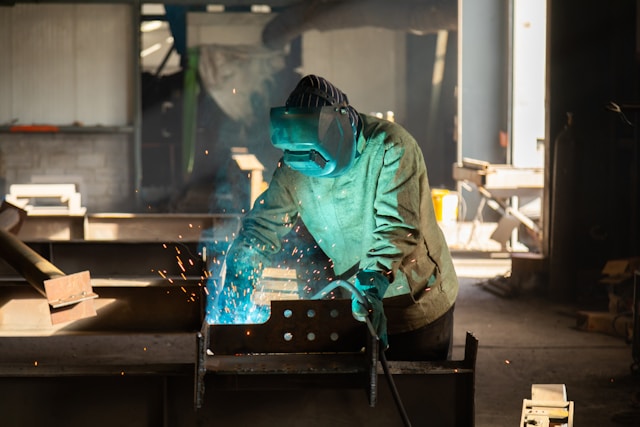
Guanajuato is Mexico's 5th economic engine, driven by an industrial corridor, nearshoring, and major employers. Discover the companies sustaining over 40K jobs.
Guanajuato begins the first part of 2026 as Mexico’s fifth economic engine, featuring an industrial corridor that integrates advanced manufacturing, financial services, and strategic logistics. León, Silao, Salamanca, Celaya, and Apaseo el Grande form the productive core where companies operate, sustaining over 40,000 direct jobs in the state. In an international context defined by nearshoring and the regionalization of production chains in North America, the entity positions itself as a structural hub within the USMCA, combining foreign investment, local capital, and technical specialization.
The Automotive Core: Guanajuato’s Industrial Employment Backbone
The automotive sector represents the primary generator of large-scale employment in Guanajuato, integrating assembly processes, auto parts, and specialized supply.
Industrial Giants – Estimated Jobs
| Company | Jobs | Location | Strategic Relevance |
|---|---|---|---|
| General Motors | 8,000 | Silao | Leading industrial employer; exports to the United States |
| Mazda | 5,300 | Salamanca | Pillar of the southern state; high export component |
| Honda | 4,700 | Celaya | Precision manufacturing and regional supply chain |
| Toyota | 3,450 | Apaseo el Grande | Expansion with a $1,114 million USD investment |
| Pirelli | 2,900 | Silao | Premium tires for export |
Toyota’s recent expansion, with an accumulated investment exceeding $1.1 billion USD, reinforces the transition towards more efficient platforms and strengthens integration with local Tier 1 and Tier 2 suppliers. According to the Organization for Economic Cooperation and Development, Mexico is one of the primary beneficiaries of industrial relocation in North America, particularly in automotive manufacturing.
Guanajuato Corporates: Financial Stability and Professional Employment
Beyond manufacturing, Guanajuato sustains its economy on native companies that provide roots, stability, and professional-profile employment.
Local Corporates – Estimated Jobs
| Company | Jobs | Sector | Impact |
|---|---|---|---|
| Banco del Bajío | 5,000+ | Financial | Leading corporate employer in the state |
6,000|Footwear|National leader in the leather-footwear sector Charly|3,500|Sports Retail|Expansion in marketing and sports sponsorship
Banco del Bajío facilitates regional business financing, while Grupo Flexi and Charly represent the evolution of traditional sectors towards proprietary brand models and international commercialization. The World Bank has indicated that regions combining export manufacturing with robust financial services demonstrate greater resilience to adverse economic cycles, a characteristic that defines the state.
Productive Diversification and Strategic Logistics in Guanajuato
Growth is not limited to the automotive sector. Global companies in food, personal care, and specialized manufacturing operate in the state, many within Guanajuato Puerto Interior, considered Latin America’s most important dry port.
Other Relevant Sectors – Estimated Jobs
| Company | Jobs | Sector | Relevance |
|---|---|---|---|
| Ferrero | 2,200 | Food | Logistics center for Mexico and Central America |
| Beiersdorf | 600 | Personal Care | Mass production of Nivea for export |
Diversification reduces sectoral dependency and strengthens the industrial ecosystem of the Bajío region.
Investment and Outlook for Guanajuato
- $3,511 million USD in accumulated recent investment.
- 11,000 jobs generated during the current administration.
- 59 projects in the pipeline.
- Projection of 14,140 additional jobs in the short term.
The automotive sector accounts for 63% of the investment, followed by new technologies and general industry (16% each), and agri-food (5%). The United Nations Conference on Trade and Development positions Mexico as one of the most attractive destinations for industrial investment in Latin America, particularly due to its commercial integration with the United States.
Talent and Competitiveness: The Next Challenge
The growth of these companies demands highly specialized human capital in mechatronics, automation, and artificial intelligence. Technical universities in the state have increased enrollment in engineering programs to meet this demand. The article
first appeared in Líder Empresarial.
More Articles

Does Market Volatility Affect Today's Dollar Price? Here's How It Trades
Mar 24, 2026
Querétaro Boosts its IMMEX Industry: Over 119,000 Jobs
Mar 24, 2026

Weekend Snapshot: Critical Updates for the Business Sector
Mar 30, 2026

The Trophy Tour Arrives in Monterrey: The 2026 World Cup Trophy Exhibited at BBVA Stadium
Mar 15, 2026

The Most Important Weekend News from Mexico and Around the World
Mar 17, 2026

Querétaro: Over 300 IT Companies and a Robust Digital Technologies Cluster
Mar 24, 2026