
How Does the Global Corn Supply Affect Bajío Producers?
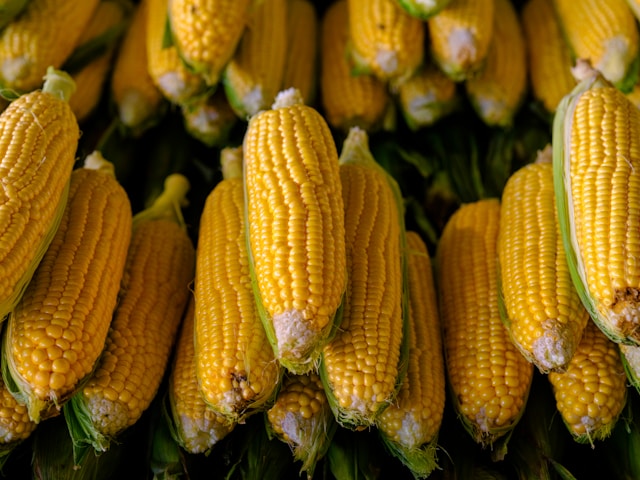
Guanajuato's corn market faces depressed prices in 2026 due to local inventory saturation and a global oversupply, particularly from a record US harvest, challenging Bajío producers.
The corn market in Guanajuato begins 2026 under critical adjustment conditions, with depressed prices and tension in the commercialization of white and yellow corn. The situation combines local factors —such as producers’ resistance to selling at low prices and inventory saturation— with a global context marked by a record corn harvest in the United States and an abundant international supply. According to official figures from the State Agricultural Information System, Guanajuato registered a corn production of 1,762,462 tons in recent years, positioning itself among the main corn-producing states in the country and contributing approximately 6.4% of the national grain production.
Production and Key Regions in Guanajuato
Corn production in Guanajuato is concentrated in municipalities with a consolidated agricultural tradition. According to agri-food sector sources and regional data, the municipalities with the highest productive contribution are Pénjamo, San Felipe, Abasolo, Salamanca, and Irapuato, where rainfed and irrigated lands are combined. On average, about 67% of the planted area is rainfed, while the rest operates under well-established irrigation systems, though both face climatic variability and rising production costs. Corn cultivation is not only productive but also an economic driver for the state: it supports approximately 60,000 productive units and contributes over 5 billion pesos annually in gross production value, according to sectoral estimates.
Price Dynamics: Volatility and Government Support
In 2025, despite incentive agreements and minimum price floors, the local market has suffered persistent downward pressure. According to INEGI, theoretical reference prices at the close of 2025 registered levels around 5,400 to 5,500 pesos per ton, figures considered low compared to production costs and market expectations. In response, both the federal and state governments implemented economic incentives, consisting of a total support of 950 pesos per ton (800 federal pesos and 150 state pesos), aimed at small and medium producers to cushion the price drop and mitigate losses from prolonged grain storage. However, the combination of depressed international prices and the cost of maintaining inventories has led to warehouse saturation and risks associated with spoilage or storage costs in the medium term.
Global Market in 2026: Record Supply and Price Impact
The pressure on local prices cannot be decoupled from the global context. According to reports from the United States Department of Agriculture (USDA), corn production in that country for the 2025-2026 cycle reached historical levels, with an estimated harvest significantly above previous years, which has generated a surplus grain supply. The combination of robust global supply and depressed international prices translates into a challenging environment for Bajío producers, particularly when competing with imported grain that arrives in Mexico at more competitive price conditions, a situation that has been documented in agricultural trade analyses.
Short-Term Impacts and Response
This market adjustment has broad implications:
- Producer resistance to selling grain, as they seek prices that cover production costs and maintain economic viability.
- Inventory saturation in warehouses, which increases the risk of losses and logistical costs.
- Pressure on agricultural public policies, which aim to balance incentives with fiscal sustainability and the price stability of basic inputs. The promotion of mechanisms like the Mexican Corn System, designed to generate more stable and transparent reference prices, responds to these challenges, reducing dependence on intermediaries and contributing to better commercial planning.
Outlook for 2026
Looking ahead to the rest of 2026, the sector’s attention is focused on several key factors:
- Stabilizing climatic conditions, with forecasts of a neutral phase that could favor agricultural yields after years of water variability.
- Increased use of agricultural contracts, which offer price and volume certainty to producers and buyers.
- Weekly price monitoring, which the Secretariat of Agri-food and Rural Development (SDAyR) keeps updated as a reference for commercial decision-making.
The current corn situation in Guanajuato reflects the intersection between a global market with abundant supply and a local market struggling to maintain
for its producers. With saturated warehouses and public incentives as mitigators, the main challenge for 2026 will be to balance production, commercialization, and the economic resilience of farmers, in an environment where external factors —such as large harvests in the U.S.— continue to determine price behavior and commercial decisions. The entry
More Articles

Supply Chain Security: How Can Companies Prepare for Emerging Risks?
Aug 24, 2026

40-Hour Workweek in Mexico: Lessons from Spain, Colombia, the US, and Chile
Sep 8, 2026

Nuevo León Achieves 75% Reduction in Extreme Poverty: How Social Indicators Improved
Aug 26, 2026

Canada's Tariffs on US Goods Take Effect Today: What's the Impact on Mexico?
Sep 8, 2026

Mexico's GDP Grows 1.4% in the Second Quarter of 2026
Aug 24, 2026

COMCE 2026 Congress: How Will It Boost Nuevo León's Foreign Trade?
Sep 2, 2026