
Do Mexican Companies Truly Innovate?
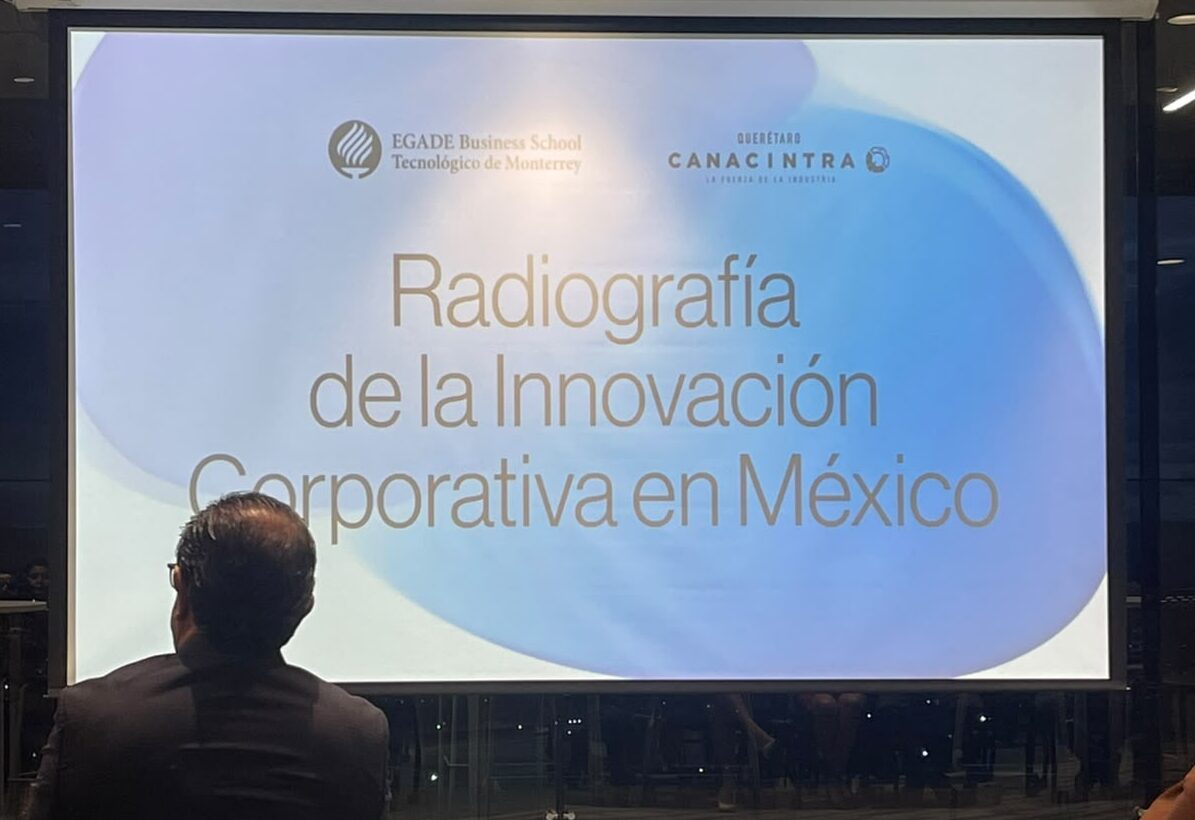
A new study from EGADE Business School reveals mixed results on corporate innovation in Mexico, highlighting gaps in resources and talent despite advancements in structure and culture.
Querétaro hosted the presentation of the “Radiography of Corporate Innovation in Mexico 2026,” a study by EGADE Business School that analyzes how companies translate their innovation capabilities into business results. The research was presented on September 30th at the
by Cristian Granados, professor in the Department of Entrepreneurship and Technological Innovation at EGADE Business School and co-author of the study. The event included a business panel and the signing of an agreement between EGADE Business School and CANACINTRA Querétaro.
The radiography, developed with support from Oracle, surveyed 87 medium and large enterprises. The diagnosis found progress in innovation structures and culture, but also identified gaps in resources, processes, tools, and specialized talent.
How is Corporate Innovation Measured in Mexico?
The study analyzes innovation as a system composed of three pillars. The objective is not solely to measure how many initiatives a company develops, but what conditions it has to execute them and what results it achieves.
The methodology considers:
- Enablers: Culture, resources, and structure.
- Mechanisms: Processes, strategy, and tools.
- Results: Impact, financial performance, market leadership, and legitimacy.
The enablers received an average score of 4.1 out of 7. Structure scored 5.1 and culture, 5.0, while resources registered 2.1.
Four Profiles of Innovative Companies
The research classified organizations based on the relationship between their capabilities, management mechanisms, and results:
- Leading Innovators (15%): Combine developed capabilities, efficient mechanisms, and superior results.
- Frugal Innovators (15%): Achieve high results with more limited structures and resources.
- Sleeping Giants (34%): Possess capabilities and structures but do not obtain proportional results.
- Lagging Innovators (36%): Show more modest efforts, with less structure and limited results.
This distribution shows that seven out of ten companies analyzed fall into the “sleeping giants” and “lagging innovators” categories. This finding indicates that simply having more resources does not, by itself, guarantee the capacity to innovate.
Having Resources Does Not Guarantee Results
The “sleeping giants” represent one of the study’s key contrasts. These are companies that have built capabilities, allocated resources, and formalized strategies but struggle to transform this infrastructure into proportional results.
The radiography proposes a series of elements that allow for evaluating innovation beyond the quantity of projects:
- Connection of initiatives with strategic problems.
- Capacity to allocate resources to opportunities.
- Speed in generating and applying learnings.
- Scaling of solutions with business potential.
- Conversion of innovation activities into tangible results.
What Insights Does This Offer for Querétaro Businesses?
The presentation at BLOQUE also brought together David Pineda, Director of the Product Development Center at Aumovio Querétaro; Raúl Méndez, General Director of Martinea Querétaro; Martijn Vriesinga, Country Manager at AWETA; Fernando Moya of EGADE Business School, as moderator; and Alfredo Sahagún, President of CANACINTRA Querétaro.
Although the event took place in the state, the results correspond to a national sample and do not represent a diagnosis of Querétaro’s companies specifically. However, the methodology provides a framework for local companies to review how they are managing their own innovation efforts.
The report points out that activities such as hackathons, agile methodologies, committees, or technology adoption gain value when they help solve strategic problems, accelerate learning, allocate resources, and scale solutions.
For companies in Querétaro, the discussion presented at BLOQUE shifts the focus to concrete measurement: what business results are being generated by the resources and structures they are already allocating to innovation.
The post
first appeared on Líder Empresarial.
More Articles
New Automotive Company to Formalize Investment in San Luis Potosí Soon
Sep 23, 2026

How Did the Employed Population of San Luis Potosí Change Between 2020 and 2025?
Sep 30, 2026

Aeroméxico Under Investigation for Potential Data Breach: What Information Is at Risk?
Sep 21, 2026

Guanajuato Ranks in the Top 5 for the Meetings Industry: What Strengthens Its Position?
Sep 14, 2026

COMCE 2026 Congress: How Will It Boost Nuevo León's Foreign Trade?
Sep 2, 2026

DiDi Food Launches Gastronomic Guide: What It Is and How It Will Help Consumers
Sep 29, 2026