
Beyond Capital: A Deep Dive into Industrial Success in Nuevo León
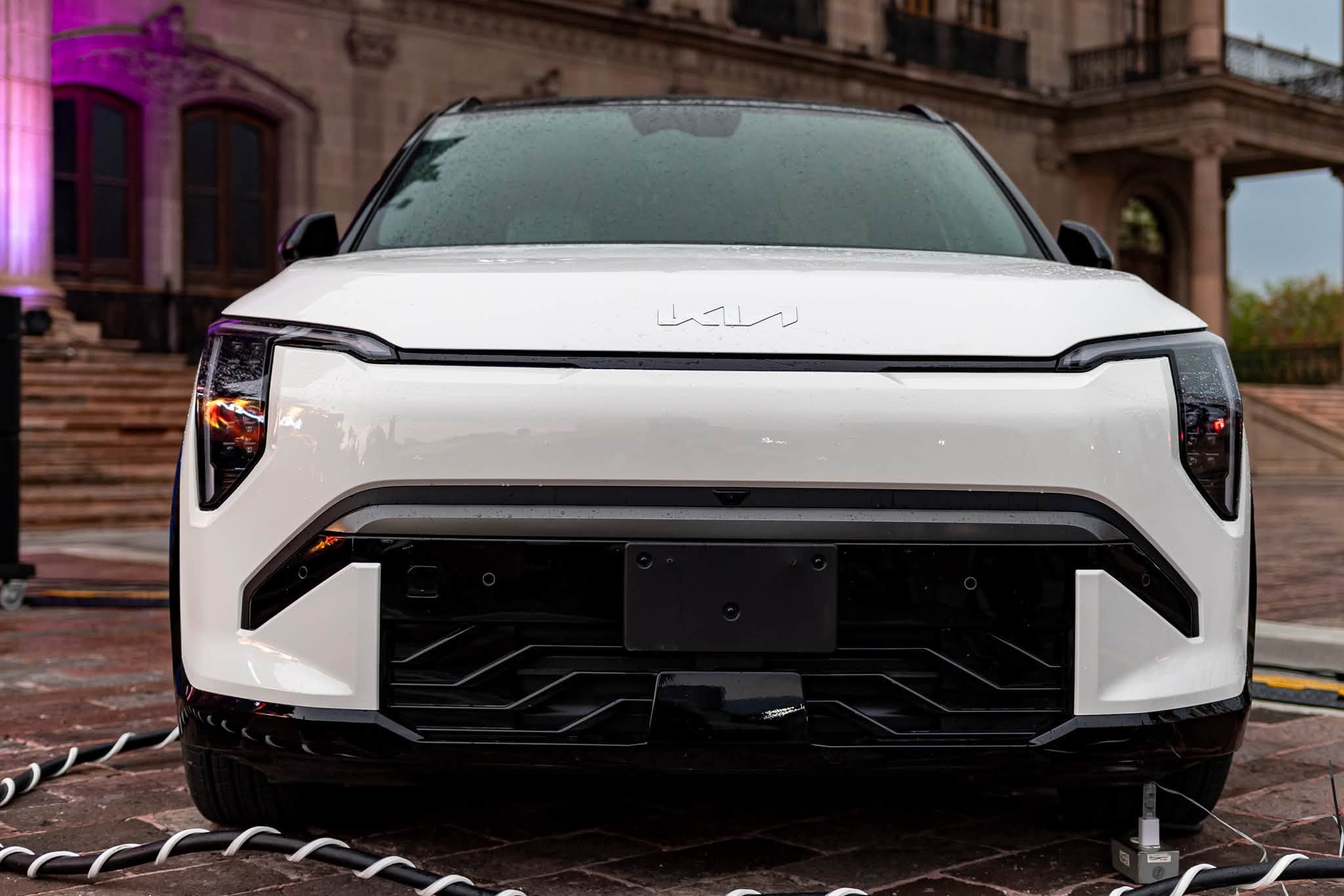
KIA's $649 million investment in electric vehicle production in Nuevo León signifies a new era for Mexican manufacturing, focusing on advanced technology and sustainability.
Beyond Capital: A Deep Dive into Industrial Success in Nuevo León
The Mexican automotive industry has officially entered a new phase. South Korean automaker KIA has announced a $649 million investment to produce the KIA EV3, the brand’s first all-electric vehicle assembled in Mexico, at its plant in Pesquería, Nuevo León. This announcement represents far more than just the manufacturing of a new model. It encompasses several key drivers transforming global manufacturing today: nearshoring, regional integration under the USMCA, industrial decarbonization, national supplier development, energy infrastructure, and highly specialized talent.
For Nuevo León, this news confirms a strengthening trend over recent years: major automakers are no longer just establishing production facilities in the state; they are now transferring more complex, higher value-added technological processes.
Deep Dive 1: The Announcement Reshaping Electromobility in Mexico
Up to this point, the KIA EV3 was exclusively manufactured in South Korea. With this decision, Mexico becomes the second country where the automaker will produce this electric vehicle, and Nuevo León will house the model’s first production line outside the Asian market. Production is slated to begin on August 4, 2026, following the adaptation of a specialized line within the Pesquería industrial complex. For the national industry, this project signifies Mexico’s evolution from solely an exporter of combustion engine vehicles to also becoming a manufacturing hub for electric vehicles.
Deep Dive 2: The $649 Million Investment Goes Beyond Car Manufacturing
The announced investment is allocated across various strategic fronts. Not all capital will be dedicated solely to EV3 production. It also includes infrastructure to enhance operational efficiency and sustainability.
| Project | Scope |
|---|---|
| EV3 Production | First KIA electric vehicle line in Mexico |
| Solar Park | Initial 2 MW, growing to 8 MW by 2030 |
| Water Reuse | Second treatment plant with 70% water reclamation |
| Electrical Infrastructure | National charging network for electric vehicles |
| Industrial Modernization | Adaptation of manufacturing lines and new technological processes |
This strategy aligns with KIA’s global model for reducing emissions and advancing towards industrial operations with a lower environmental footprint.
Deep Dive 3: Why Did Nuevo León Win This Investment Again?
For years, Nuevo León has been building one of the most robust manufacturing ecosystems in North America. Today, it concentrates:
- Over 300 automotive companies
- A solid network of Tier 1 and Tier 2 suppliers
- Universities with specialized automotive engineering programs
- Logistics infrastructure connected to the United States
- Experience in export manufacturing
Deep Dive 4: The Real Bet is on Mexican Suppliers
Secretary of Economy, Marcelo Ebrard, confirmed that the EV3 will launch with 27% national content. While this may seem like a moderate percentage, it represents one of the primary industrial challenges for the coming years. The goal will be to progressively increase the participation of Mexican companies in the vehicle’s manufacturing. This will open opportunities for national manufacturers of:
- Electronic components
- Batteries
- Thermal systems
- Metal parts
- Specialized plastics
- Automotive software
- Advanced logistics
Deep Dive 5: The Pesquería Plant in Nuevo León is Already a Global Benchmark
The expansion comes just days after the plant received a major international accolade. The complex earned the Gold Plant Quality Award 2026, presented by J.D. Power. This award recognizes the plant with the lowest manufacturing defect rates in the Americas region. This recognition strengthens the corporation’s confidence in assigning new projects with high technological content.
Deep Dive 6: Labor Impact Extends Beyond Announced Jobs in Nuevo León
KIA has confirmed that the project will generate:
- 500 direct jobs during 2026.
- An additional 1,500 jobs between 2027 and 2030.
However, the impact will be significantly greater. Currently:
- The plant employs 2,600 workers.
- Approximately 85,000 people are directly and indirectly involved in its supply chain.
- KIA’s complete operation in Nuevo León has already accumulated nearly $4 billion in investment.
- It generates approximately 16,000 direct jobs across all its operations.
Each new model incorporates additional processes in engineering, logistics, quality, automation, and technological development.
Deep Dive 7: Electromobility Also Means Infrastructure
The commitment doesn’t end when the vehicle rolls off the production line. KIA has announced the creation of the brand’s first national electric charging network. The project includes:
- Public charging stations
- Mobile solutions
- Vehicle-to-vehicle energy transfer
- Strengthening of national infrastructure for electric vehicles
This addresses one of the main challenges in the Mexican market: expanding the charging network to accelerate the adoption of electric cars.
Deep Dive 8: An Investment Aligned with Global Trends
The arrival of the EV3 coincides with a favorable international environment for Mexico. Various organizations support the country’s positioning as a destination for advanced manufacturing projects:
| Organization | Strategic Indicator |
|---|---|
| UNCTAD | Mexico remains among the world’s top recipients of Foreign Direct Investment, with annual flows close to $41 billion. |
| CEPAL | Mexico ranks first in Latin America in attracting investments related to electromobility. |
| Kearney | The country rose to 19th place in the Global Foreign Direct Investment Confidence Index. |
| USMCA | The regionalization of supply chains has driven higher national content in automotive manufacturing. |
These indicators help explain why global manufacturers continue to shift strategic projects to Mexico, even amidst an international context of trade adjustments.
Deep Dive 9: The Next Challenge: Turning Nuevo León into the Silicon Valley of Mobility
During the project’s presentation, Governor Samuel García announced that the state will develop a new 220-hectare industrial hub opposite the KIA plant. The intention is to concentrate specialized electromobility suppliers within a single industrial corridor. If realized, Pesquería could evolve from an automotive plant into a complete ecosystem of innovation, advanced manufacturing, and technological development. This strategy aims to reduce logistics times, increase regional content, and attract new high value-added investments.
What Does This Investment Mean for Nuevo León?
Beyond the financial figures, KIA’s expansion signals the future of manufacturing in Mexico. The production of the EV3 confirms that next-generation investments are no longer limited to increasing installed capacity. They now encompass research, automation, sustainability, digitalization, and more integrated supply chains.
For Nuevo León, the announcement reinforces a position built over decades: an ecosystem capable of attracting complex projects thanks to its infrastructure, supplier network, and, above all, its specialized human capital. In a global context of increasingly intense competition for investment, the arrival of the first KIA electric vehicle manufactured in Mexico solidifies the state as one of the primary laboratories for the transition to electromobility in North America.
The entry
appears first on Líder Empresarial.
More Articles

The Cost of the Super Peso for Jalisco's Exporting Companies
Aug 25, 2026
Manufacturing Sustains Employment in Nuevo León: Which Sectors Drove Growth?
Sep 2, 2026

Apple Event 2026: Launches, Innovations, Pricing, and More
Sep 9, 2026

Mexico's GDP Grows 1.4% in the Second Quarter of 2026
Aug 24, 2026

Mexican Peso Gains Ground: What is the Dollar Price Today, September 15?
Sep 15, 2026

Trump Raises Tariffs on Canadian Autos and Steel: Implications for Mexico and USMCA
Aug 24, 2026