
Financial Markets Start the Week Amidst Caution and Optimism: Oil and Dollar Set the Global Pulse
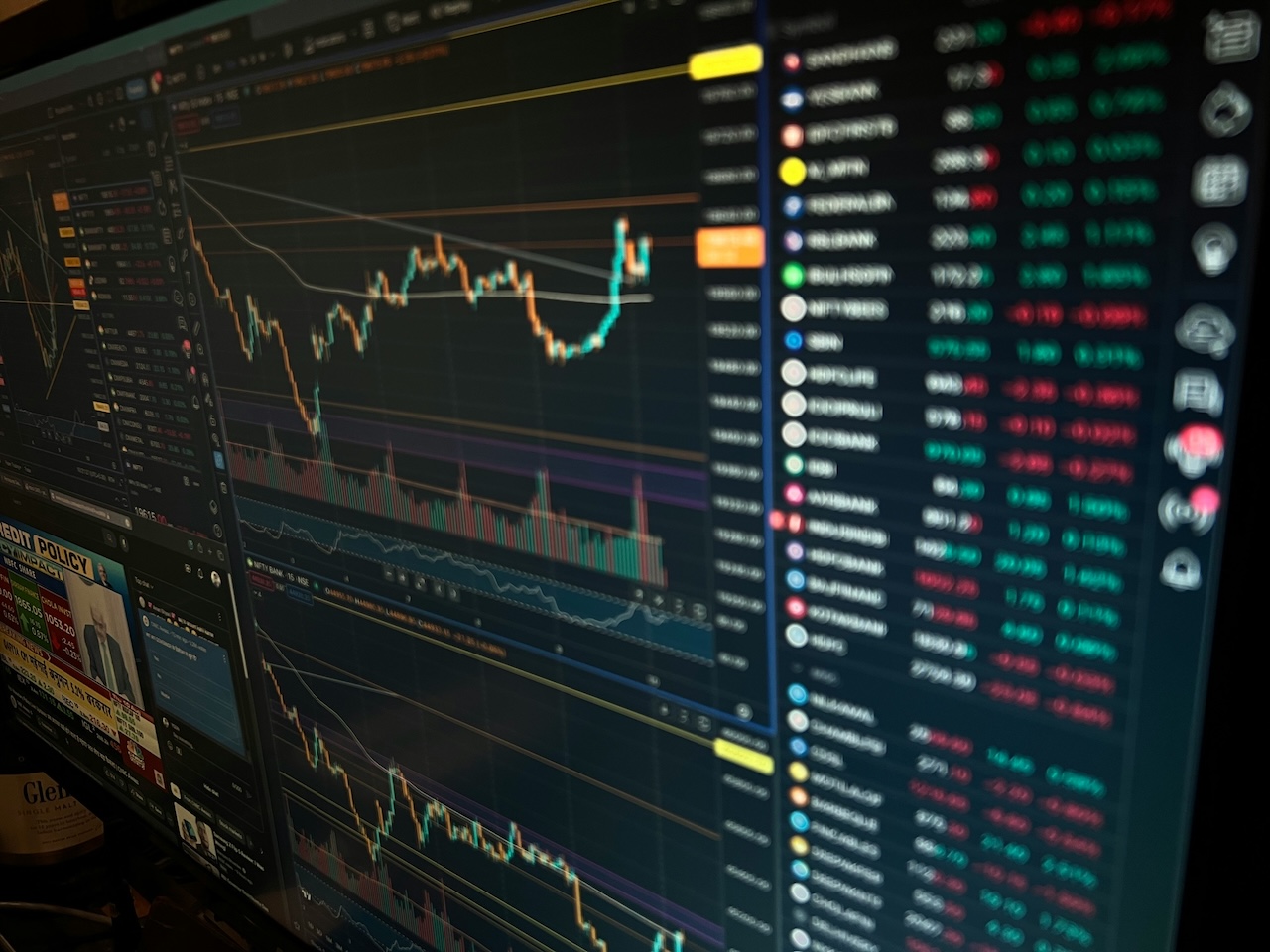
Financial markets open the week with mixed signals, influenced by Middle East tensions, economic indicators, and the performance of oil and the US dollar.
Financial markets kicked off the week with a mixed tone, in a session marked by investor caution due to persistent geopolitical tension in the Middle East and anticipation of new economic indicators. While European stock markets showed limited movement, Wall Street anticipated a positive opening, and oil prices rebounded again due to uncertainty about global energy supply. The week’s start reflects the delicate balance facing markets: on one hand, partial relief from diplomatic overtures between the United States and Iran; on the other, fear that any new episode of tension could once again disrupt supply chains, inflation, and the behavior of
In this context, investors are also keeping a close eye on the strength of the dollar, the performance of the Mexican peso, and the evolution of the technology sector, which is attempting to recover some of the ground lost last week.
European Stock Markets and Wall Street Open the Week with Mixed Signals
Europe’s main stock exchanges began Monday’s session without a clear direction. The Euro Stoxx 50 index remained virtually unchanged, while Germany’s DAX registered a slight advance of approximately 0.27%. In contrast, Spain’s Ibex 35 started the day with a decline of about 0.45%.
The picture in European markets reflects a sentiment of prudence. Traders are avoiding aggressive bets as they await greater clarity on the international outlook and the release of new economic indicators in the region.
Key data points drawing attention include:
- Inflation in Spain.
- Consumer confidence in the Eurozone.
- The evolution of the conflict between the United States and Iran.
- Expectations regarding international monetary policy.
Meanwhile, Wall Street futures offered a more optimistic outlook. Prior to the opening, S&P 500 contracts were advancing around 0.7%, while Nasdaq 100 futures were up nearly 1%, primarily driven by the recovery of the technology sector.
Analysts believe the US market maintains better short-term prospects due to the strength of its economy and the expectation that technology companies will continue to lead stock market growth in the second half of the year.
However, volatility remains present, and any shift in the geopolitical landscape could quickly alter investor sentiment.
Middle East Keeps Investors on Alert
One of the primary factors influencing market behavior continues to be the conflict between the United States and Iran. Over the weekend, both nations engaged in new cross-border attacks, reigniting uncertainty about the stability of the provisional peace agreement reached weeks ago.
Although various reports indicate that representatives from both countries are expected to hold diplomatic talks in Doha, Qatar, this week, specialists believe that numerous unresolved issues still exist.
Among the matters that remain open are:
- The future of Iran’s nuclear program.
- Control of the Strait of Hormuz.
- Political stability in Lebanon.
- International energy security.
The Strait of Hormuz, in particular, continues to be a major focal point of concern for markets, as a significant portion of the world’s oil supply passes through this maritime route. During the most intense days of the conflict, maritime traffic suffered temporary disruptions, increasing fears of potential interruptions in the global crude supply.
Although traffic subsequently began to normalize, the new clashes recorded over the weekend reintroduced some uncertainty into international markets. Specialists agree that geopolitical risk will continue to be a major factor capable of altering stock market behavior in the coming weeks.
Oil Recovers Ground Amid New Risks to Global Supply
The most evident reaction to the conflict was once again observed in the energy market. Brent crude oil futures were up around 1%, trading at approximately $72.5 per barrel, while West Texas Intermediate (WTI) hovered around $70.
The rebound occurs after both contracts accumulated losses exceeding 10% in the previous week, when investors bet on a decrease in geopolitical tensions.
The price recovery is primarily attributed to three factors:
- The possibility of further supply disruptions.
- The fragility of the diplomatic agreement between Washington and Tehran.
- Uncertainty about the speed at which oil flow could fully normalize.
Various analysts believe the market may be underestimating the risks that global crude supply still faces. While the normalization of traffic through the Strait of Hormuz helped reduce the risk premium in recent days, any new episode of tension would have the capacity to drive oil prices up again.
This behavior also keeps central banks under surveillance, as a sustained increase in crude oil prices could translate into greater inflationary pressures globally.
Mexican Peso Starts the Week Under Pressure
In the foreign exchange market, the dollar opened this Monday at around 17.50 pesos per unit, while the reference exchange rate published by the Official Gazette of the Federation stood at 17.47 pesos.
The average observed at bank tellers showed a quotation close to:
- Buy: 17.11 pesos.
- Sell: 17.74 pesos.
The performance of the Mexican peso continues to be influenced by various international factors, including:
- The strength of the US dollar.
- Expectations regarding US interest rates.
- The evolution of international oil prices.
- Geopolitical uncertainty in the Middle East.
You might also be interested in:
The entry
appears first on Líder Empresarial.
More Articles

Aguascalientes Achieves Strongest Start to the Year in Foreign Investment in Nine Years
Jun 2, 2026

Why Greenwashing is a Risk for Mexican Companies and What is Changing
Jun 1, 2026

ITESO: Informality as a Driver of Growth in Jalisco
Jun 17, 2026

Nissan Develops Quantum Algorithm That Could Reduce Aerodynamic Simulations from Days to Minutes
Jun 1, 2026

Querétaro Businesses Report Increased Foot Traffic Due to World Cup
Jun 15, 2026

Less Alcohol, Healthier Snacks, and Rational Purchases: Gen Z's Strategy
Jun 12, 2026