
Why Greenwashing is a Risk for Mexican Companies and What is Changing

ESG is no longer just a reputational tool in Mexico; it's a financial and regulatory imperative.
The ESG (Environmental, Social, and Governance) agenda has ceased to operate solely as a reputational tool for Mexican companies. Today, it functions as a financial, regulatory, and capital access variable, particularly for issuers, exporters, global supply chain providers, construction firms, financial institutions, and industrial companies.This is understandable. Experts from Universidad Panamericana point out that the gap between what companies say and what they do in this area—or greenwashing—now represents a significant financial risk, as investors demand verifiable evidence.## What is Changing in the ESG Agenda GloballyThe main change follows a real trend where sustainability is currently linked to three key business decisions: reporting, financing, and competing. This means clear, tangible actions and the disclosure of results are required, not just a slogan.In this context, IFRS S1 and S2 standards have emerged—for the disclosure of sustainability-related financial information and climate-related financial information—which are effective for annual periods beginning on or after January 1, 2024. Together, they aim to have companies disclose sustainability risks and opportunities useful to investors.Meanwhile, in Europe, the Corporate Sustainability Reporting Directive (CSRD) mandates that allied companies report under the European Sustainability Reporting Standards, elevating information to the level of formal corporate reporting.Read alsoThe change is also advancing in Mexican companies. The Mexican Financial Reporting Standards Board (CINIF) issued Sustainability Reporting Standards in May 2024, effective January 1, 2025, which establish guidelines for disclosing ESG metrics under IFRS parameters. Furthermore, for issuers in Mexico, the Mexican Stock Exchange (BMV) already publishes disclosures under IFRS S1-S2, as seen with Grupo Bimbo and other issuers.## It’s No Longer Just Reputation, It’s Market PermanenceReporting equates to market competitiveness, as what is currently at risk goes beyond consumer loyalty, impacting the cost of capital, investor access, supply chain permanence, and regulatory compliance.A company that does not measure emissions, climate risks, water consumption, governance, or social impacts may be excluded from tenders, financing, or regulated markets.The financial market confirms this pressure. Although sustainable funds faced net outflows in 2025, Morningstar Inc. reported that global assets in sustainable funds reached approximately $4.13 trillion by the end of December 2025, demonstrating that ESG remains integrated into the global financial architecture.## Green Bonds and Sustainable Debt in MexicoMexico also reflects this transformation in the debt market. The Ministry of Finance and Public Credit (SHCP) reported that from 2015 to May 2024, 207 thematic bonds were issued in the country; 67% were sustainable or sustainability-linked, 16% green, and 0.5% blue.For its part, the BMV reported in April 2025 that sustainable financing in its market exceeded 400 billion pesos, with 49 sustainable bonds, 35 linked to sustainability objectives, and 24 green bonds.Additionally, BIVA maintains a specific section for ASG (ESG) issuances, classified as green, social, sustainable, and sustainability-linked bonds.Recent cases show that this market is already financing concrete projects. Vinte placed green bonds worth 2.5 billion pesos on BIVA in 2025 for sustainable housing and green communities. Mexico City issued a green bond worth 3 billion pesos in December 2025 for sustainable mobility projects.## Mexican Companies That Understand the ESG TrendSeveral Mexican companies are already integrating ESG metrics into their financial or integrated reports. Grupo Bimbo published its 2025 Integrated Annual Report and has IFRS S1-S2 sustainability disclosures on the BMV.Cemex presented its 2025 Integrated Report and also publishes a TCFD report on climate risks and opportunities.
published its 2025 Integrated Annual Report, highlighting that sustainability remains a central pillar of its business model.With this panorama, it is clear that the ESG trend is no longer a reputational label. For certain companies, it has become a condition for competitiveness. The new rules require the measurement, reporting, and verification of information that was previously confined to corporate discourse.Therefore, the question is no longer whether a company should adopt ESG, but rather how prepared it is to demonstrate it with verifiable data.### You might also readThe article
first appeared on Líder Empresarial.
More Articles

Ebola Health Measures for the 2026 World Cup in Guadalajara
May 28, 2026
Between Two Giants: The Trump-Xi Summit and Its Impact on Mexico
May 13, 2026
Mexico Under Scrutiny: Why Rating Agencies Are Sounding the Alarm
May 21, 2026
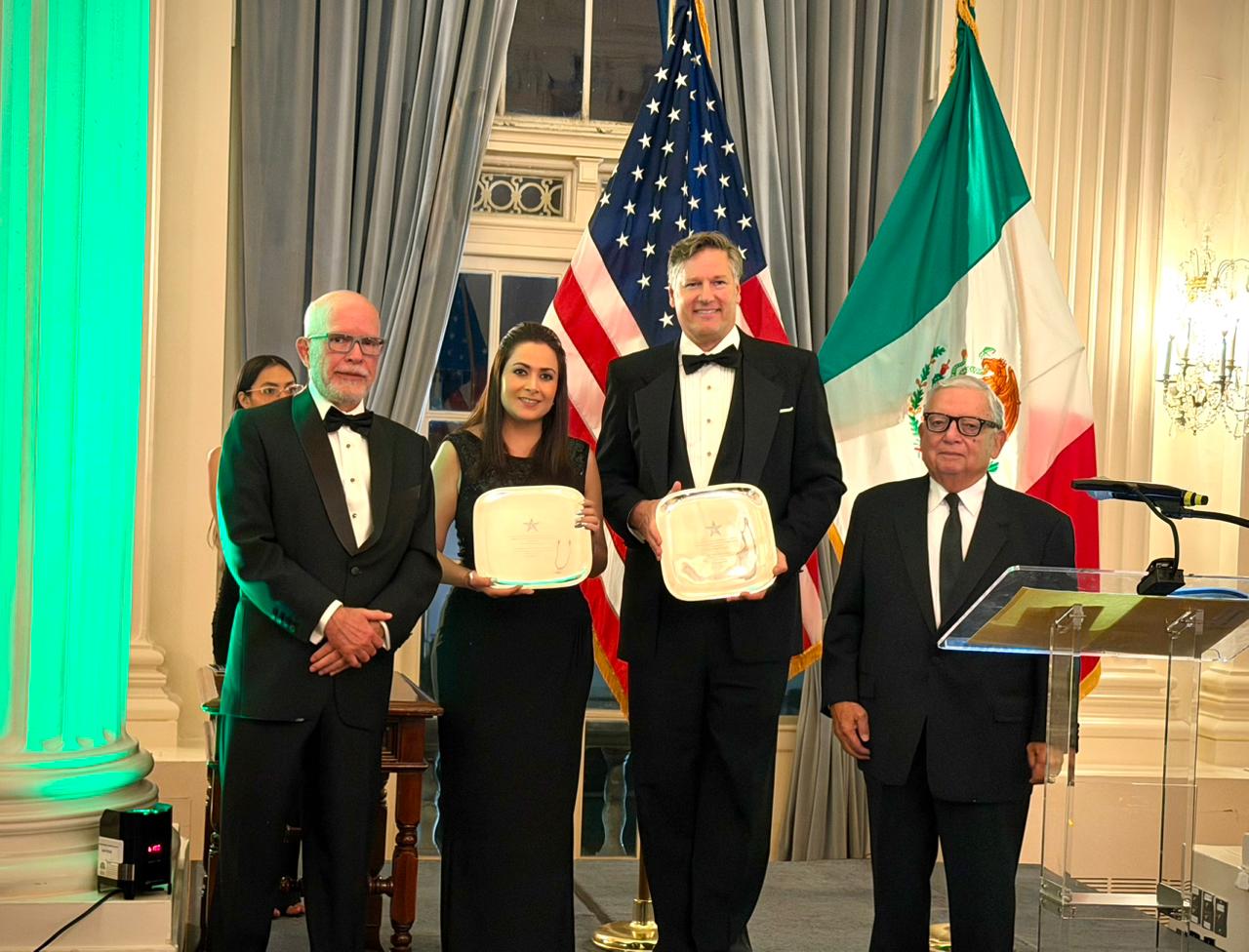
Aguascalientes Strengthens International Presence in Washington; Tere Jiménez Receives Bilateral Recognition
May 20, 2026

Is There a Fuel Shortage in Jalisco?: Pemex Responds
May 26, 2026

Investing in Jalisco? Security Becomes the Largest Magnet for Capital
May 5, 2026