
Chinese Goods Using Mexico to Evade Tariffs? U.S. States Under Scrutiny
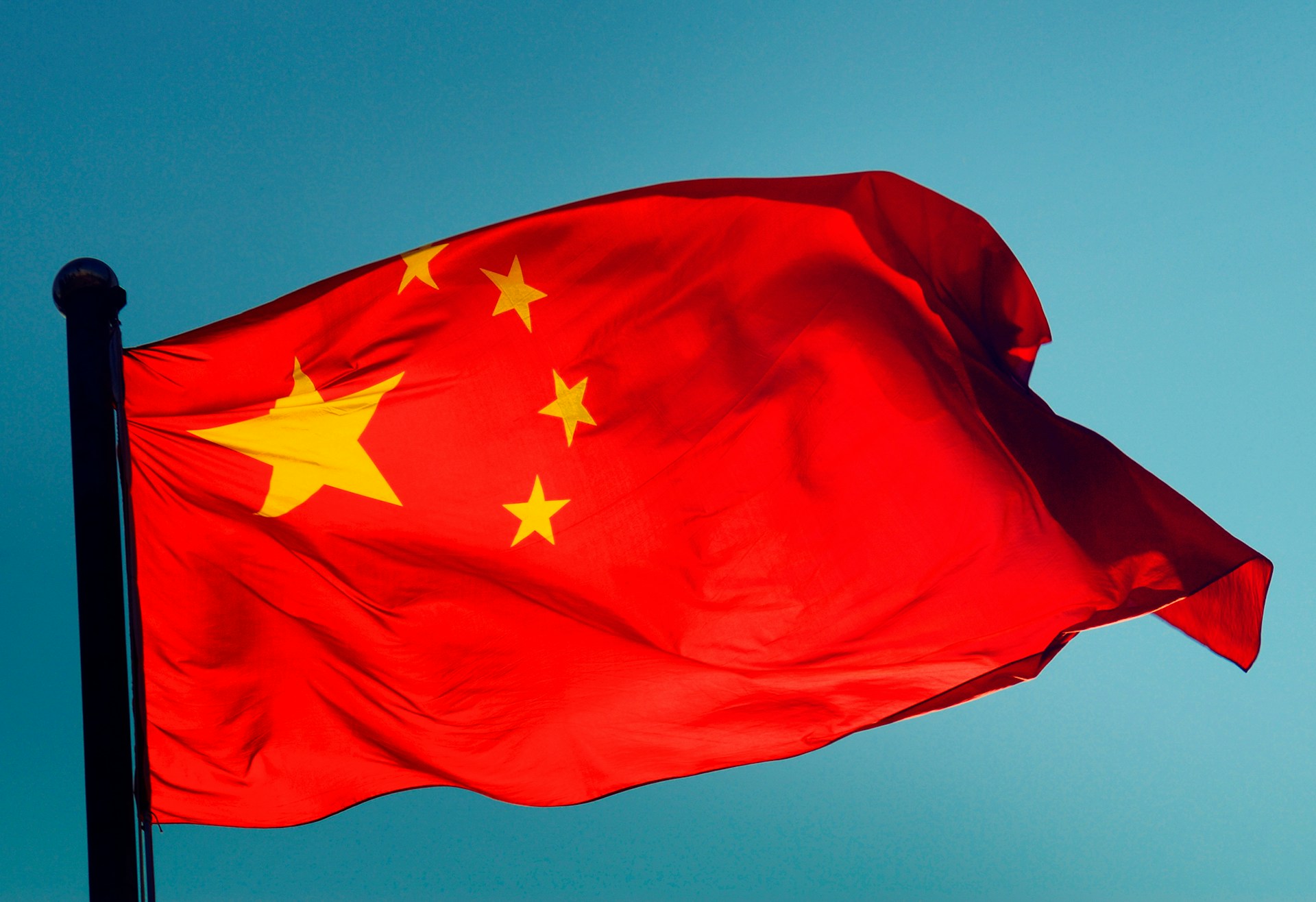
A White House report highlights concerns over potential illegal transshipment of Chinese goods through Mexico to evade U.S. tariffs.
Mexico is facing increased U.S. trade scrutiny over the potential illegal transshipment of Chinese goods, according to a new White House report. The document, titled The Great Transshipment Scam, places Mexico among economies with high volumes of China-related products and significant export platforms to the United States.
However, the report itself acknowledges that these flows coexist with legitimate trade and manufacturing. Therefore, observed changes in U.S. imports do not, by themselves, prove tariff evasion. Within Mexico, the report specifically identifies two states, forming a corridor that is considered a potential point of exposure for certain electrical products.
How the Transshipment Denounced by the United States Works
Illegal transshipment occurs when a product uses a third country to artificially conceal or modify its true origin. According to the U.S. report, a Chinese good may undergo minimal processing before continuing to the United States. Described practices include:
- Repackaging
- Labeling
- Light assembly
- Document changes
As well as other operations that do not necessarily represent substantial productive transformation. Subsequently, the product could be declared as originating from the intermediary country to avoid tariffs applicable directly to Chinese goods.
Therefore, the issue is not about using Chinese components within a production chain. The focus is on falsifying origin or violating trade rules. The USMCA (United States-Mexico-Canada Agreement) establishes specific requirements that a good must meet before receiving treatment as a North American originating product. Thus, legitimately manufacturing a good in Mexico with foreign inputs can be part of legal trade. Conversely, merely changing its documentation does not guarantee preferential access.
Could Chinese Goods Leverage the USMCA to Avoid Tariffs?
The White House considers Mexico to be of particular relevance due to its commercial integration with the United States. The report posits that Chinese goods illegally channeled through Mexico or Canada might attempt to obtain USMCA preferential treatment. In certain scenarios, the document argues, a specific tariff applied to China could be significantly reduced or even eliminated.
However, such a benefit would legally only apply to goods that comply with the rules of origin established in the trade agreement. Precisely, this matter is already on the U.S. trade agenda for 2026. The Office of the United States Trade Representative (USTR) has indicated that the USMCA needs to strengthen rules of origin in strategic sectors. Furthermore, it proposes incorporating more effective measures against transshipment. Consequently, the new report may increase pressure to enhance origin verifications during trade negotiations among the three countries.
Guanajuato and Querétaro, the Mexican States Under Scrutiny for Chinese Goods
The document shifts from the international panorama to a specific location in Mexico: the Guanajuato-Querétaro industrial corridor. The White House identifies it as a potential transit or processing point for Chinese goods related to four product groups:
- Electric motors
- Electric generators
- Transformers
- Static converters
These goods correspond to tariff codes HS 8501 to 8504. According to U.S. methodology, the Mexican corridor could handle China-linked products that subsequently compete with manufactures developed in the United States. The White House connects this potential flow with productive corridors in Detroit, Grand Rapids, and Indianapolis, which specialize in motors and electrical components.
However, the report does not accuse all companies located in Guanajuato or Querétaro of participating in illegal operations. Nor does it identify specific Mexican companies within this comparison. In fact, the White House itself clarifies that the selected corridors are illustrative examples and not an exhaustive list of proven illegal operations. Therefore, the inclusion of both states represents a risk signal within the U.S. methodology, not a determination of guilt.
Why Did the United States Focus on These Products?
The methodology compares goods associated with a higher risk of transshipment against U.S. regions where identical or similar products are manufactured. First, the report identifies tariff categories with relevant indications of exposure to China-related goods. Subsequently, it links them with U.S. manufacturing corridors that produce those same goods. In the Mexican case, this comparison led to connecting Guanajuato and Querétaro with U.S. production of motors, generators, transformers, and converters.
However, the document acknowledges a central difficulty: differentiating transshipment from legitimate new productive investments. A Chinese company can establish a factory, genuinely produce in Mexico, and generate sufficient transformation to comply with the relevant rules. For this reason, an increase in Mexican exports to the United States, by itself, does not allow us to assert that evasion exists.
Mexico Appears Among Top Risk Countries
The White House analyzes a network comprising approximately 40 countries and divides them into three tiers. Mexico appears in the first group, designated Diversified Scale Leaders. This category includes economies with large flows of Chinese goods, but also with broad manufacturing bases and legitimate exports to the United States. In addition to Mexico, the first tier includes:
- Canada
- European Union
- India
- Israel
- Japan
- South Korea
- Taiwan
The second tier includes Brazil, Indonesia, Malaysia, Thailand, Turkey, and Vietnam. The third group, meanwhile, comprises smaller economies that possess ports, free trade zones, logistics centers, or assembly capabilities that can be leveraged to modify trade routes. Thus, the United States does not present the phenomenon as a problem exclusive to Mexico, although geographical proximity and the USMCA elevate its strategic importance.
How Much Money Could Be Involved?
The report presents several estimates and warns that they should not be added or directly compared, as each uses different methodologies. The analyzed calculations place the potential annual exposure to transshipment between $40 billion and $303 billion. One estimate from the White House Council of Economic Advisers sets a range of $34.2 billion to $89.6 billion. Exiger, on the other hand, proposes a central calculation close to $75 billion. Altana, in contrast, develops the broadest scenario, at $303 billion.
The U.S. Department of Commerce conducted a more constrained calculation using product and regional information. Under this methodology, it estimates that approximately $67 billion in goods destined for the United States would have passed from China through Mexico, India, and Vietnam during 2025. It is important to note that these $67 billion do not correspond solely to Mexico but to the three main centers analyzed collectively. The same exercise estimates approximately $28 billion in lost tariff revenue for the United States from these flows.
What Could Change for Mexican Companies?
The report itself does not impose new tariffs or sanctions against Guanajuato or Querétaro. However, it does provide arguments for a U.S. policy that seeks to tighten controls on the origin of goods. For Mexican companies, this could translate into a greater need to demonstrate:
- The actual origin of their components
- The processes carried out within Mexico
- The traceability of their suppliers
- Compliance with rules of origin
- Productive transformation effected in national territory
- Documentation supporting preferential USMCA access
This pressure could be particularly relevant for companies that use Chinese inputs and subsequently export to the United States. The U.S. trade agenda already proposes strengthening rules of origin and anti-transshipment mechanisms within the USMCA. Therefore, the consequence for legitimate companies could be a greater documentary burden, more verification, and additional controls on their supply chains.
The Report Does Not Demonstrate That All Mexican Growth Comes from China
One of the main nuances appears within the White House document itself.
It observed that, after imposing tariffs on China starting in 2018, China’s direct participation in U.S. imports decreased. Simultaneously, the share of countries used as alternative suppliers increased. However, the report acknowledges that this relationship does not automatically allow the conclusion that goods simply changed routes. Part of the movement can be explained by new factories, productive investment, supply chain relocation, and legitimate modifications in international trade. Precisely there will be one of the central discussions for Mexico to distinguish between real manufacturing and operations created solely to modify the declared origin of a product.
You May Also Like
The entry
appears first on Líder Empresarial.
More Articles
Aguascalientes Industry Recovers 3.1% in April
Aug 10, 2026

Brazil Tariffs: Mexico's New Gateway to the United States?
Jul 16, 2026

Dollar Price Declines Today: Is it a Good Time to Buy Foreign Currency?
Aug 12, 2026

Nissan Improves Results in the First Quarter of Fiscal Year 2026
Aug 4, 2026

Querétaro Employment: Which Sectors Gained and Lost Workers?
Aug 4, 2026

Weekend Recap: Key Developments in Mexico and Globally on July 18-19
Jul 20, 2026