
Nissan 2026: The Birth of an Automotive "Super Hub" in Aguascalientes
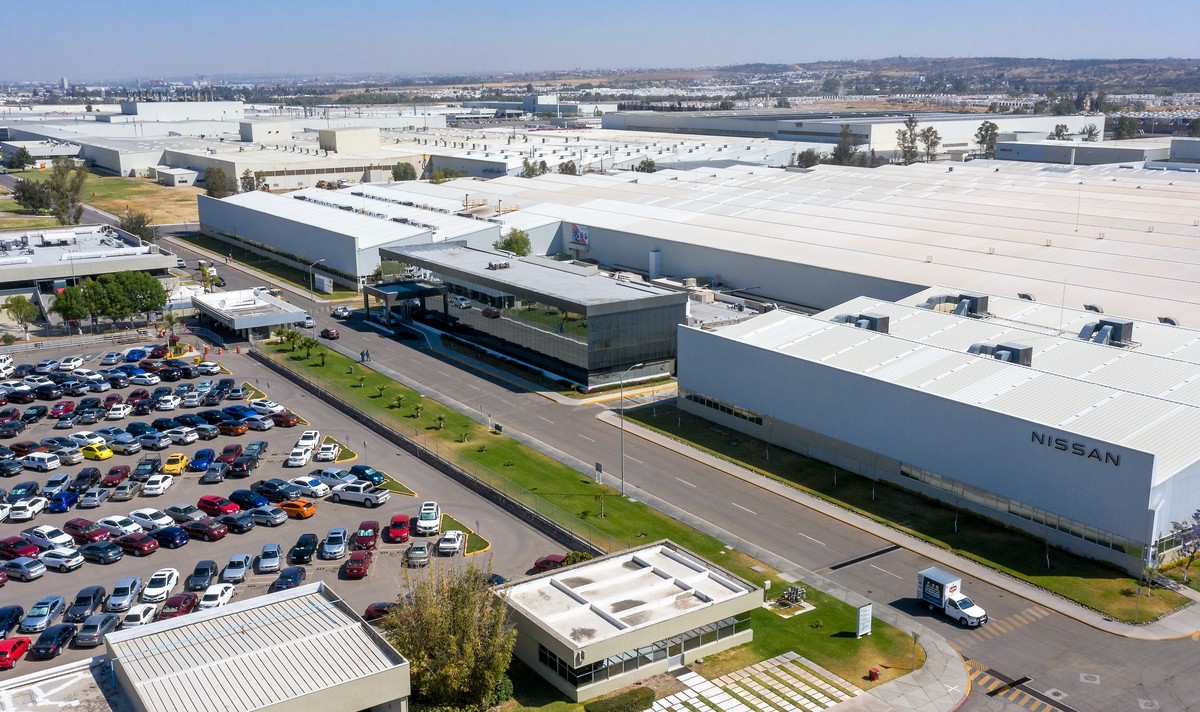
Nissan is consolidating its Mexican production in Aguascalientes by 2026, creating an automotive "super hub" with increased efficiency and capacity.
For 2026, Nissan has initiated the
in its recent history in Mexico, a move aimed at redefining North America’s automotive landscape. As the calendar turns to the first days of the year, the Japanese firm is preparing to close a historic chapter in Morelos and transform Aguascalientes into an unprecedented manufacturing “super hub” in Latin America. The strategy is clear: centralize 100% of Mexican production in the Bajío region starting in the first quarter of 2026. This move implies not only absorbing the operations of the historic CIVAC plant but also bringing production from Argentina to the heart of Mexico. But how did Nissan reach this inflection point? Data from INEGI (2020-2025) helps understand the magnitude of this evolution compared to its competitors.
Japanese Resilience: Production Evolution (2020-2025)
Examining the intricacies of production, Nissan not only survived the Covid-19 pandemic and the semiconductor crisis but also built a “V-shaped” recovery curve that now allows it to execute this massive consolidation.
Annual Production Overview
-2020 (The Start of the Challenge): 521,730 units. In a year of global paralysis, Nissan kept its machinery operating at partial capacity but with stability. -2021 (Silent Resilience): 536,323 units. Contrary to general perception, Nissan managed to grow slightly (+2.8%) amidst logistical chaos, surpassing its pandemic year. -2022 (The Semiconductor Downturn): 391,002 units. This was the turning point. The global component shortage impacted its production lines, marking the lowest historical point of the five-year period. -2023 (The Big Rebound): 615,751 units. The recovery was aggressive, with a 57% jump from the previous year, regaining lost ground. -2024 (The Peak of the Five-Year Period): 669,941 units. The best year of the period, demonstrating full installed capacity. -2025 (The Eve of Change): 658,536 units. Closes the cycle with stability, maintaining high volumes prior to the relocation.
The “Fantastic Four”: The Lineup Aguascalientes Will Inherit
The centralization at plants A1 and A2 is not for just any vehicle. Aguascalientes will inherit the crown jewels: the complete manufacturing of the brand’s best-selling models. As of the close of 2025, here’s how the production of key models that will define Aguascalientes’ 2026 performed:
- Nissan Kicks (The Growth Leader): The phenomenon of the decade. Production surged from 94,157 units in 2020 to nearly 199,314 units in 2025. It is the model with the highest expansion projection for the Aguascalientes lines.
- Nissan Sentra (The Export King): A pillar of Plant A2. Although it experienced a slight adjustment, it remains the flagship sedan with 183,245 units in 2025 (after a peak of 198,440 in 2024).
- Nissan Versa (The National Favorite): The mass-market volume leader. It closed the period with 168,764 units, ensuring that assembly lines have no downtime.
- NP300 and Frontier (The New Occupant): This is key for 2026. Historically, CIVAC contributed between 60,000 and 80,000 annual pickups (69,488 units in 2025). By adding this volume to Aguascalientes, along with production imported from Argentina, the state will become a powerhouse for light commercial vehicles.
Battle of the Giants: Nissan vs. the Mexican Industry
To gauge the significance of this decision, one must view the entire chessboard. While Nissan opts for absolute centralization in a single state, its direct competitor, General Motors, pursues territorial diversification.
National Production Comparison 2020-2025 (Leading Brands):
| Brand | Geographic Strategy | 2020 Production | 2025 Production | Growth/Evolution |
|---|---|---|---|---|
| General Motors | Dispersed: Guanajuato, SLP, Coahuila | 728,768 | 857,431 | Leader by total volume thanks to 3 complexes. |
| Nissan | Centralized: Aguascalientes (100% by ‘26) | 521,730 | 658,536 | Solid 2nd place, maximizing efficiency in a single hub. |
| Ford Motor | Northern: Sonora, EdoMex | 136,067 | 417,280 | Highest percentage growth (Tripled production). |
| Stellantis | North/Central: Coahuila, EdoMex | 442,107 | 396,281 | Volume contraction, focus on margin (Pickups/SUVs). |
| Volkswagen | Concentrated: Puebla | 298,972 | 335,716 | Moderate growth, far from volume leaders. |
| Toyota | Bifocal: BC, Guanajuato | 169,350 | 310,152 | Sustained growth, doubling figures in 5 years. |
Aguascalientes, the “Detroit” of Bajío
The decision to close CIVAC and bring production from Argentina is not a cutback; it is a strategic consolidation of strength. Looking at the 2026 map, the difference is clear:
-Guanajuato leads by number of brands (Toyota, Mazda, Honda, GM), operating as a diverse cluster. -Puebla remains the stronghold of German engineering (VW/Audi).
dominates the production of “Big Pickups” and electric vehicles for the U.S. But Aguascalientes, with the arrival of the NP300 and Nissan’s centralization, transforms into something unique: an ecosystem where a single manufacturer, in a single geographic location, will be responsible for producing nearly 700,000 vehicles annually (projecting the sum of capacities).
If the 2020-2025 period was one of recovery and resilience, 2026 will mark the beginning of the era of super-efficiency. Nissan is consolidating its geographic footprint to soar higher, and Aguascalientes is, indisputably, its global launchpad.
You may be interested in
The entry
first appeared in Líder Empresarial.
More Articles

Reduced Working Hours in Mexico: Risks, Costs, and What Businesses Must Monitor
Mar 20, 2026

Does Market Volatility Affect Today's Dollar Price? Here's How It Trades
Mar 24, 2026

Organized Crime: A Parallel Economy (Part II)
Mar 24, 2026

The Trophy Tour Arrives in Monterrey: The 2026 World Cup Trophy Exhibited at BBVA Stadium
Mar 15, 2026

Scholarships at Tec de Monterrey San Luis Potosí Up to 85%: SEGE Signs Agreement
Mar 18, 2026

El talón de Aquiles del crecimiento industrial: la crisis energética en México
Apr 9, 2026