
Working Less Doesn't Mean Producing Less: The New Productivity Equation
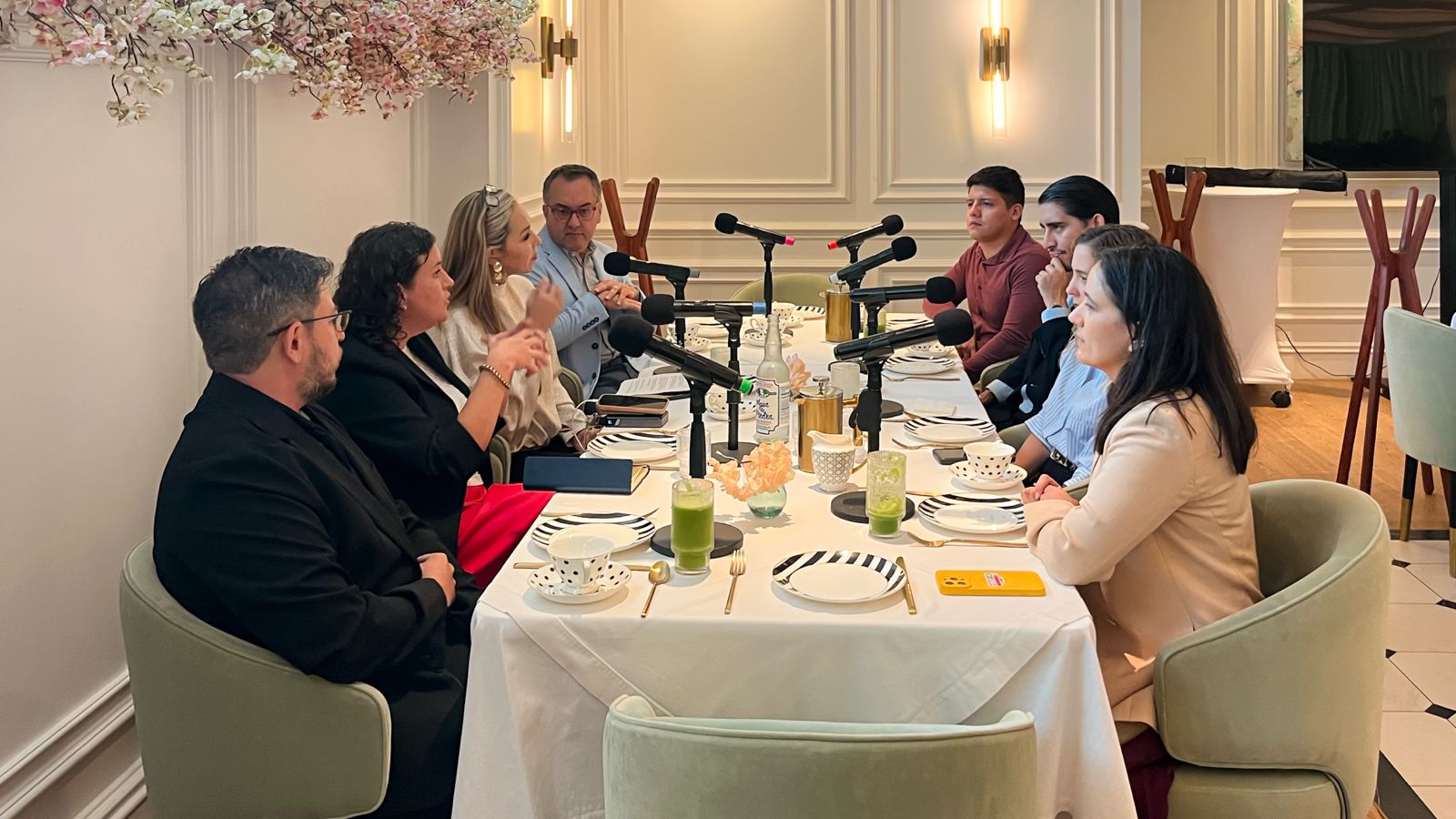
Mexican business leaders discuss how to boost productivity by working smarter, not harder, focusing on value creation over mere hours logged.
Guest
Title
Company
Daniel Ordaz Founder and Director SENDOS.AI Eduardo Arredondo Director HYVEL Óscar González General Director and Partner TAAF LOGISTICS Ana Lucía Founder and Director BOLSA ROSA Rafael Miyar Founding Partner ION HYDRATION
For decades, productivity and time seemed to go hand in hand. More hours. More presence. More supervision. More people. But that equation is starting to break.
Mexican companies are simultaneously facing higher labor costs, better worker conditions, new demands for flexibility, and a technological transformation that is changing how work is organized. The question is no longer just how much time a person works. It’s much more uncomfortable: how much value are they actually producing during that time?
That was one of the main tensions in the conversation held in Monterrey, where business leaders from various sectors analyzed how to increase productivity without simply demanding more from people. Participants included Daniel Ordaz, founder and director of Sendos.AI; Eduardo Arredondo, director of Hyvel; Óscar Jesús González, general director and partner of TAAF logistics; Ana Lucía, founder of Bolsa Rosa; and Rafael Miyar, founding partner of Ion Hydration, the company that owns the Industrade brand.
The experiences were different, but they all converged on one idea: producing more doesn’t necessarily require working more. It often requires working better.
Do More Hours Really Mean More Productivity?
Daniel Ordaz introduced a key point: before demanding higher productivity, companies need to recognize the conditions under which people work. Long commutes, extended workdays, family difficulties, and economic pressures also arrive at the workplace daily.
That’s why he questioned a logic still present in some organizations: first demand more productivity, then improve conditions. For Ordaz, a company also has a responsibility for the value it generates for those who work for it. “If I have to pay my people poorly to be successful, then I’m not really a good businessperson.”
The discussion took another dimension when Eduardo Arredondo shared his experience. In his company, he explained, the standard workday is around 35 hours per week. The reduction in time did not necessarily mean producing less. The focus was elsewhere: improving lines, supply, purchasing, warehousing, and processes to prevent operators from wasting time searching for materials, waiting for answers, or performing unnecessary movements.
The commercial strategy also changed. By reducing product dispersion and moving towards more standardized demand, operations gained efficiency. The result was significant: with practically the same people and the same working time, the company has managed to nearly double its production. The conclusion seems simple: before asking someone to work faster, ask yourself if the process allows them to do so.
The Real Enemy Might Be Non-Value-Generating Work
A significant portion of productivity is lost in activities that organizations have normalized. Waiting for authorization. Searching for information. Re-entering data. Preparing a report that someone else processes again. Unnecessary travel. Staying in an office simply because the workday isn’t over yet.
The conversation in Monterrey gave a name to a practice known in many companies: measuring commitment by presence. Being seated doesn’t necessarily mean being productive. And working from home doesn’t automatically mean being productive either. The difference lies elsewhere: having clarity on what is expected of each role and being able to measure the outcome.
Óscar Jesús González shared that at TAAF Logistics, they started using performance indicators that don’t just focus on whether a task is completed. They also observe how it was completed. How many processes were done without errors. How smooth the journey was from order generation to final collection. The logic shifts from “do it” to “do it right and make it flow.” Some of these indicators are even linked to bonuses. Productivity then ceases to be a perception of the boss and starts becoming information.
If You Don’t Know What You Expect from a Person, You Can’t Measure Them Either
The conversation revealed another problem, less technological and much more fundamental. Many companies are not sufficiently clear about what they expect from each role. And when the outcome is not defined, a seemingly simple solution emerges: monitor the schedule.
Ana Lucía steered the discussion towards the need to connect the company’s overall objectives with what each person does daily. If the organization needs to increase sales, that goal should translate into responsibilities and metrics for different areas. Not just for sales. Also for recruitment, training, operations, and any function that contributes to the result.
Daniel Ordaz described a similar logic at Sendos: start with what the company wants to achieve and cascade it down to the different roles within the organization. The question changes. It’s no longer: “How many hours were they working?” but rather: “What outcome were they supposed to generate, and how did they contribute to the company’s objective?”
Productivity Also Happens Outside the Company
But optimizing internal processes may not be enough. In Monterrey, the conversation quickly moved beyond company walls. Traffic. Transportation. Distances between home and work. School schedules. Daycares. Family responsibilities. An employee may have a perfectly designed process within the plant and still arrive late after spending hours commuting.
Óscar González explained that in an operation like logistics, where activity doesn’t stop, flexibility can take different forms for each person. Remote work for some. Different schedules for others. The key, from his experience, is to listen to the employee and understand their context.
Rafael Miyar shared the case of an employee for whom his company tried to offer various schedule alternatives as their family needs changed. The experience also showed the limits of flexibility: there are operations where personal needs and those of the role eventually become incompatible. There is no universal formula. But there is a new business question: how much of productivity truly depends on the worker, and how much depends on the system we build around them?
Measure to Improve, Not Just to Control
Eduardo Arredondo summarized one of the most frequently repeated principles during the conversation: “What gets measured gets controlled, and what gets controlled gets improved.” Measuring, however, doesn’t mean turning every minute into surveillance. It means establishing a baseline.
- Production.
- Quality.
- Errors.
- Sales.
- Times.
- Conversion.
- Margin.
- Compliance.
Without this reference, any effort to increase productivity may end up simply adding more workload. Technology greatly expands this measurement capability. But it also opens a delicate discussion: how far should monitoring go? Examples of technologies capable of observing activities, detecting patterns, and finding automation opportunities emerged during the discussion. The possibility exists. The ethical question does too. Because a tool designed to identify a bottleneck can easily become a tool to monitor a person. Productivity and control are not synonymous.
Artificial Intelligence as a Copilot, Not a Pilot
Technology then appeared as one of the great tools for freeing up time. But not as an automatic substitute for people. Óscar González used a clear analogy to explain how they are approaching artificial intelligence at TAAF Logistics: AI is a copilot; the person remains at the wheel. They use it to organize information, structure files, and consolidate reports. They have even developed dashboards connected to their systems to reduce tasks that previously required manual labor. The intention is not to hand over the entire operation to the tool. It’s to eliminate “grunt work.” Half an hour spent preparing a report. An hour organizing information. Time that can be redirected to activities where a person generates greater value.
Eduardo Arredondo shared a similar experience in administrative areas. In his operation, AI tools already support the preparation of presentations, emails, and initial customer service. They have also incorporated agents to filter inquiries and deliver more qualified leads to sales. Technology thus begins to solve one of the central questions of productivity: what work should a person stop doing to dedicate their time to something more valuable?
Automating Doesn’t Mean Stopping Thinking
The conversation also set a limit. The ease of delegating activities to artificial intelligence can become a new problem if people stop reviewing, questioning, or developing their own judgment. Daniel Ordaz warned about the risk of losing individuality for convenience. If a person systematically delegates their emails, analyses, content, and decisions, there may come a point where it’s difficult to identify what their actual contribution was.
That’s why he proposed the need to establish clear rules within organizations on how to use technology, what information can be shared, and what activities necessarily require human intervention. The discussion led to competencies that may gain value in the coming years:
- Critical thinking.
- Judgment.
- Ethics.
- Communication.
- Leadership.
- Analytical skills.
Óscar González added another skill: understanding data. Because when virtually everyone has access to similar tools, the advantage will not necessarily be in who possesses artificial intelligence. It will be in who better understands the information and knows how to turn it into decisions.
Talent Is Not a Line Item to Simply Cut
One of the most revealing moments of the conversation came when Daniel Ordaz recounted the case of a global company that carried out significant personnel cuts. The decision aimed to streamline payroll. But later, consequences emerged that the initial numbers had not shown. People who left the organization concentrated knowledge that no one had documented. Processes began to stall. Some positions had to be reinstated later at a higher cost.
The experience brought another fundamental difference to the table: performance and potential are not the same. A person may not show the best results during a specific period and yet possess knowledge, experience, or growth capacity that will be difficult to replace. Productivity observed exclusively in the short term can lead to decisions that destroy long-term value. Reducing payroll immediately improves a financial line. Losing critical knowledge can take months to appear.
The Challenge Is Not to Produce More, but to Produce Better
As the discussion neared its close, participants outlined decisions they should prioritize towards 2027. Rafael Miyar spoke of advancing the technological implementation of his commercial process, supported by a new CRP and tools that allow for better organization and qualification of opportunities. Ana Lucía also identified an opportunity in the commercial area, where AI can support prospecting and acquisition without eliminating human intervention in activities where personal relationships remain determinant.
Eduardo Arredondo focused the priority on commercial strategy: growing in industrial clients, standardizing demand, and concentrating sales on a smaller number of products. His logic can be summarized as: more sales with less dispersion. Óscar González focused on two concepts: productivity and added value. From his perspective, the conversation should not solely focus on producing more, but on producing better: improving processes, working conditions, and results, and allowing part of those improvements to also benefit the employee.
Daniel Ordaz proposed using technology not only to reduce costs but to better understand the future of the business, anticipate problems, and find new opportunities. These are different priorities. But all question an idea that for a long time seemed obvious: that increasing productivity means asking for more effort. The conversation in Monterrey showed another possibility. Perhaps the next great productivity improvement will not come from working more hours. It may come from eliminating a task, redesigning a process, better measuring a result, standardizing an operation, using technology with judgment, or allowing a person to concentrate their time on what truly generates value. Because in a scenario of fewer available hours and higher labor costs, the business question can no longer be how much more people can work. The question is different: how much of the work we do today is truly worth continuing to do?
| Finding Matrix | Finding |
|---|---|
| Productivity | Working more hours does not necessarily mean producing more. Productivity depends on processes, organization, and the ability to eliminate value-less activities. |
| Processes | Before demanding higher performance from people, it is necessary to review waiting times, rework, travel, authorizations, and repetitive tasks. |
| Measurement | Presence is losing relevance as an indicator. Performance should be measured through results, quality, times, errors, sales, conversion, and compliance. |
| Talent | Performance and potential are not the same. Reducing staff solely for cost savings can mean losing knowledge and experience that are difficult to recover. |
| Flexibility | There is no single work model. Remote work, differentiated schedules, and other models should respond to the role, operation, and people’s needs. |
| Technology & AI | Technology should free up time from repetitive, low-value tasks, without replacing human judgment or supervision. |
| Data | The advantage will not solely be in having information, but in knowing how to interpret it and translate it into better decisions. |
| Human Skills | Critical thinking, judgment, ethics, communication, leadership, and analytical skills will gain relevance as automation increases. |
| Standardization | Reducing dispersion and simplifying processes can increase productivity without the need to increase staff or working hours. |
| Well-being | Working conditions, commutes, schedules, and personal environment also influence employee productivity. |
| Priority towards 2027 | The challenge will be to produce better, not simply produce more: redesign processes, measure results, utilize technology, and generate more value with available resources. |
The entry
More Articles

DiDi Food Launches Gastronomic Guide: What It Is and How It Will Help Consumers
Sep 29, 2026
Monterrey Leads New Alliance Between Technology and Health: TCS Drives Digital Transformation
Sep 23, 2026

Most In-Demand Medical Specialties in Querétaro
Sep 22, 2026

Tec de Monterrey Ranks as Mexico's #1 University in QS 2027 Rankings
Oct 5, 2026

ITESO: Jalisco's Formal Employment Enters Zone of Pressure
Oct 1, 2026

Why the Dollar is Strengthening Against the Mexican Peso: Factors Influencing Exchange Rates
Sep 23, 2026