
Trump's Project Freedom: Opportunity or Risk for Mexico's Energy Trade?
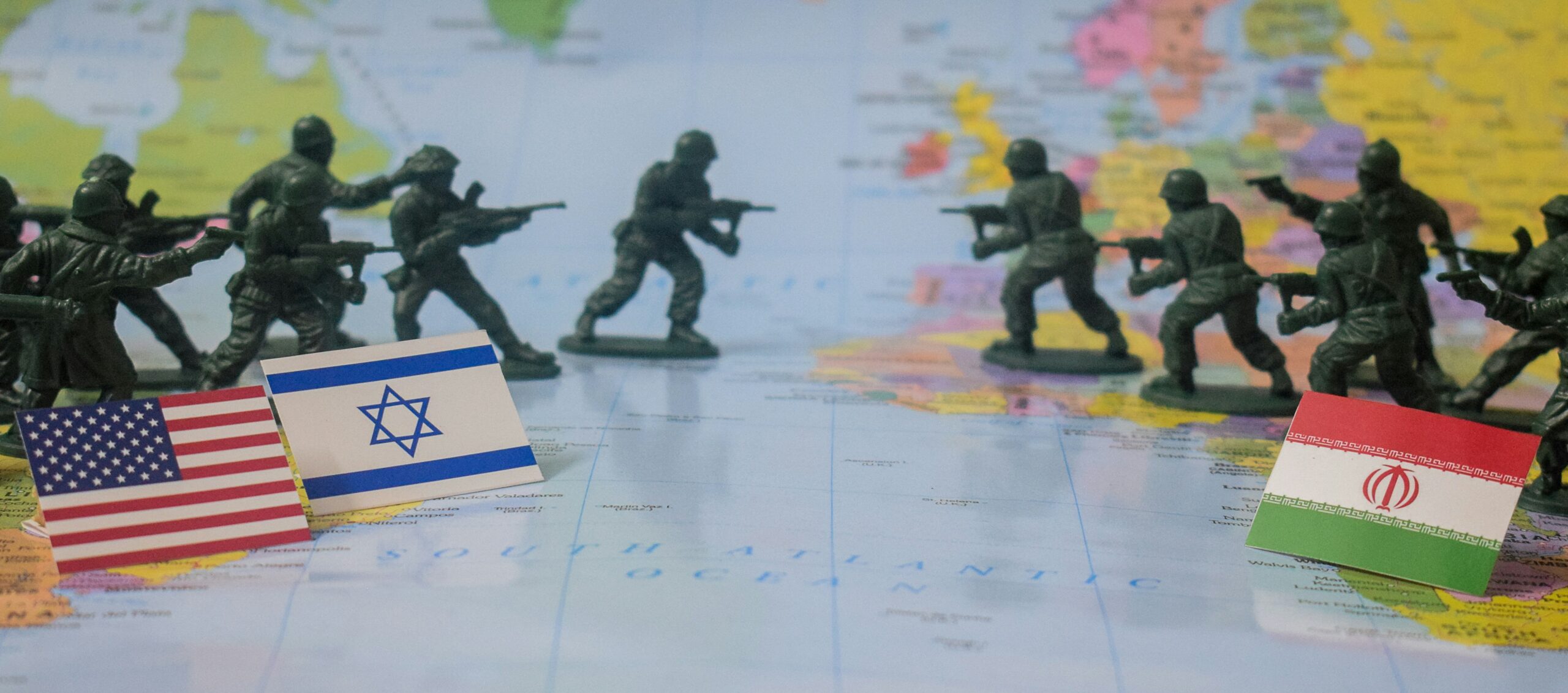
Trump's Project Freedom in the Strait of Hormuz presents a paradox for Mexico: balancing higher oil revenues against escalating inflation and logistics costs amidst geopolitical uncertainty.
On May 3, 2026, U.S. President Donald Trump announced the launch of Project Freedom, an operation led by U.S. Central Command (CENTCOM) to escort neutral vessels stranded in the Strait of Hormuz and guide them to safe waters. The deployment includes 15,000 personnel, guided-missile destroyers, over 100 aircraft, and multi-domain unmanned platforms, according to CENTCOM’s official statement. Trump described the mission as a humanitarian gesture: several countries had requested assistance to free their ships trapped amidst the conflict, with crews, in some cases, running out of food.
Two Months of Blockade, Peak Prices, and a First Day of Fire
The operation commenced after more than two months of near-total paralysis in the strait, a corridor through which approximately 20% of the world’s consumed oil and liquefied natural gas transited before the conflict erupted on February 28, 2026. With Brent crude exceeding $107 per barrel in the weeks leading up to the announcement, and Goldman Sachs labeling the disruption as the largest supply shock in the history of the global oil market, Project Freedom was presented as a signal of opening. However, on the very day of its launch, Iranian forces attacked the Emirati port of Fujairah and vessels near the strait with drones, missiles, and speedboats, casting doubt on the operation’s viability from its first day.
For Mexico, the question is not straightforward. The country is a crude oil exporter, and its fiscal revenues benefit from rising international prices. Simultaneously, Mexico imports approximately 60% of the gasoline it consumes and nearly 70% of the natural gas it uses. The potential for Project Freedom to alter oil prices in any direction has direct implications for inflation, household purchasing power, and the logistics costs of the productive sector.
The Scenario Before Project Freedom
The attacks on February 28, 2026, triggered the effective closure of the Strait of Hormuz. According to data from the United Nations Conference on Trade and Development (UNCTAD), daily vessel transits plummeted by 97%: from an average of 141 vessels during February to only three to six in early March. Market response was immediate.
Between February 27 and March 9, Brent crude prices surged by 27%, reaching $91.8 per barrel. From there, the ascent continued: Brent surpassed $116 in subsequent weeks, while WTI accumulated a 60% increase compared to its pre-conflict level. At least 150 oil tankers were stranded in the Persian Gulf, and freight costs skyrocketed by up to 300% on some routes. Tanker index rates rose by up to 72%, and the price of bunker fuel doubled, according to UNCTAD.
The scenario before Project Freedom 2.1 The International Energy Agency (IEA) documented that global supply fell by 10.1 million barrels per day in March, bringing world production to 97 million barrels daily. North Sea crude reached $130 per barrel during that period, the IEA noted in its oil market report.
For Mexico, this scenario presented two simultaneous interpretations. The Mexican Export Blend (MME) reached a peak of $111.51 per barrel on April 2, its highest level in years. For every dollar increase in the barrel price, the federal government’s oil revenues rise by approximately 10.7 billion pesos, equivalent to about $618 million, according to economic estimates.
However, this windfall was accompanied by direct inflationary pressures: the National Institute of Statistics and Geography (INEGI) registered inflation of 4.63% in the first two weeks of March, and the Organization for Economic Co-operation and Development (OECD) revised its annual projection to 3.8%.
The Operation and the New Scenario
Project Freedom was not announced as a reopening of the strait to general commercial traffic. According to CENTCOM’s statement, the mission consists of escorting vessels from neutral nations not destined for Iranian ports, guiding them to safe areas outside the Gulf. Admiral Brad Cooper, CENTCOM Commander, described the operation as defensive and critical for regional security and the global economy. The operation is also supported by the «Maritime Freedom Construct», a joint initiative of the State Department and the Department of Defense aimed at improving international coordination and maritime intelligence sharing. However, the first day redefined expectations. While CENTCOM facilitated the passage of two U.S.-flagged vessels, Iranian forces responded with drones, missiles, and speedboats. Admiral Cooper confirmed in a press conference that the Navy repelled the attacks.
The operation and the new scenario 2.1 In parallel, a tanker owned by the Emirati state company Abu Dhabi National Oil Co. (ADNOC) was hit by drones outside the strait, and the port of Fujairah in the United Arab Emirates received attacks with Iranian cruise missiles for the first time since the April 8 ceasefire came into effect. The market reaction was immediate: Brent jumped 6% to settle above $114, while WTI approached $106, according to Bloomberg information.
A structural element is that the U.S. naval blockade of Iranian ports, ordered on April 13, remains active. Project Freedom applies only to third-country vessels not headed for Iranian ports; it does not cancel existing restrictions. Iran has stated it will keep the strait closed as long as that blockade persists. Admiral Cooper indicated, in the same press conference, that the minefields in the strait «are not so extensive» as to prevent passage and that the United States possesses technology to clear routes, without specifying timelines.
The Impact on Global Oil Flow
Prior to the announcement of Project Freedom, Goldman Sachs had characterized the Hormuz disruption as the largest supply shock in oil market history. In its projections, the bank expected Brent to average $85 per barrel in 2026 and WTI $79, both upward adjustments from previous forecasts. This scenario assumed that flows through Hormuz would remain at 5% of normal levels for six weeks, followed by a month of recovery, resulting in accumulated losses of over 800 million barrels. By late April, with Brent already above $107, Goldman revised its outlook again: it estimated crude would reach $90 in the fourth quarter, compared to the previous projection of $80.
Bloomberg Intelligence warned that a prolonged closure of the strait could push Brent above $150 per barrel. OPEC+ approved a production quota increase of 206,000 barrels per day for May, but analysts deemed it «academic»: as long as the strait remains blocked, the additional production cannot reach the markets that need it. According to OPEC, the group’s production fell by 7.7 million barrels per day in March.
The impact on Global Oil Flow 2.1 S&P Global Vice Chairman, Daniel Yergin, described the crisis as «the greatest energy disruption in history», noting that its effects extend beyond oil to include natural gas, fertilizers, helium, aluminum, and petrochemicals. Yergin pointed out that 80% of the oil and 90% of the liquefied natural gas crossing Hormuz is destined for Asia, a continent facing severe shortages, plant shutdowns, and rationing.
Project Freedom does not equate to restoring the volume of 20 million barrels per day that transited Hormuz before the crisis. Its immediate scope is to free stranded third-country vessels, not to reopen the corridor to general trade. The conditions for that, including mine clearance, withdrawal of the naval blockade, and stabilization of hostilities, remain unresolved. The first day of operations, including an exchange of fire, illustrated the gap between announcement and practice.
The Two Sides for Mexico
The Export Front: Temporary Gains
The rise in international crude oil prices has generated direct additional revenues for the Mexican government. With MME at $111.51 per barrel at its April peak, each dollar increase equates to approximately $618 million in additional federal revenues. This fiscal inflow facilitated the agreement between President Claudia Sheinbaum and Japan’s Prime Minister Sanae Takaichi for the shipment of one million barrels of Mexican crude to Japan in July 2026, an operation that positioned Mexico as an energy diplomacy actor at a time when Japan, almost entirely dependent on imported oil, was seeking alternatives to the Persian Gulf.
If Project Freedom reduces tension and crude prices recede, this fiscal revenue premium will diminish. If, conversely, the operation provokes an escalation that further inflates crude prices, revenues will increase in the short term, albeit at the expense of a more unstable global environment.
The Import Front: Pressure on the Pocketbook
Despite being a crude oil producer, Mexico imports approximately 60% of the gasoline it consumes, primarily from the United States, and nearly 70% of the natural gas it uses. A fluctuation in international prices directly impacts production, transportation, and domestic consumption costs. Inflation already showed the impact: INEGI registered 4.63% in the first weeks of March, and the OECD raised its annual projection to 3.8%. The cost of fertilizers, one-third of whose global maritime trade passes through Hormuz according to UNCTAD, doubled since the conflict began, with projected increases of up to 6% for vegetables, 8% for meat, and 10% for bread and cereals. Mexican airlines offer another indicator. The price of jet fuel reached an average of $179.46 per barrel at the end of April. Grupo Aeroméxico reported a 51% drop in its net profit, while Volaris recorded 39.2% larger losses, with fuel consuming up to 32% of its operating costs. Experts anticipated fare hikes of up to 30% and indicated that the pressure would not subside before July 2026.
Logistics Costs: The Cross-Cutting Effect
The increase in maritime freight costs has a cross-cutting effect on the Mexican economy. With tanker rates up to 72% higher and insurance premiums soaring, the diversion of shipping routes extends delivery times by weeks, disrupting supply chains for sectors ranging from petrochemicals to the automotive industry. The Federal Electricity Commission (CFE) warned of potential increases in electricity costs stemming from the rise in natural gas prices, which recorded 20% increases in global markets.
Given this scenario, the Ministry of Finance and Public Credit (SHCP) indicated in its «Pre-Criteria 2027,» submitted to Congress, that the federal government would maintain measures to preserve fuel price stability, aiming to prevent effects on transportation and production costs. Hacienda acknowledged that higher oil revenues would offset exchange rate pressure stemming from the Middle East conflict. However, the cost of these stabilizers is real: when Brent exceeded $120, the government allocated nearly five billion pesos per week in fuel subsidies.
Three Fronts, One Paradox: What the Operation Does Not Solve for Mexico
Project Freedom modifies the operational conditions of the strait but does not alter the underlying conflict that generated it. The naval blockade of Iranian ports remains active. Iran maintains the closure of the strait as a negotiating leverage. In this context, the escort operation exists in a space of ambiguity: it is not a reopening and does not cancel hostilities.
For Mexico, the tensions of this scenario manifest on three simultaneous fronts. The first is the fiscal paradox. The rise in crude oil prices benefits the federal government through higher MME revenues, but this same dynamic translates into higher prices for gasoline, LP gas, food, and transportation for consumers. The 2022 precedent illustrates this: stimuli to the Special Tax on Production and Services (IEPS) to contain gasoline inflation amounted to 395.4 billion pesos and practically neutralized the additional 394.5 billion generated by that year’s oil price surge. In the face of a conflict of greater intensity and duration, the capacity of fiscal stabilizers has limits, as warned by the International Monetary Fund (IMF) and the OECD. The second is structural dependence. Mexico produces heavy crude but imports refined fuels. This gap means that every movement in international prices directly affects the basic consumer basket, regardless of the benefits generated for public coffers. The IMF and OECD projected inflation close to 3.9% for Mexico in the current scenario, recognizing that shock absorption mechanisms have a limited temporal horizon.
Three Fronts, One Paradox: What the Operation Does Not Solve for Mexico 2.1 The third is geopolitical uncertainty. The first day of Project Freedom ended with an exchange of fire in the strait and the April 8 ceasefire shaken. Former Israeli Prime Minister Naftali Bennett described the attack on the port of Fujairah as «a declaration of renewed war by Iran against U.S. and Israeli allies in the region». Adding to this is a new dimension: China ordered its companies to disregard U.S. sanctions on private refiners linked to Iranian oil trade, in what Bloomberg described as «an unprecedented act of defiance» that threatens to drag the global banking sector into the heart of the tension between the world’s two largest economies. The warning from United Nations (UN) Secretary-General António Guterres provides a framework for gauging the outlook. With Brent at $118, the UN projected three scenarios: even if the blockade ended immediately, global growth would fall to 3.1% and inflation would rise to 4.4%; if disruptions persist, 32 million people would fall into poverty and 45 million more would be at risk of extreme hunger; in the worst-case scenario, the global economy would face a recession. Guterres stressed that even with a prompt resolution, supply chains would take months to normalize.
The Strait Remains Closed, the Question Remains Open
Project Freedom represents a U.S. move to manage vessel flow in the Strait of Hormuz, not a solution to the conflict keeping that corridor under tension. The naval blockade of Iranian ports remains active. Iran’s response on the first day of operations was armed. And oil prices reacted upwards to that escalation, not downwards to the possibility of an opening.
What the operation does introduce is a new variable onto an already complex board. If it succeeds in freeing stranded vessels without provoking a major escalation, it could ease some pressure on the freight market and global supply chains. If it generates additional friction with Iran or other actors, the cycle of volatility would deepen. For Mexico, the outcome depends on three factors beyond its control: the duration of the operation, Iran’s sustained reaction, and the subsequent behavior of crude oil prices. In a country that exports oil but imports gasoline, the question left open this May 4 is how long this paradox can be sustained before the citizen’s pocket pays the difference.
*You can also read:*The post
first appeared in Líder Empresarial.
More Articles

The Cost of the Super Peso for Jalisco's Exporting Companies
Aug 25, 2026

$300 Million and a New Plant: Bosch's Investment Details in Nuevo León
Aug 19, 2026

Canada's Tariffs on US Goods Take Effect Today: What's the Impact on Mexico?
Sep 8, 2026

Querétaro's Light Vehicle Financing Captures 80.3% of Retail Purchases
Sep 4, 2026

Nuevo León Achieves 75% Reduction in Extreme Poverty: How Social Indicators Improved
Aug 26, 2026

Querétaro's Agri-Exports Face New Trade Barriers
Aug 31, 2026