
U.S. Cancels AIFA Flights: Airlines Respond
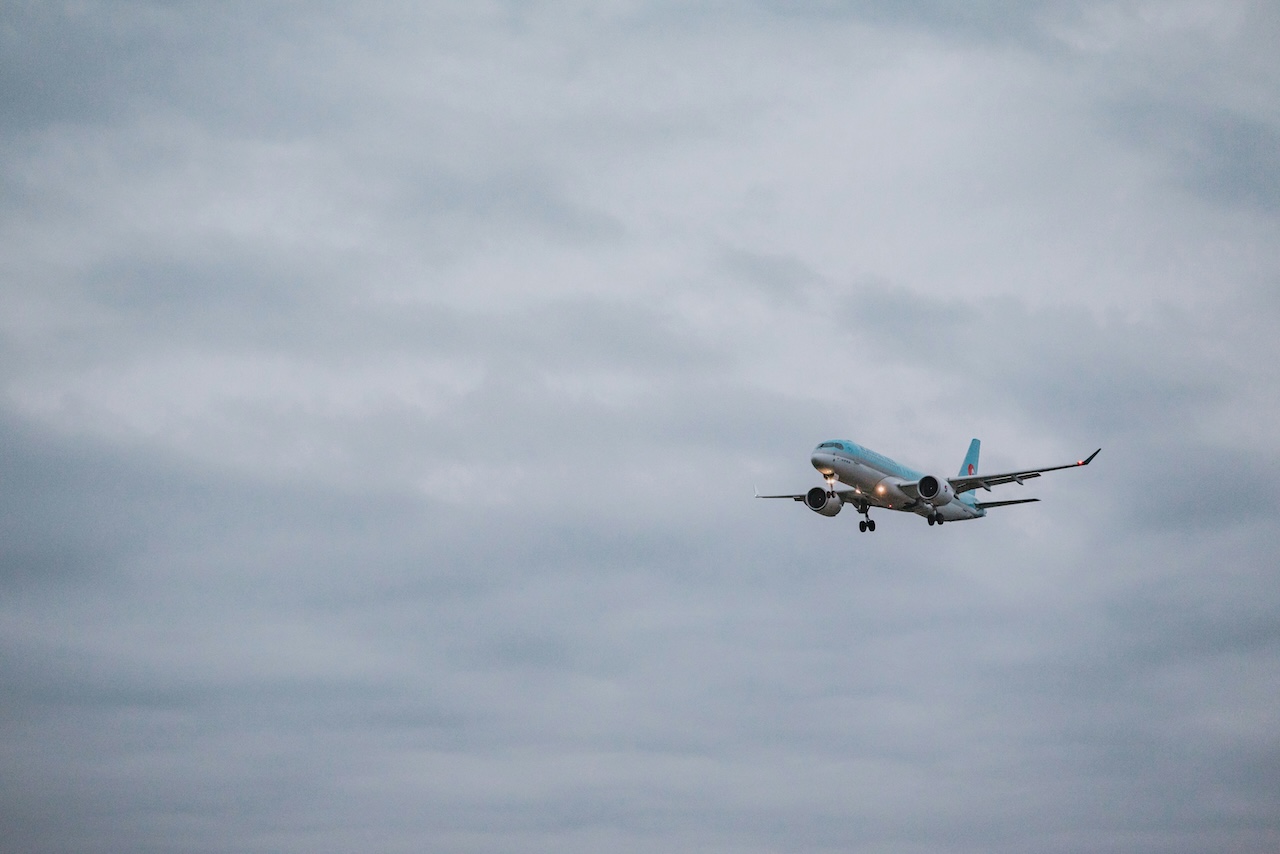
The U.S. Department of Transportation has suspended 13 existing and planned routes for Mexican airlines from AIFA, citing non-compliance with a 2015 air transport agreement and anti-competitive practices.
The United States Department of Transportation (DOT) announced the suspension of 13 current and planned air routes operated by Mexican airlines from the
This decision directly impacts AIFA, located in the State of Mexico, and also freezes any expansion of combined routes (passenger and cargo) from Mexico City International Airport (AICM). The U.S. government argued that Mexico has not complied with the conditions established in the 2015 bilateral agreement, which sought to guarantee equitable conditions for airlines of both countries. According to the DOT, Mexico has reportedly blocked or frozen flights of U.S. airlines over the past three years, which—in the Department’s view—constitutes a direct violation of the treaty.
“Until Mexico stops playing games and fulfills its commitments, we will continue to hold it accountable… No country should be able to take advantage of our airlines, our market, or our passengers without consequences,” stated Sean Duffy in an official communiqué.
According to the new directive, the United States prohibits all combined passenger and cargo flights between its territory and AIFA. Furthermore, it suspends the possibility for Mexican airlines to request new routes from that airport to any U.S. city.
Viva Aerobus: AIFA flights to Austin-Bergstrom, John F. Kennedy (New York), O’Hare (Chicago), Dallas-Fort Worth, Denver, George Bush (Houston), Los Angeles, Miami, and Orlando. Aeroméxico: AIFA flights to Houston and McAllen, as well as a service between AICM and San Juan.
The DOT accuses the Mexican government of abruptly canceling slots (takeoff and landing times) for U.S. airlines since 2022 and of forcing the relocation of cargo flights to AIFA, a measure that, according to Washington, “has not been compensated with sufficient infrastructure or guarantees of equity.”
“Mexico is no one’s piñata; Mexico must be respected,” stated the president during her conference.
Sheinbaum instructed Foreign Minister Juan Ramón de la Fuente to establish contact with Secretary of State, Marco Rubio, and the U.S. Secretary of Transportation, with the objective of reviewing if the decision has merit. “We do not agree with this decision by the Department of Transportation. Yesterday I asked the Foreign Minister to communicate with Secretary Marco Rubio to request a meeting. From our perspective, there is no basis for these actions,” she asserted.
The president also hinted that there might be an underlying political or economic motive behind the DOT’s decision, as —she stated— “it could be an interest in supporting certain U.S. companies against Mexican ones.” Sheinbaum recalled that, despite the differences, the relationship with President Donald Trump has been “one of respect and understanding,” and that this situation should not escalate beyond the diplomatic realm.
“We want respect and dialogue. If they say competition is being violated, let’s review it jointly. But from our perspective, there is no reason to limit flights from AIFA,” she maintained.
Amidst the uncertainty, national airlines began to react. Volaris, one of the most affected by the route suspension, issued a statement informing that it is analyzing the DOT’s announcement “in detail” to minimize operational and commercial impact. “We are in close communication with federal government and industry authorities to explore different options and avoid impacts on our customers,” the company stated.
Aeroméxico and Viva Aerobus are also maintaining communication with the Ministry of Infrastructure, Communications and Transport (SICT) to define joint strategies. “So far, it is the new flights that are affected. What they propose is that future services and expansions are frozen. But we believe that, through dialogue, an understanding can be reached,” Sheinbaum anticipated.
More Articles

2026 World Cup Generated $65 Billion MXN Economic Impact and Created 130,900 Jobs in Mexico: Concanaco
Jul 24, 2026

Nearshoring Without New Plants: How Existing Factories in Querétaro Are Growing
Jul 11, 2026

Nubarium Enhances Cybersecurity and Digital Identity via Open Finance 2050
Jul 22, 2026

CANACOPE Querétaro Warns of Informal Sales of World Cup Products
Jul 7, 2026

Capgemini to Open Second Global Delivery Center in Mexico; Facility to be Located in Bajío Region
Jul 16, 2026

Mexico-US Trade Deficit Reaches $197 Billion: Is Trump Preparing New Tariffs?
Jul 16, 2026