
When Does the USMCA Review Conclude in 2026?: Ebrard
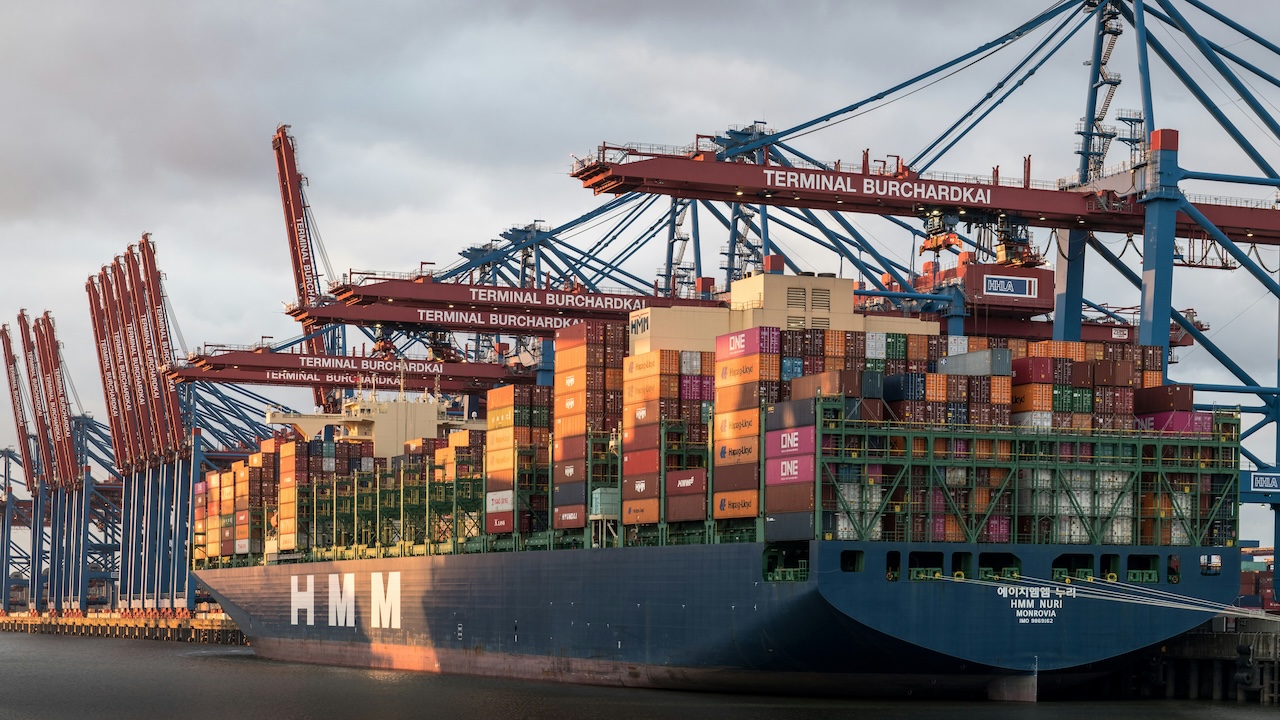
Mexico's Economy Secretary Marcelo Ebrard provides updates on the USMCA review, detailing its timeline, Mexico's objectives, and the importance of dispute resolution.
The review of the United States-Mexico-Canada Agreement (USMCA) is advancing at a critical juncture for North American economic integration. The evaluation process for the region’s most significant trade agreement now has clear dates and defined strategic priorities.
According to Mexico’s Secretary of Economy, Marcelo Ebrard, the USMCA review is proceeding “on schedule and in due form,” with negotiations anticipated to conclude by mid-2026. This process will set the course for the trilateral trade relationship for years to come and will be crucial for key sectors such as automotive, energy, manufacturing, and labor.
The USMCA Review Enters Its Decisive Phase
Marcelo Ebrard confirmed that Mexico, the United States, and Canada are in the final stage of analyzing the internal consultations
conducted with their respective productive sectors. These consultations, which concluded in late 2025, gathered opinions, concerns, and proposals from companies, industrial chambers, unions, and strategic stakeholders in each country.
According to the Secretary of Economy, the three countries are expected to formally submit the conclusions of these exercises by the end of this month, which will allow for full progress in the trilateral review of the agreement.
In Mexico’s case, Ebrard detailed that the report from the national consultation will be presented to President Claudia Sheinbaum in the coming days. Subsequently, the document will be sent to the Senate of the Republic as part of the institutional process accompanying the agreement’s negotiation.
This timeline adheres to the deadlines previously established by the trade partners and maintains summer 2026 as the final date, by which point adjustments to the agreement must be defined.
When Will the USMCA Review Officially Conclude?
According to information provided by the Ministry of Economy, the USMCA review is scheduled to conclude between late June and July 1, 2026. This period symbolically coincides with the FIFA World Cup, which will be jointly hosted in cities across the three countries, a context that reinforces the narrative of regional integration.
Ebrard emphasized that his team has been in constant communication with their counterparts in Washington and Ottawa for months, fostering continuous technical dialogue and preventing last-minute surprises.
Key Dates for the USMCA Review Process
-Late 2025: Conclusion of internal consultations in Mexico, the United States, and Canada -January 2026: Presentation of consultation results to the President and Senate in Mexico -First half of 2026: Technical negotiations among trilateral teams -Late June / July 1, 2026: Formal conclusion of the treaty review
Mexico’s Objective: Maintain and Strengthen the Treaty
Unlike other periods of trade tension in the region, the Mexican government has been emphatic that it is not seeking substantial modification of the USMCA, but rather its preservation and strengthening in specific areas.
Marcelo Ebrard reiterated that there is broad consensus in Mexico regarding the treaty’s importance, considering it not only strategic but essential for the national economy. North America’s productive integration, he stated, is now so profound that it would be difficult to disarticulate without generating significant costs for all three countries.
Mexico’s main objectives during this review include: -Maintain the general structure of the USMCA intact -Strengthen the dispute resolution mechanism -Reduce regulatory uncertainty for businesses -Ensure reciprocity and parity in labor and trade mechanisms
“We want the dispute settlement system to continue functioning and be strengthened,” Ebrard stated, warning that unilateral or abrupt decisions could affect multiple productive sectors.
Dispute Resolution: The Central Focus of Negotiations
One of the most sensitive and strategic points for Mexico in the USMCA review will be the dispute resolution mechanism. For the federal government, this instrument is key to ensuring equitable competitive conditions among the three countries.
Ebrard explained that the objective is not to secure automatic victories for Mexico in panels, but rather to have an agile, symmetrical, and effective system that reduces the operational uncertainty of the treaty.
From the Mexican perspective, strengthening this mechanism would allow for: -Avoiding unilateral decisions that affect entire industries -Ensuring legal equality among trade partners -Expanding the mechanism’s scope to more areas of the treaty -Generating greater certainty for foreign investment
This point gains relevance in sectors such as automotive, agriculture, and energy, where disputes have been recurrent since the USMCA came into force.
Political Tensions and Messages from the United States
The review process is not without political noise. This same week, U.S. President Donald Trump described the USMCA as “irrelevante” (irrelevant) during a visit to an automotive plant in Michigan. In his speech, he asserted that his country does not need either Mexico or Canada to develop its automotive industry.
These statements were interpreted as a pressure tactic preceding formal negotiations, rather than a definitive stance. In practice, North America’s productive framework demonstrates that supply chains are deeply interconnected.
Given this scenario, Ebrard was clear in stating that the Mexican government’s priority is to preserve the treaty, as it has generated a positive balance in terms of regional competitiveness compared to other economic centers worldwide.
Claudia Sheinbaum’s Stance and the Mexico Plan
For her part, President Claudia Sheinbaum endorsed the USMCA review process, affirming that the Mexican economy remains robust with favorable prospects. In this context, she announced that in the coming weeks she will present an assessment of the first year of the Mexico Plan, focused on attracting investment and strengthening strategic sectors.
Sheinbaum highlighted that this plan has had a positive impact on capital inflows, particularly in areas such as: -Energy and oil production -Natural gas -Renewable energy sources -Road infrastructure
This environment, she stated, places Mexico in a strong position to face the treaty review and negotiate from a logic of reciprocity with its trade partners.
You can also read:
The post
first appeared on Líder Empresarial.
More Articles

How Much Will FIFA Pay the Winner of the 2026 World Cup?
Jul 18, 2026
Will Tenneco Make a New Investment in Aguascalientes? What is Known
Jul 24, 2026

Japanese Companies in Mexico: Why the Country Remains Strategic for Investment
Jul 14, 2026
Sales Summit 2026: From Unknown to Chosen
Jul 8, 2026

Women Losing Ground in San Luis Potosí's Economy: IMCO Report
Jul 21, 2026
How Jalisco is Preparing its Industrial Parks for the USMCA Review
Jul 20, 2026