
Why Tourism is Solidifying as Guanajuato's Economic Engine?
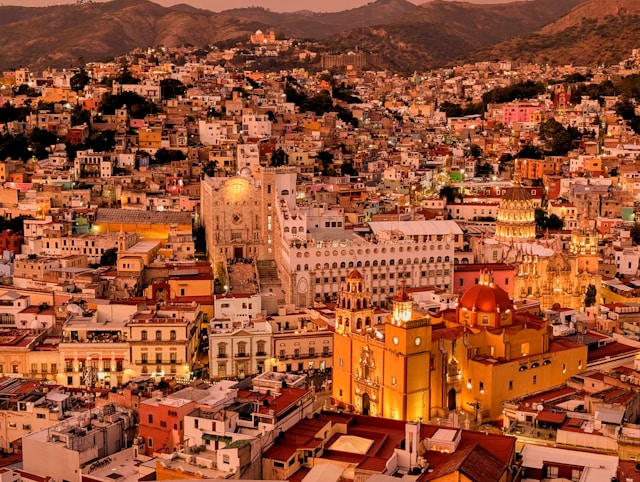
Tourism in Guanajuato is solidifying its role as a key economic driver, demonstrating resilience, generating substantial revenue, jobs, and regional development, outperforming national economic growth.
In an environment of moderate national economic growth, tourism is solidifying as one of Guanajuato’s most resilient and strategic sectors. According to updated information from the State Tourism Observatory, as of the close of November 2025, tourism activity not only maintained positive indicators but also reaffirmed its role as a generator of economic spillover, formal employment, and regional development. Learn more details.
Economic Spillover and Tourist Flow: Signs of Structural Strength in Guanajuato
During November 2025, the state recorded an economic spillover of 5.758 billion pesos, with 478,101 tourists and 2.39 million visitors. These figures reflect the strength of local tourism, events, and short-stay segments, which are key to the state economy.
Average hotel occupancy stood at 47%, with 363,192 rooms occupied. This consistent performance in a traditionally intermediate month for the sector demonstrates stability in demand.
Cumulatively, from January to November 2025, Guanajuato welcomed over 21.8 million visitors, generating a spillover exceeding 82.474 billion pesos, positioning tourism as one of the state’s main economic drivers.
Air Connectivity and Regional Competitiveness
Connectivity continues to be a determining factor. Guanajuato International Airport (BJX) reported 277,400 passengers in November, with a monthly growth of 2%. The cumulative annual total for 2025 reached 2.9 million passengers, a 4% increase compared to 2024.
This performance strengthens Guanajuato’s competitiveness against other destinations in the Bajío region, particularly in business tourism, conferences, and international events, which are high-value-added segments.
Tourism and State GDP: A Sector Above the National Average
Tourism contributes 10.3% to the state’s GDP, surpassing the national average estimated at 8.7%. This confirms its structural weight in Guanajuato’s economy. This participation positions the sector as a key buffer against industrial cycles and macroeconomic adjustments.
From a business perspective, tourism in Guanajuato combines:
- Constant consumer flow.
- High territorial dispersion of economic spillover.
- Integration with local value chains (food, transportation, events, professional services).
Strategic Destinations in Guanajuato: Concentration and Diversification
Data from the OTEG shows differentiated dynamics by municipality:
- Guanajuato City led in November with 53% hotel occupancy and an economic spillover of 709 million pesos, consolidating its cultural and heritage profile.
- Silao stood out with 56% occupancy, driven by business and logistics tourism.
- San Miguel de Allende and
are high-value hubs, both for their infrastructure and their brand positioning.
Collectively, these destinations concentrate a significant portion of the state’s economic spillover, although the growth of intermediate municipalities demonstrates greater decentralization of tourism.
Infrastructure and Installed Capacity
Guanajuato has:
- 1,104 lodging establishments.
- 33,212 available rooms. León and San Miguel de Allende concentrate the largest capacity, reinforcing their role as anchors for urban, cultural, and MICE (Meetings, Incentives, Conferences, and Exhibitions) tourism, while other municipalities are expanding their offerings towards gastronomic, nature, and wellness experiences.
Employment: Social Impact and Productivity
In the third quarter of 2025, the restaurant and accommodation sector employed 217,429 people in the state, positioning Guanajuato in fifth place nationally for tourism job creation.
This sector represents:
- 8% of state employment.
- 4% of national employment in the sector. A relevant data point for the ESG agenda is that 67% of the occupied personnel are women, positioning tourism as a driver of labor inclusion and economic stability for thousands of households.
Tourism Business Ecosystem
Tourism in Guanajuato is supported by a diverse ecosystem that includes more than 17 registered business segments, ranging from traditional lodging and digital platforms to event operators, travel agencies, gastronomic tourism, wellness, nature, and cultural experiences.
This diversity enables:
- Greater resilience to changes in demand.
- Broader distribution of economic spillover.
- Constant opportunities for investment and professionalization.
2026 Outlook: Investment and Growth Opportunities
For 2026, the state is moving forward with a clear strategy:
- Annual Tourism Plan, based on seven regions and a new tourism brand
- 6 billion pesos in infrastructure linked to the 2026 World Cup
- An additional 51 million pesos in public tourism works in Guanajuato City
- International presence at FITUR 2026 to attract visitors and foreign investment
In an environment where ECLAC adjusted Mexico’s economic growth to 0.4% in 2025 and forecasts 1.3% for 2026, tourism is solidifying as a factor of economic resilience for the state.
The post
first appeared on Líder Empresarial.
More Articles

Farmacias Similares and Stori Launch Card to Include Millions
Jul 13, 2026

DIVEX B2B 2026: León to Host Business Gathering Featuring Over 600 Scheduled Meetings
Jul 29, 2026
Aguascalientes Sees 211% Surge in Foreign Direct Investment for Q1 2026
Jul 14, 2026

Life Satisfaction in Nuevo León: Economic Factors and Mental Health Challenges
Jul 16, 2026

Banxico Mandates Banks to Streamline Mobile Transfers
Jul 15, 2026

Electric Vehicles or Specialized Supply Chain? Nuevo León Accelerates on Both Fronts
Jul 6, 2026