
Can Nuevo León Become North America's New Semiconductor Hub?
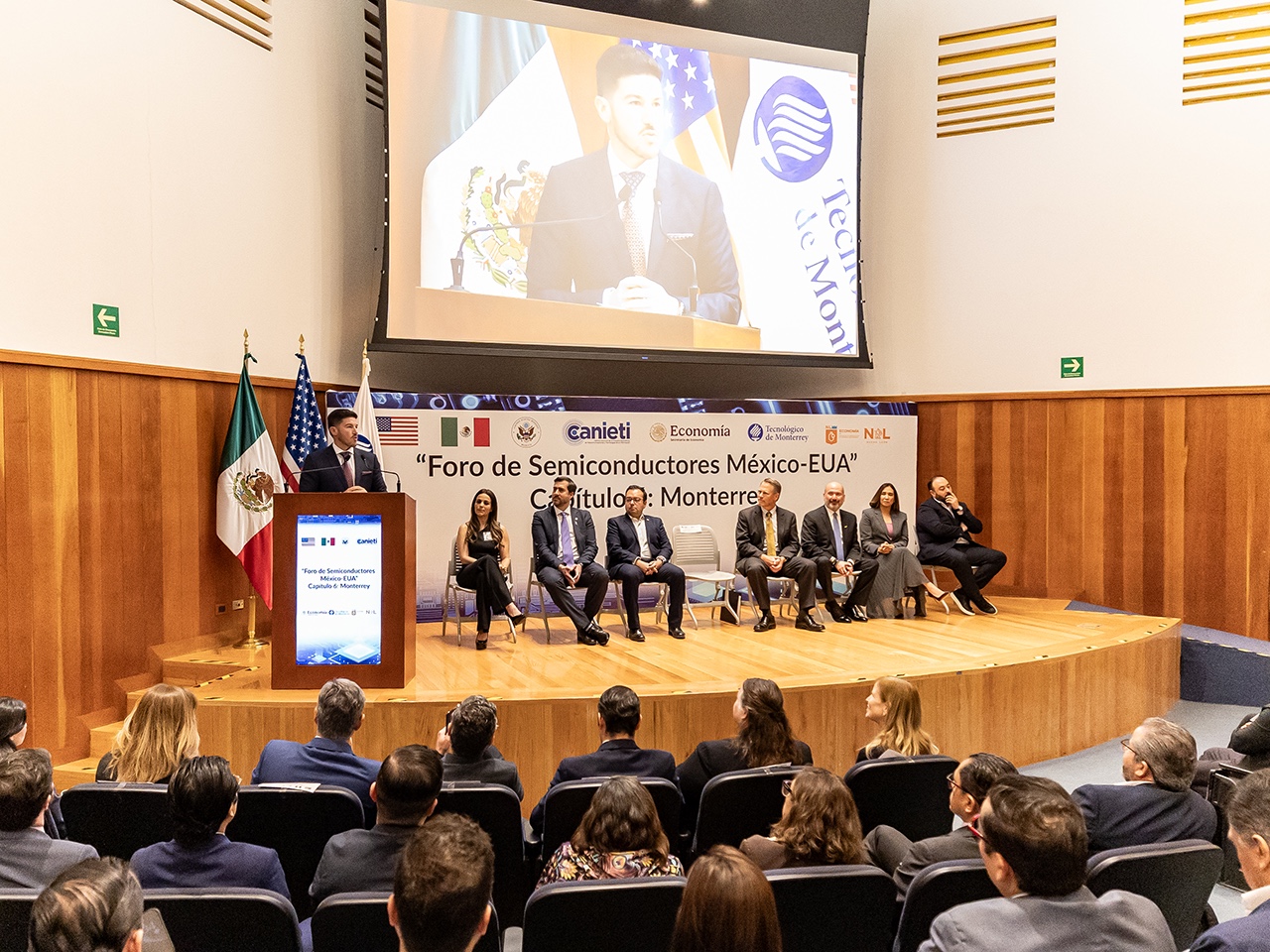
Nuevo León seeks to establish itself as a strategic hub for semiconductor manufacturing and advanced technology in North America, leveraging its competitive advantages.
Nuevo León aims to consolidate its position as a strategic player in the semiconductor industry following the Mexico-United States Semiconductor Forum, Monterrey Chapter. This event brought together authorities, businesses, and academia to strengthen regional technological integration. During the forum, Governor Samuel García highlighted the state’s competitive advantages in infrastructure, energy, talent, and industry—key elements for attracting investment in chip manufacturing and advanced technology within North America’s new productive architecture. The gathering took place in the auditorium of EGADE Business School at the Tecnológico de Monterrey and featured participation from representatives of both countries, as well as leaders from the technology and manufacturing sectors. Furthermore, the forum seeks to accelerate the integration of semiconductor supply chains in North America, amidst a global context defined by industrial reconfiguration and geopolitical tensions in Asia.
Why is Nuevo León Positioning Itself as a Destination for the Semiconductor Industry?
During the forum’s inauguration, the state governor emphasized that Nuevo León possesses structural conditions to attract
What Development Hubs is the State Preparing to Attract Technological Investment?
As part of its industrial strategy, the state administration is preparing two technological development hubs in Pesquería and Colombia. These projects aim to attract investment in high-tech sectors, including the semiconductor industry. These hubs include fiscal incentives and special investment attraction schemes, designed to compete with other technology centers on the continent. Furthermore, the state government explained that these incentives would allow international companies to reduce or eliminate certain federal, state, and municipal taxes, which could position Nuevo León as an attractive destination for new technology plants. This approach aligns with the global trend of nearshoring and the regionalization of supply chains, particularly in strategic industries such as advanced electronics, artificial intelligence, and digital manufacturing.
How Does Mexico-United States Cooperation Strengthen the Semiconductor Ecosystem?
The forum also reflected growing technological cooperation between Mexico and the United States. During the event, Mark Johnson—Deputy Chief of Mission at the U.S. Embassy in Mexico—highlighted the state’s role within the North American industrial ecosystem. Johnson noted that Nuevo León represents a center of manufacturing excellence and innovation, with capabilities ranging from the automotive industry to advanced technology. He further emphasized that the integration of supply chains between both countries strengthens North America’s competitiveness against other global regions.
Why Have Semiconductors Become Strategic for North America?
On the other hand, the push for semiconductors in Mexico occurs at a time of global market reconfiguration. The U.S. strategy aims to reduce dependence on Asia, especially after the logistics disruptions caused by the pandemic. In this context, the CHIPS and Science Act emerged, legislation that promotes regional chip production in North America and fosters collaboration with strategic allies. Binational forums are part of this strategy. To date, these meetings have been held in Jalisco, Baja California, Chihuahua, and Mexico City, in addition to Phoenix, Arizona, one of the main semiconductor hubs in the United States. Nevertheless, the objective of these gatherings is to connect technology companies, universities, and governments to build a competitive regional ecosystem for semiconductor production. Finally, with this initiative, Nuevo León seeks to position itself as a strategic node within the global chip industry, a sector that today drives technological innovation and industrial transformation worldwide.
You may be interested in:The post
More Articles
Leading Industry Companies in San Luis Potosí in 2026
Feb 20, 2026
What is the Economic Cost of Road Blockades in Mexico?
Feb 23, 2026
Nuevo León Leads Industrial Park Development in Mexico
Feb 24, 2026

Celaya Progresses in Strategic Rail Infrastructure
Feb 16, 2026

Sheinbaum Meets with Nordic Business Leaders: Key Discussions
Mar 10, 2026
Can Nuevo León Become North America's New Semiconductor Hub?
Mar 12, 2026