
Conflict in Hormuz: Dollar Surges 97 Cents as Inflation Impacts Mexican Families

The 2026 conflict in Hormuz led to a 97-cent dollar surge, impacting the Mexican peso and fueling inflation, significantly affecting Mexican households.
February 28, 2026, marked a turning point for both the global and Mexican economies. On that day, with the intensification of the conflict against Iran, financial markets experienced a significant shock that even impacted the dollar exchange rate, triggering one of the year’s most pronounced increases.
The Dollar’s Escalation: Anatomy of a Currency Crisis
The Pre-Conflict Scenario: The Calm Before the Storm
To understand the magnitude of the impact, it is essential to analyze the exchange rate’s trajectory in the weeks leading up to the conflict’s outbreak. In early 2026, the Mexican peso maintained surprising strength. On January 22, the dollar reached a peak of 17.60 pesos, but from that point, it began a downward trend, reflecting a certain macroeconomic stability.
During the first half of February, the U.S. currency experienced a gradual weakening. On February 5, it traded at 17.40 pesos, declining to 17.29 and subsequently to 17.23 pesos. By mid-month, the exchange rate stabilized in a range of 17.17 to 17.20 pesos, with values such as 17.19 on February 11 and 17.20 on February 16.
The lowest point of this period was recorded on February 20, 2026, when the dollar reached a minimum of 17.13 pesos, signaling the Mexican peso’s strongest point so far that year. The days leading up to the conflict showed a slight recovery: on February 25, the currency was at 17.18 pesos, while on February 26 and 27, it remained stable around 17.17 pesos.
The February 28th Shock: War Commencement and Immediate Reaction
On February 28, 2026, the day Israel and the United States intensified their offensive against Iran, the exchange rate closed at 17.25 pesos per dollar, just 8 cents above the previous week’s level. This apparent calm was deceptive. Markets, which operate 24 hours on global platforms, began to react as details emerged about the closure of the Strait of Hormuz and the scope of the energy crisis.
March Escalation: The Dollar Breaks Psychological Barriers
The first days of March revealed the true extent of the impact. By March 2, the dollar had already climbed to 17.25 pesos, and the following day, March 3, it reached 17.34 pesos. However, the upward trend was just beginning.
Between March 4 and 6, extreme volatility was recorded. On March 4, the currency closed at 17.54 pesos, while on March 5, it reached 17.72 pesos, showing a pronounced increase. March 6 marked a critical point with an exchange rate of 17.79 pesos per dollar, the highest level since late January.
The third week of March demonstrated persistent volatility. On March 13, the exchange rate stood at 17.92 pesos but experienced a correction on March 17, declining to 17.69 pesos. March 18 marked one of the period’s most dramatic peaks: the dollar reached 17.92 pesos for settlement of obligations, reflecting maximum tension in financial markets since the conflict’s inception.
The last week of March showed significant fluctuations. On March 19, the exchange rate was at 17.81 pesos, decreasing to 17.66 pesos on March 20. However, the final days of the month evinced a new escalation: on March 25, it remained at 17.77 pesos, but on March 27, it closed at 18.06 pesos, while on March 30, it reached a high of 18.10 pesos, establishing the highest point for March.
April: The Historical Peak and Subsequent Correction
The beginning of April marked a critical moment for the exchange rate. On April 1, 2026, the dollar reached a historic high of 18.10 pesos for the settlement of obligations, representing the highest point since the conflict began. This level signified a 5.6% depreciation of the Mexican peso compared to the February 20 minimum, when it traded at 17.13 pesos.
The first day of the month was particularly volatile, with the official exchange rate registering 17.81 pesos for determination, 18.00 pesos for publication in the Official Gazette of the Federation (Diario Oficial de la Federación), and 18.10 pesos for the settlement of dollar-denominated obligations. This dispersion among the different rates reflected extreme market uncertainty.
However, the following days showed a significant correction. On April 6, the dollar decreased to 17.79 pesos for determination, 17.81 pesos for DOF publication, and 18.00 pesos for the settlement of obligations. This reduction marked the beginning of a downward trend that would consolidate in the second week of April.
By mid-April, the downward trend had consolidated. On April 13, the exchange rate closed at 17.34 pesos, while on April 14, it reached 17.26 pesos for determination, 17.34 pesos for DOF publication, and 17.30 pesos for the settlement of obligations, marking the lowest level since early March.
Volatility Analysis: A Month of Unprecedented Turbulence
A comparison between periods reveals the exceptional magnitude of the currency crisis. While the exchange rate fluctuated within a narrow range of just 5 cents (between 17.13 and 17.18 pesos) from February 20 to February 27, in the month following the conflict’s onset, the fluctuation range dramatically multiplied: the dollar oscillated within a 97-cent range, from the pre-conflict low of 17.13 pesos to the historic high of 18.10 pesos recorded on April 1.
This 5.6% increase in just one month represents one of the most pronounced depreciations of the Mexican peso in such a short period in recent years. Geopolitical uncertainty and fears of a greater escalation of the conflict drove dollar demand, exerting downward pressure on the Mexican peso, which had previously demonstrated strength.
An analysis revealed that, despite this shock, the Mexican peso had maintained remarkable resilience in the preceding year, moving from approximately 20.55 pesos per dollar in early 2025 to current levels. This prior strength made the reversal experienced between February and April 2026 even more dramatic.
The recovery observed since mid-April, with the exchange rate declining from 18.10 pesos to 17.26 pesos in just two weeks, suggests that markets began to discount the possibility of a diplomatic resolution to the conflict. However, analysts warned that volatility in global energy markets could generate further economic instability if the conflict prolongs, maintaining the risk of new episodes of Mexican peso depreciation.
The Oil Paradox: Government Gains, Consumer Pain
Iran’s closure of the Strait of Hormuz unleashed a perfect storm in energy markets. Brent crude surpassed the $100 per barrel barrier, trading at $116, while the Mexican Export Blend reached a maximum of $66.63 per barrel, a 5% increase in a single week. More dramatic data shows that in March, Mexican crude escalated from approximately $71 to a historic peak of $111.51 on April 2.
For the federal government and Pemex, these figures represent significant financial relief. Each dollar increase in the barrel price translates into 10.7 billion additional pesos for federal revenues, a relief that could reach $618 million according to estimates. However, this fiscal benefit comes at a high cost for the populace. “Mexico’s dependence on imports of refined fuels and natural gas exacerbates the inflationary impact on citizens’ pockets,” warned an analysis by the Ministry of Finance. The country imports nearly 60% of the gasoline it consumes and approximately 70% of its national natural gas demand, meaning that every increase in international prices is directly passed on to Mexican consumers.
Inflation Hits Consumer Staples
The Organisation for Economic Co-operation and Development (OECD) had to revise its projections, estimating that inflation in Mexico will close the year at 3.8%, up from the previously forecasted 3.3%. Official data from the National Institute of Statistics and Geography (INEGI) confirm this alarming trend: inflation reached 4.63% in the first two weeks of March, significantly exceeding analysts’ expectations.
The Energía y Ecología portal documented that the conflict has caused a 2 percentage point increase in local inflation, a figure explained by rising costs on multiple fronts. Freight costs skyrocketed by up to 300%, while the scarcity of fertilizers, 70% of which Mexico imports from the conflict region, has dramatically increased the prices of basic foodstuffs. Projections are unsettling: a 6% increase is expected for vegetables, 8% for meat, and 10% for bread and cereals. Corn and tortillas, staples of the Mexican diet, are already experiencing price increases, directly affecting the most vulnerable families. In states like Sinaloa, farmers report critical shortages of fertilizers, endangering the production of staple grains.
Sectors in Crisis: From Oil to the Dinner Table
The conflict’s impact is not uniformly distributed across the Mexican economy. The petrochemical industry has been particularly hit, with production plants in Altamira halting production lines due to the scarcity of raw materials imported from the Persian Gulf. This paralysis has a domino effect on the automotive industry, especially in hubs like Puebla, where assembly lines face delays due to a lack of essential plastic components.
The logistics and transportation sector suffers the direct impact of rising freight costs. The rerouting of maritime routes to avoid conflict zones not only increases costs and insurance but also extends delivery times by weeks, affecting Mexico’s entire foreign trade chain. The Federal Electricity Commission (CFE) has warned about possible increases in electricity costs due to the rising price of natural gas, which saw increases of 20%. Faced with this situation, the Ministry of Finance announced the continuation of fiscal stimuli for gasoline and diesel to protect families’ purchasing power, although the effectiveness of these measures faces limits given the persistence of the crisis.
Future Scenarios: Between Diplomacy and Catastrophe
The horizon presents two radically different paths for Mexico. U.S. President Donald Trump revealed he was contacted by “the right people” from Iran interested in reaching an agreement, which could mark a turning point towards stabilizing energy markets. Iranian Foreign Minister Abbas Araghchi noted that previous negotiations were close to an agreement but were hampered by Washington’s “maximalist” demands. Iran’s ambassador to Pakistan described indirect talks as a basis for an “open diplomatic process” if trust is strengthened.
A successful agreement could alleviate Mexico’s inflationary pressure and stabilize the peso’s exchange rate. However, the alternative is concerning. An extension or escalation of the conflict could unleash what the United Nations Development Programme (UNDP) has termed a “triple shock”: more expensive energy, food at risk, and weaker economic growth. Alexander De Croo, UNDP Administrator, warned that a conflict of this magnitude represents a “setback in development” with a “lasting impact, especially in the poorest countries.”
For Mexico, a prolonged conflict could further escalate oil prices and exert additional downward pressure on the peso. The risk of a global recession could destroy demand for Mexican exports, nullifying any fiscal gains derived from high crude prices. Professor John Mearsheimer warned that the consequences could be “catastrophic for the global economy.”
Strategic Recommendations: Reducing Vulnerability
Specialists agree that Mexico must adopt urgent measures to reduce its vulnerability to external shocks. The OECD suggests maintaining a restrictive monetary policy to stabilize the exchange rate, although it warns that this could slow the country’s economic dynamism. Key recommendations include creating strategic basic grain reserves, actively seeking alternative suppliers to diversify imports, and fundamentally, accelerating the transition towards renewable energies. Projects are already being explored to replicate thermosolar plant technology in Mexico, similar to those implemented in Morocco, with the goal of reducing dependence on fossil fuels and strengthening national energy sovereignty.
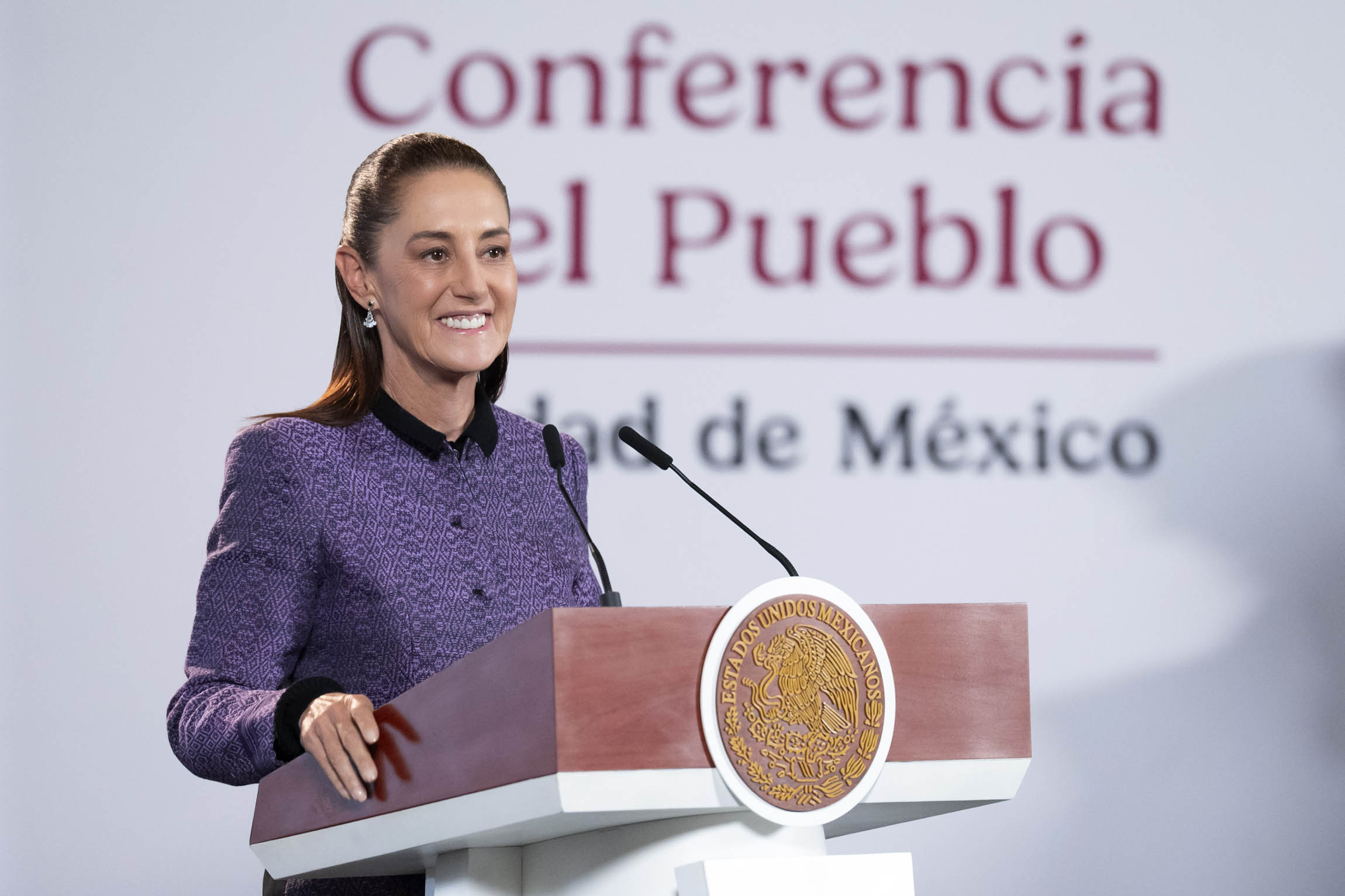
Experts like Dana Stroul emphasize that resolving crises of this magnitude requires a long-term international effort, focused on diplomacy and political will, rather than quick military solutions. Meanwhile, President Claudia Sheinbaum’s administration closely monitors the situation, aware that fiscal benefits are potentially ephemeral against the threat of inflation eroding the purchasing power of millions of Mexicans.
The conflict in the Middle East serves as a severe reminder of how global interconnectedness exposes Mexico to distant events. The country’s ability to navigate this crisis will depend on a combination of immediate mitigation policies and a long-term strategic vision focused on self-sufficiency and diversification.
You may also read:
More Articles

Foodex 2027: How Japan Can Forge New Avenues for Mexican Tequila
Oct 6, 2026

Most In-Demand Medical Specialties in Querétaro
Sep 22, 2026
Two Years into Sheinbaum's Administration: What Labor Reforms Have Been Approved?
Oct 1, 2026

Growing Without Collapsing: What's Pressuring Logistics in Mexico?
Oct 1, 2026

Monterrey Leads New Alliance Between Technology and Health: TCS Drives Digital Transformation
Sep 23, 2026

What Medical Specialties Are Most in Demand in Mexico?
Sep 22, 2026