
Crude Oil Prices Rise Amid Military Conflicts Involving Iran: How This Impacts Mexico
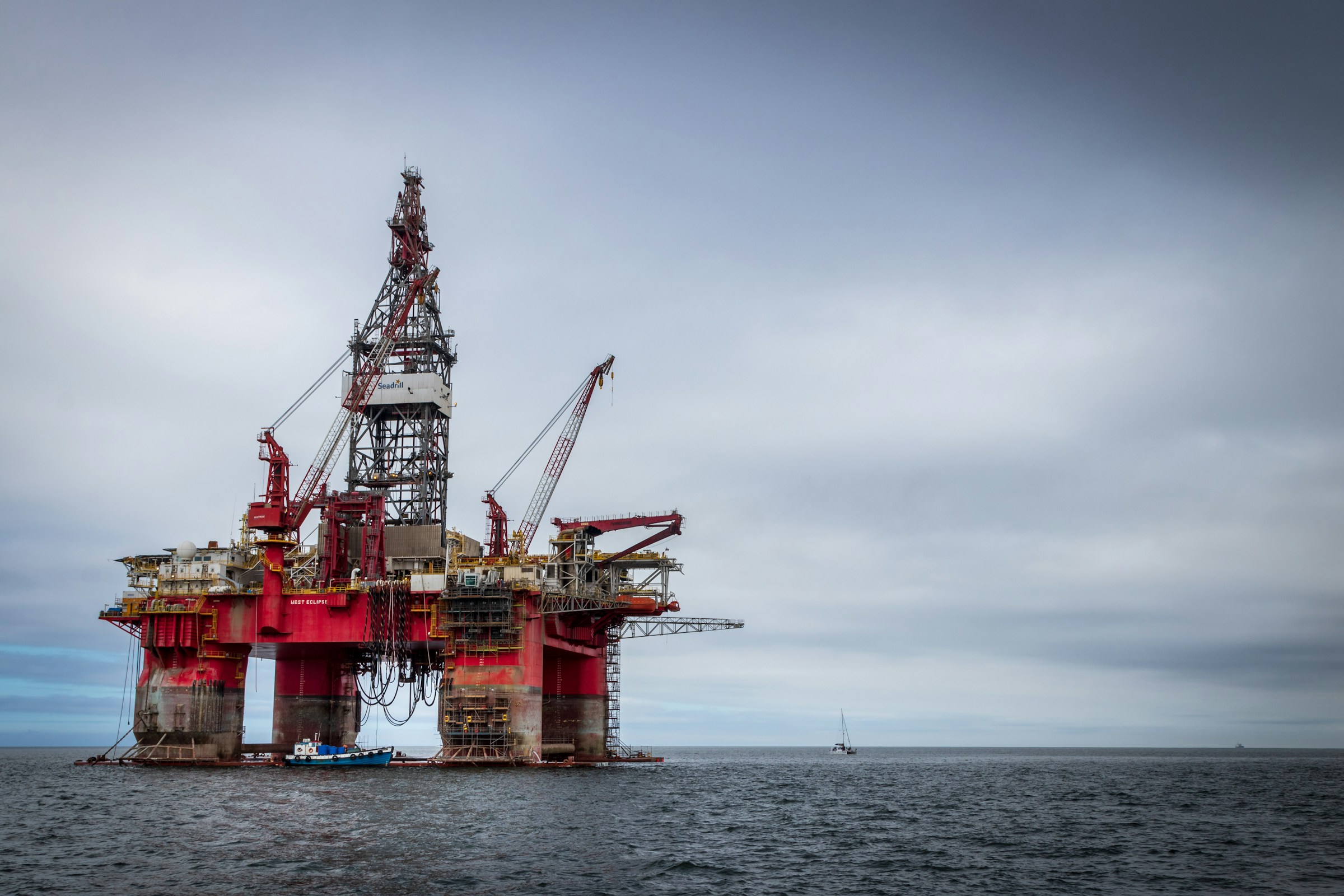
Military conflicts involving Iran are driving global oil prices up. This article analyzes how rising crude prices, driven by Strait of Hormuz risks, impact Mexico's economy, fiscal revenue, fuel costs, and inflation.
When a military conflict involves Iran, global oil prices not only react to the supply “that has already been lost,” but also to the supply that could be lost in a matter of hours. This “fear” translates into a risk premium that pushes international benchmarks (Brent and WTI) upward. In recent days, the trigger has been the military escalation
against Iran, with reports of interferences, attacks, and disruptions to commercial navigation in the Strait of Hormuz, which is not merely another point on the map, but rather an energy chokepoint. Through this route, a volume equivalent to approximately 20% of global petroleum liquids consumption transits, about 20 million barrels per day (2024 average), according to the U.S. EIA. In this context, Brent touched the 82 dollar per barrel zone at its intraday peak before moderating; WTI also rebounded strongly. Analysts project it could reach 100-108 dollars per barrel.
The “Trigger” Driving Oil Prices: Hormuz, Insurance, and Logistics
In a conflict of this magnitude, specialists argue that oil prices rise in layers: -Risk of physical disruption: If Hormuz slows down or is blocked, the market discounts fewer available barrels, pushing prices up today. -Cost of moving crude: Even if the oil “exists,” it can become more expensive to transport due to detours, reduced vessel availability, and war risk premiums. There have even been reports of war risk insurance cancellations for ships in the area, which raises costs and reduces willingness to navigate. -Domino effect on gas: When there is also tension over gas/LNG (e.g., stoppages or threats to facilities), the energy shock amplifies and fuels inflation expectations.
Why Might the Increase in Oil Prices Be Prolonged?
There are clear precedents; in January 2020, after the attack that killed Qasem Soleimani, oil prices jumped around 4% at the time, but the movement moderated as the market assessed that there would be no sustained supply cut. The lesson is key to interpreting the current situation, as oil “heats up” quickly due to risk, but only remains high if a prolonged disruption is confirmed:
- Damaged infrastructure
- Actual closure of routes
- Harsher sanctions
- Regional escalation
What Does Rising Oil Prices Imply for Mexico?
You may also be interested in Mexico faces a mixed scenario. It produces crude oil but imports refined fuels. This duality defines how an oil shock stemming from conflicts like the one involving Iran impacts the country.
However, this Monday, Mexico’s president, Claudia Sheinbaum, ruled out that recent conflicts in the Middle East, specifically between the United States and Iran, would cause a “sharp increase in gasoline prices” in Mexico.
Higher Fiscal Revenue… with Structural Limits
A higher international price can translate into increased oil revenues for the federal government. Historically, the Ministry of Finance and Public Credit (SHCP) has estimated that each additional dollar per barrel improves oil tax collection. However, the benefit is neither automatic nor complete: -Mexico exports less crude oil than before. -Pemex increasingly prioritizes domestic refining. -If the price significantly exceeds the budgetary assumption (USD 54.9/barrel in 2026), there is fiscal margin; if it falls below, it pressures finances. The positive effect exists, but it is smaller than in periods of high exports.
Pressure on Gasoline and Diesel Prices
Although the country refines more, domestic fuel prices remain linked to the international market. When oil prices rise: -Imported molecules become more expensive. -Transportation and logistics costs increase. -The exchange rate can amplify the impact if the peso weakens. Even with fiscal stimuli to the IEPS (Special Tax on Production and Services), part of the increase eventually passes on to the consumer. This directly impacts: -Freight transport -Business costs -General inflation
Indirect Inflationary Risk
Oil does not only affect gasoline, as rising energy costs gradually filter into the economy, thus also impacting: -Industrial production costs -Food transport -Service rates
Pemex: Higher Revenue, But Greater Operational Exposure
A more expensive barrel increases crude oil sales revenue. However: -Pemex also faces higher operating costs. -Refining margins (“crack spreads”) can be compressed. -Profitability depends on the balance between exporting crude and producing fuels. If the refining system operates efficiently, the impact can be favorable. If not, the benefit is diluted.
Oil Hedge: Protection Against Declines, Not Against Increases
Mexico’s oil hedge protects the budget if the price falls below the level estimated in the Economic Package. But it’s important to understand: -It does not limit gains when prices rise. -It acts as insurance against plunges. -It reduces budgetary volatility. In a war scenario that drives up prices, Mexico can benefit. If the conflict dissipates and prices fall, the hedge comes into play.
Exchange Rate and Country Risk Perception
Conflicts in the Middle East often increase global risk aversion. This can lead to: -Capital outflow from emerging markets. -Pressure on the peso. -Increased financial volatility. A weaker peso makes energy imports more expensive and amplifies the oil shock.
Businesses and Consumers: Uneven Impact
The effects are not distributed equally: -Businesses intensive in transport and logistics face higher costs. -Oil-exporting sectors may benefit. -Consumers absorb increases in fuel and basic goods. The final impact depends on the duration of the conflict and the fiscal and monetary response.
You can also read
The entry
first appeared in Líder Empresarial.
More Articles

Querétaro and Microsoft Launch Free AI Courses: Dates and How to Register
Feb 26, 2026

Guanajuato Positions its Leather and Footwear Industry in the Texas Market
Feb 5, 2026

Apple Unveils iPhone 17e: Features and Pricing in Mexico
Mar 2, 2026

Madrid-Guanajuato Flight: Air Route Driving Tourism and Investment
Feb 3, 2026

Mexico-Canada Economic Plan Announced: What Does It Entail?
Feb 17, 2026

Aguascalientes Kicks Off 2026 with Over 1,600 Formal Jobs Generated in January
Feb 10, 2026