
Middle East Conflict Brings Mexican Oil Closer to Japan

Geopolitical shifts due to the Middle East conflict are reshaping global oil trade routes, prompting Japan to diversify its crude oil sources.
The near-total closure of the Strait of Hormuz, a consequence of the war between the United States, Israel, and Iran that erupted in late February, has forced Japan to re-evaluate, in record time, where it sources the crude oil that sustains its industry. In this unexpected realignment, Mexico has found an opening. A tanker carrying Mexican crude arrived in Japan this week for the first time since 2023, a specific event that, however, reveals something broader: how geopolitical conflicts are redrawing global oil trade routes in real-time.
The Fact: A Shipment with a Name and Address
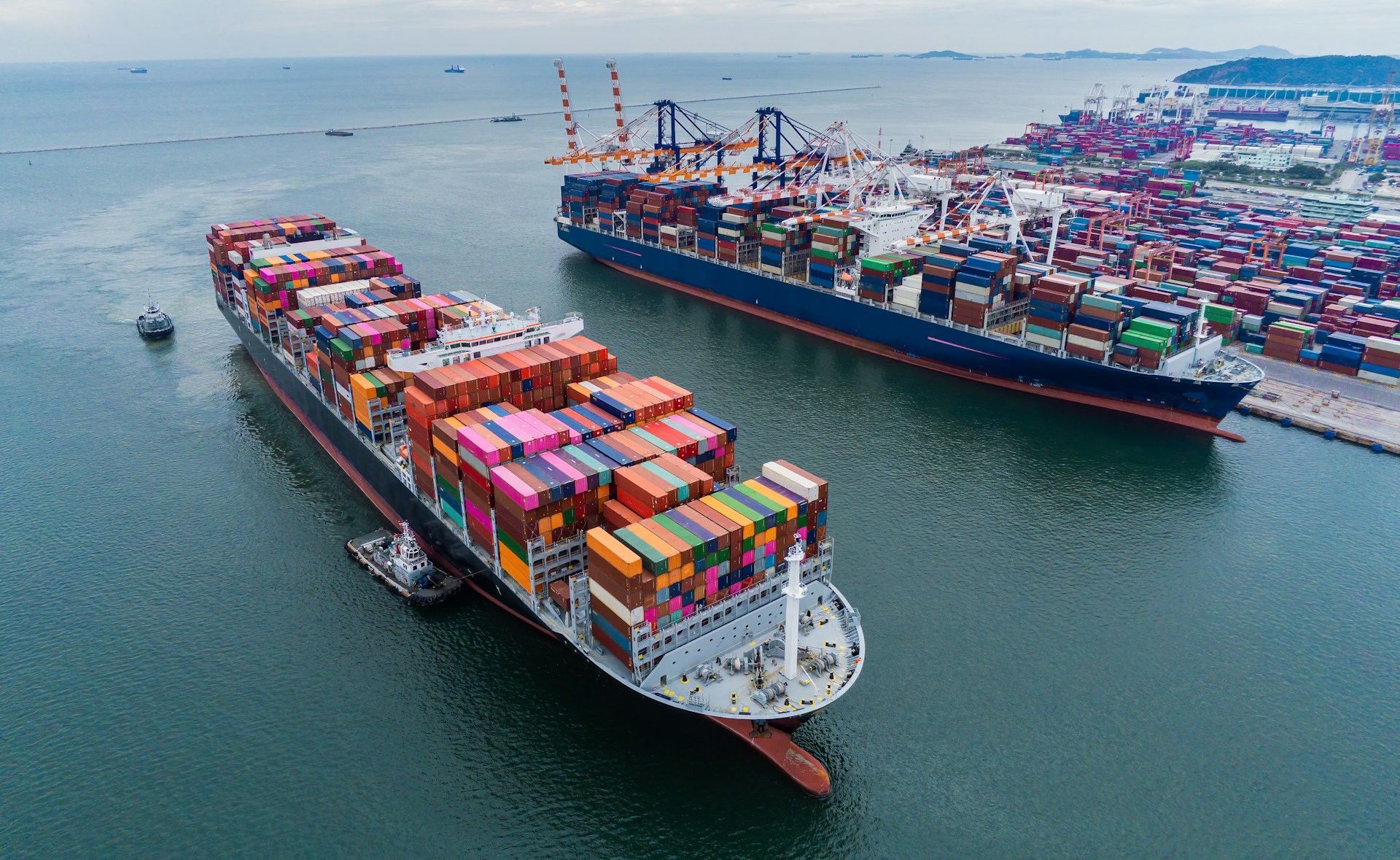
The vessel transporting Mexican crude for Cosmo Oil, a subsidiary of Cosmo Energy Holdings, was scheduled to arrive in Japan this Friday, according to the Japanese Ministry of Industry. This marks the first arrival of Mexican crude in Japan since the war against Iran began, according to the Ministry of Economy, Trade, and Industry (METI). The order was for one million barrels of Isthmus crude, loaded onto the vessels Eagle Kuantan and Eagle Kangar from Petróleos Mexicanos (Pemex)‘s Pajaritos terminal on the Gulf of Mexico coast. The supply was handled by PMI, the commercial arm of the Mexican state-owned oil company.
The chosen route illustrates the level of disruption facing global energy trade: the vessel departed from the Gulf of Mexico and rounded the Cape of Good Hope at the southern tip of Africa, first reaching the Yokkaichi refinery in central Japan, and then continuing to the Chiba refinery near Tokyo. It is a longer and more costly journey than the usual route from the Middle East, but one that Cosmo deemed necessary to guarantee the supply to its three refineries over the coming months.
The Diplomatic Origin: A Call Between Leaders
The agreement did not arise spontaneously in the spot market. It has an identifiable political origin: in April, Japan’s Prime Minister Sanae Takaichi spoke by phone with Mexico’s President Claudia Sheinbaum to discuss the war in the Middle East and agree to strengthen energy cooperation between the two countries. Sheinbaum stated in a press conference that the Japanese government had already requested Pemex, even before that call, about the possibility of exporting oil. “There had already been an agreement for a certain amount of oil that could be exported,” the president noted. The president was careful to qualify the scope of the announcement: she clarified that this is not an unprecedented event for Mexico, but rather the placement of surplus crude that is not used in national refineries.
On the Japanese side, the Minister of Economy, Trade, and Industry, Ryosei Akazawa, confirmed the agreement for one million barrels in a subsequent press conference, as part of a broader strategy to diversify supply towards Mexico and other producing countries.
The Geopolitical Context: A Dependence That Became Unsustainable
To understand why Japan turned to such a distant supplier as Mexico, one must first grasp its exposure to the Middle East. Before the conflict, over 90% of the crude oil Japan imported came from that region, primarily from Saudi Arabia, the United Arab Emirates, Kuwait, and Qatar—countries whose exports depend directly on the Strait of Hormuz. This maritime corridor is no ordinary channel. Twenty million barrels per day transit through it, equivalent to a quarter of global oil maritime trade, and 80% of that volume is destined for Asia. The near-total closure of Hormuz therefore left Japan among the most exposed countries in the world to the crisis.
However, the search for alternatives did not begin with the war. As early as 2025, before the military escalation, Japan had already reduced the Middle East’s share in its crude supply from 95.4% to 93.5%, relying on purchases from the United States, Africa, Latin America, and Oceania. The Mexican episode thus fits into a diversification trend that the war has only abruptly accelerated.
The Commercial Logic: Behind the Agreement
The explanation is not exhausted by diplomacy. Behind the shipment is a purely economic reason: price differentials between markets made it more profitable, for several weeks, to send Mexican crude to Asia than to place it in its traditional destination. According to an analysis by data firm Kpler, PMI faces increasing pressure in the U.S. Gulf, its historical market, because the Dos Bocas refinery is absorbing more and more crude for domestic consumption, while Venezuelan crude has reappeared as a direct competitor in that basin. This double squeeze led PMI to evaluate alternative destinations based on how well each shipment paid, not just on the customary route.
The result was that Maya blend, loaded in July, became up to eight dollars per barrel more competitive for complex refineries in East Asia than a month earlier, remaining about four dollars per barrel below the price of Oman crude, its main competitor in that market. This does not mean Mexico is abandoning the Atlantic, as it does not have sufficient barrels to sustain a shift of this magnitude, but it does mean that Asia has begun to weigh more heavily in its commercial decision-making. The crude oil case was not isolated. Cosmo also received a shipment of Mexican high-sulfur fuel oil in Singapore in May, attracted by a price differential between Asia and the West of nearly $60 per ton, more than double the pre-conflict levels. The emerging pattern is one of arbitrage pushing Mexican barrels eastward as long as the Middle East crisis keeps regional prices distorted.
A Critical Perspective: The Risk of Overstating the Event
However, it is worth putting the episode into perspective. Japan imports an average of 2.3 million barrels of crude oil per day, so the two recent Mexican shipments, totaling approximately two million barrels, are equivalent to less than a week of its usual consumption. This suggests that the move functions more as a temporary relief to sustain refinery operations for a few weeks, while Tokyo reorganizes its entire supply chain, rather than as the beginning of a structural commercial relationship.
In fact, along with Mexico, Cosmo also turned to the United States, Malaysia, and Brazil as alternative suppliers during this period, confirming that Japan’s strategy is broad diversification rather than substitution towards a single country. Pemex’s own data reinforce this cautious interpretation. Crude exports to the region identified as the Far East went from being unreported in January to 35,388 barrels per day in February and 97,779 barrels per day in May 2026. The increase is real and verifiable, but it is worth remembering that this figure groups several Asian destinations, not just Japan, and represents a smaller fraction compared to Mexico’s total crude exports, which in May amounted to 513,373 barrels per day.
The contrast is clear: there is a measurable shift towards Asia in Mexican oil trade, driven by an exceptional geopolitical situation and a temporal window that will remain open as long as the crisis in Hormuz persists. But to frame this shift as Mexico replacing the Middle East as Japan’s supplier would be to get ahead of what official and commercial data, for now, actually show.
You Might Also Like:
appears first on Líder Empresarial.
More Articles

Japanese Companies in Mexico: Why the Country Remains Strategic for Investment
Jul 14, 2026
Nearshoring Without New Plants: How Existing Factories in Querétaro Are Growing
Jul 11, 2026

ITESO: Informality, the Unexpected Driver of National GDP
Jun 17, 2026

CANACOPE Querétaro Warns of Informal Sales of World Cup Products
Jul 7, 2026

Nissan and Takayama Recycle Paint Process Waste for Construction Materials
Jun 25, 2026

AI No Longer Lives in Chat: It's Now Working Within Your Company's Tools
Jun 19, 2026