
Mexican Engineers Develop First Common Language Interface for Industrial Robots in the Americas
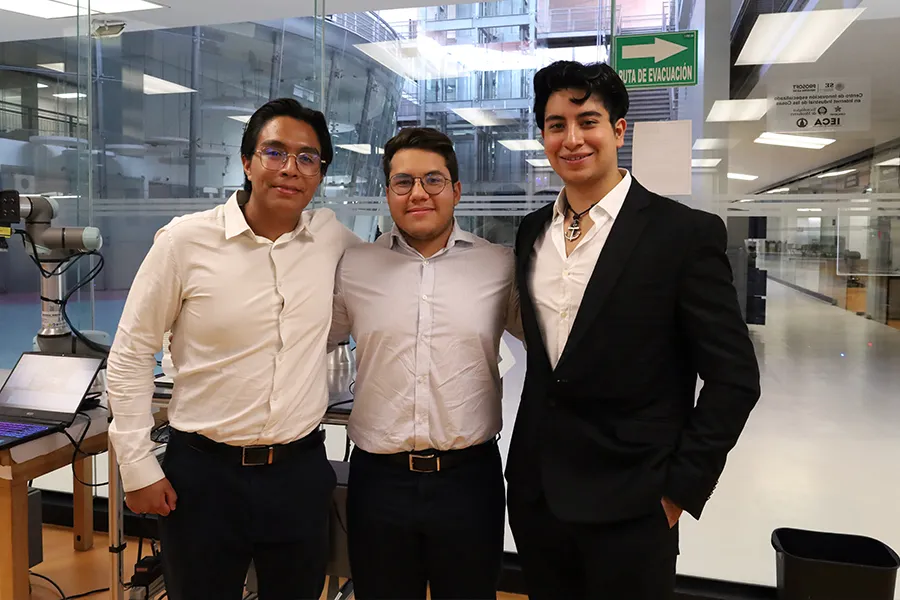
Engineers from Tec de Monterrey, in collaboration with Siemens and Universal Robots, introduce SRCI, the first common language interface for industrial robots in the Americas, streamlining manufacturing operations.
In a significant advancement for the manufacturing industry, recent engineering graduates from Tecnológico de Monterrey, Mexico City Campus, presented the first demonstration in the Americas of the Standard Robot Command Interface (SRCI) protocol. This protocol aims to solve a historical challenge in automated manufacturing: the lack of a common language for robots from different brands. Collaboration with Siemens and Universal Robots made this demonstration a reality. They address a recurring problem: each robot operates with its own instructions and environments, forcing engineers to master diverse platforms and increasing operational costs. SRCI offers a solution by enabling robots of different brands to communicate through a single interface, thereby optimizing coordination and operation in production processes.
The SRCI protocol, a key technological solution, is implemented through a Siemens Programmable Logic Controller (PLC), which enables robots to operate regardless of their brand. Juan Pablo Castro, one of the Tec de Monterrey graduates involved in the development, highlighted that swapping one robot for another will be simpler, requiring only minimal adjustments. This advancement reduces lead times, costs, and operational complexity in processes such as assembly, welding, palletizing, and packaging.
The SRCI protocol not only addresses immediate needs; it also marks a turning point towards a future where factories will be more intelligent and adaptable. David Navarro Durán, a professor in the Mechatronics Department at Tec de Monterrey, emphasized that this advancement fosters a more efficient, accessible, and flexible ecosystem for the industry. Furthermore, it facilitates the creation of smart factories that can rapidly adapt to technological changes.
Academic and industrial collaboration: This project is the result of collaboration among Tec de Monterrey, Siemens, and Universal Robots, which provided logistical support, licenses, and technical advice. The students initiated the development as part of their graduation project, demonstrating how academia and industry can work together to solve current manufacturing challenges.
The SRCI protocol is now advancing towards a technical documentation phase, with the goal of expanding its implementation and adoption within the industry. This initial demonstration also opens the door to new collaboration opportunities for integrating the protocol into Siemens’ autonomous mobile robots.
The post
More Articles

Beer and Snacks Emerge as Winners of Mexico's Consumption "World Cup"
Jul 10, 2026

Biofabrication 2026 Arrives in Monterrey: What Impact Will It Have on Latin American Science?
Jul 29, 2026

Life Satisfaction in Nuevo León: Economic Factors and Mental Health Challenges
Jul 16, 2026
Will Artificial Intelligence Be Regulated in Mexico? Initiatives Under Consideration
Jul 20, 2026

How UANL Will Integrate Artificial Intelligence into Its Educational Programs
Jul 15, 2026

Banxico Mandates Banks to Streamline Mobile Transfers
Jul 15, 2026