
Mexico Under Scrutiny: Why Rating Agencies Are Sounding the Alarm
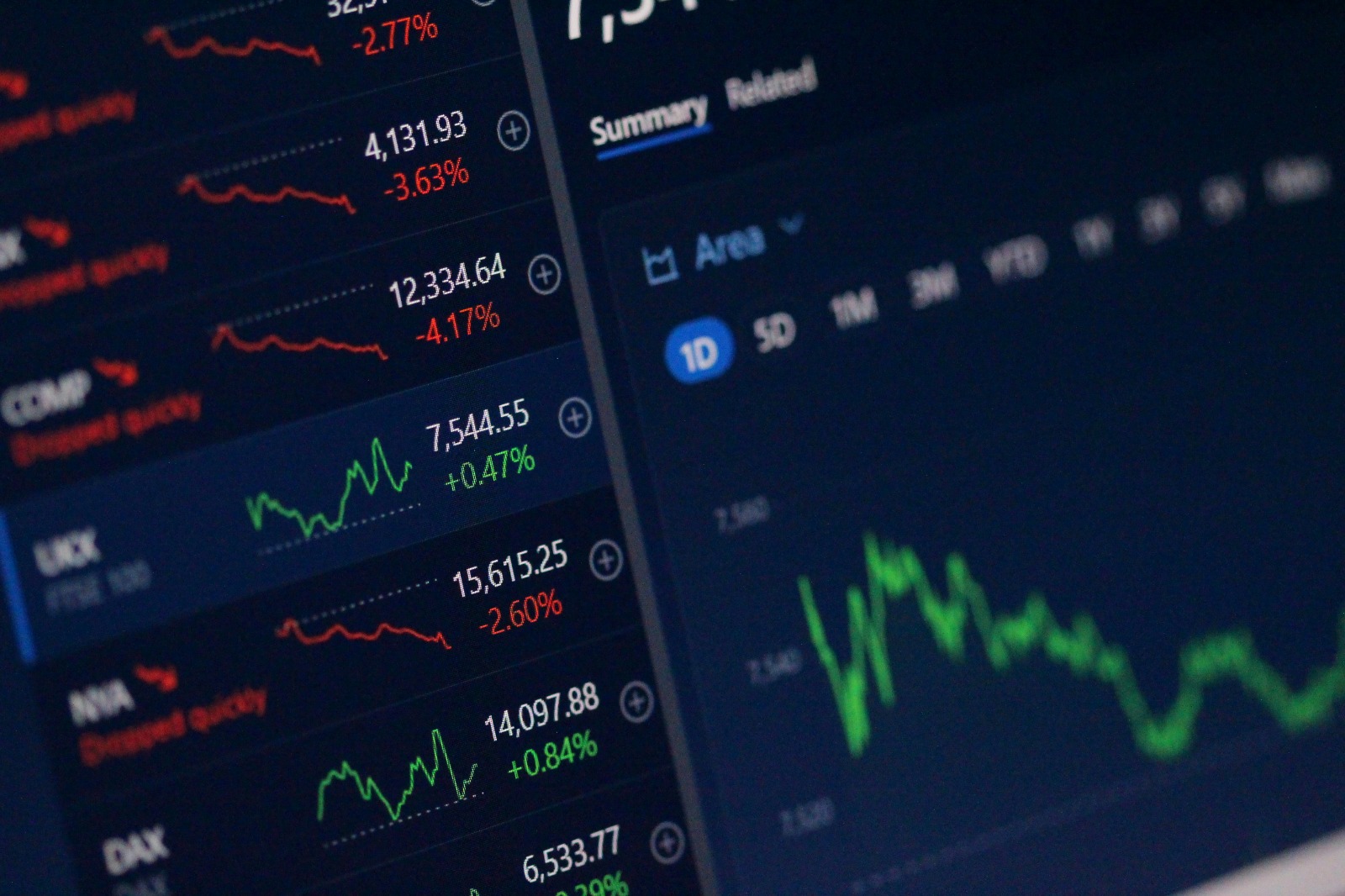
Leading credit rating agencies highlight persistent risks for Mexico, including low growth, rising debt, and reliance on the US.
When three of the world’s most influential rating agencies agree on the same risk factors for a single country, the message transcends financial technicalities and becomes a signal that markets, investors, and citizens are right to take seriously. In the span of a few weeks, Fitch, S&P, and Moody’s issued their verdicts on Mexico. Their conclusions share common threads: low growth, rising debt, Pemex as an Achilles’ heel, and a commercial dependence on the United States that can be both a strength and a vulnerability.
What is a Sovereign Rating?
Imagine a country, much like an individual applying for credit, needs to demonstrate its ability to repay its obligations. Rating agencies are firms that analyze this capacity and assign a grade. As GBM explains on its educational platform, three major agencies are globally recognized as “the big three”: Moody’s, Standard & Poor’s (S&P), and Fitch. They assess the long-term debt issued in U.S. dollars by the federal government.
The scale ranges from “AAA” to “D.” An “AAA” rating signifies an extremely strong capacity to pay and virtually no risk; countries like Germany or Canada have achieved this rating. At the opposite end, “D” indicates a default has already occurred. In between, there’s a crucial distinction: investment grade, which separates relatively safe debt from so-called speculative grade. The dividing line lies between BBB- and BB+.
This distinction is significant. By regulation, many pension funds, insurance companies, and sovereign wealth funds can only purchase debt from countries with investment-grade ratings. The United Nations Development Programme notes that ratings can harmonize investor expectations by quantifying the perception of country risk.
The Current Landscape: Three Agencies, Three Messages
In just over a month, the three major agencies issued their assessments of Mexico, presenting distinct positions but converging concerns.
Fitch was the first to comment, on April 10, 2026, affirming Mexico’s rating at BBB-, the lowest notch within investment grade, with a stable outlook. On May 12, S&P confirmed its BBB rating but revised the outlook from stable to negative, signaling a potential downgrade within the next 24 months. Finally, Moody’s was the most impactful: on May 20, it directly lowered Mexico’s rating from Baa2 to Baa3, although it shifted the outlook from negative to stable, indicating no further movement is anticipated in the next 18 months.
All three agencies agree that Mexico retains investment-grade status. However, the direction of their movements speaks volumes.
Signal 1: Growth That Falls Short
The first shared concern is the pace of economic expansion. S&P documented that GDP grew by a mere 0.8% in 2025, down from 3.3% in 2023, and that in the first quarter of 2026, the economy advanced only 0.2% year-over-year. Fitch, using its own methodology, recorded growth of 0.6% for 2025 and projects a recovery to 1.7% in 2026.
The structural problem runs deeper than a single poor year. S&P pointed out that the trend for real GDP per capita over a 10-year period is only 0.8%, below that of sovereigns in the same income category. Moody’s noted that Mexico will only gradually return to a trend growth rate near 2%, and that economic weakness complicates fiscal consolidation.
Low growth is not just a welfare issue; it’s a fiscal problem. With an economy not growing sufficiently fast, tax revenues fall short of closing the gap between government revenue and expenditure. This cycle is at the heart of the three rating agencies’ alarms.
Signal 2: Rising Debt and Unyielding Spending
The second common factor is the trajectory of public debt. Fitch reported that general government debt reached 54.6% of GDP in 2025 and projects it will surpass the median of 58% for BBB-rated countries before 2027. S&P forecasts that net general government debt will climb to 56.3% of GDP in 2026 and continue rising to 59.4% by 2029.
IMCO warned that broad public debt exceeded 61.8% of GDP by the end of 2025, the first time in over 20 years that government obligations surpassed this threshold, and the IMF projects it will remain above 63% until 2031 if the trend persists.
What exacerbates the diagnosis is spending rigidity. Moody’s pointed out that pension expenditures, debt service, and support for Pemex consume an increasing proportion of the budget, limiting the government’s ability to adjust its finances without compromising essential services. Fitch added that interest payments represent about 17% of government revenue, one of the highest within the BBB rating category, leaving less room for investment, health, or education.
Signal 3: The Burden of Pemex and CFE
All three rating agencies explicitly mention Petróleos Mexicanos (Pemex) as a structural risk to public finances. Not because it’s an insignificant asset, but because its recurrent losses have progressively become sovereign debt.
Moody’s quantified the cost: the government provided approximately $35 billion (1.9% of GDP) to Pemex during 2025 and has budgeted to transfer an additional $14 billion (0.7% of GDP) in 2026, with support expected to continue in subsequent years. For this reason, Moody’s lowered its assessment of Mexico’s fiscal strength to reflect the contingent risk Pemex represents on the sovereign balance sheet.
S&P noted that, although the sovereign does not formally guarantee the debt of Pemex or CFE (Comisión Federal de Electricidad), the probability of the government providing extraordinary support to both entities is “almost certain,” given recent history. Consequently, both companies receive the same rating as the sovereign, despite their weaker individual credit profiles.
Fitch described the phenomenon as a gradual migration of Pemex’s debt onto the sovereign’s balance sheet and characterized contingent liabilities as one of the factors that detracts a notch from the assessment of Mexico’s public finances.
Signal 4: The U.S. Commercial Link, a Double-Edged Sword
Mexico has been the United States’ primary trading partner for three consecutive years, with exports growing 7.6% in 2025 despite tariff uncertainty. This link is a strength, but also a risk factor that all three agencies closely monitor.
The negotiation of the USMCA (United States-Mexico-Canada Agreement) is at a critical juncture. S&P explained that Mexico, the United States, and Canada have a deadline of July 1, 2026, to extend the agreement for another 16 years. If an agreement is not reached by that date, countries could move to annual reviews, and any party could withdraw unilaterally after six months’ notice. Key negotiation points include rules of origin, regional supply chains, and Mexican energy market regulations.
Negotiations have also been complicated by factors beyond trade. S&P documented that growing U.S. concerns about links between drug trafficking organizations and various levels of government in Mexico have generated new bilateral tensions that are spilling into trade discussions. S&P and Moody’s noted that an unexpected deterioration in U.S. relations could directly affect the country’s economic stability and external position.
What Converges in the Three Assessments
Beyond differing methodologies and ratings, Moody’s, S&P, and Fitch share a diagnosis: Mexico has solid macroeconomic fundamentals, a credible central bank, a flexible exchange rate, and a robust external position. However, it faces a combination of structural low growth, rigid spending, rising debt, and contingent liabilities that limit its fiscal maneuverability.
IMCO directly stated this, warning that without additional growth or a fiscal reform to broaden the revenue base, the debt trajectory is unlikely to change on its own.
For the rating agencies, the question isn’t whether Mexico can pay its debt today. That capacity exists. The question is whether the next two to three years will allow for debt stabilization, or if it will continue to rise to the point of eroding the rating.
What Can Improve the Outlook?
The three agencies also outlined their positive scenarios.
- Moody’s indicated that an upward impulse would emerge if fiscal strength improves durably, with progress toward deficits consistent with debt reduction and a decrease in contingent risks, especially those related to Pemex.
- S&P stated that it could revise the outlook to stable if policy implementation translates into significant fiscal consolidation.
- Fitch pointed to consolidation that places debt on a downward trajectory, particularly through improvements in fiscal revenues, as a positive condition.
The government announced a 5.6 trillion peso Infrastructure Plan in February 2026 (15% of GDP), involving public, private, and mixed investments. S&P acknowledged that the initiatives were well-received in the local market, though it cautioned that implementation has been very slow and uncertainty persists regarding financing mechanisms.
The Underlying Read
What occurred in May 2026 was not a coincidence of calendars. It was the accumulation of years of insufficient growth, increasingly rigid spending, and a state-owned enterprise whose losses the state absorbed without being able to reverse them. The fact that Moody’s directly downgraded the rating, S&P put the market on yellow alert, and Fitch keeps Mexico at the minimum threshold of investment grade are not three isolated events: they are three distinct readings of the same diagnosis.
IMCO precisely articulated it: the Mexican state has a narrow, but not non-existent, fiscal margin. What matters is what is done with it: whether spending is improved, whether an environment is created to spur private investment, and whether consistent signals are sent abroad. The rating agencies are not asking for a fiscal miracle. They are asking for evidence that the direction is changing. That evidence is still pending.
You Might Also Like:
The entry
first appears on Líder Empresarial.
More Articles
Capgemini Mexico Recognized on Most Ethical Companies Ranking 2026
Sep 24, 2026
Most In-Demand Medical Specialties in Querétaro
Sep 22, 2026

Do Mexican Companies Truly Innovate?
Oct 1, 2026

San Luis Potosí Auto Parts Industry Poised to Close 2026 at $8 Billion
Sep 8, 2026

Omnilife Plans New Investment in Jalisco: What's It About?
Sep 18, 2026

Why the Dollar is Strengthening Against the Mexican Peso: Factors Influencing Exchange Rates
Sep 23, 2026