
Mezquital: Where Signature Cuisine Honors Memory at Sarmiento Winery
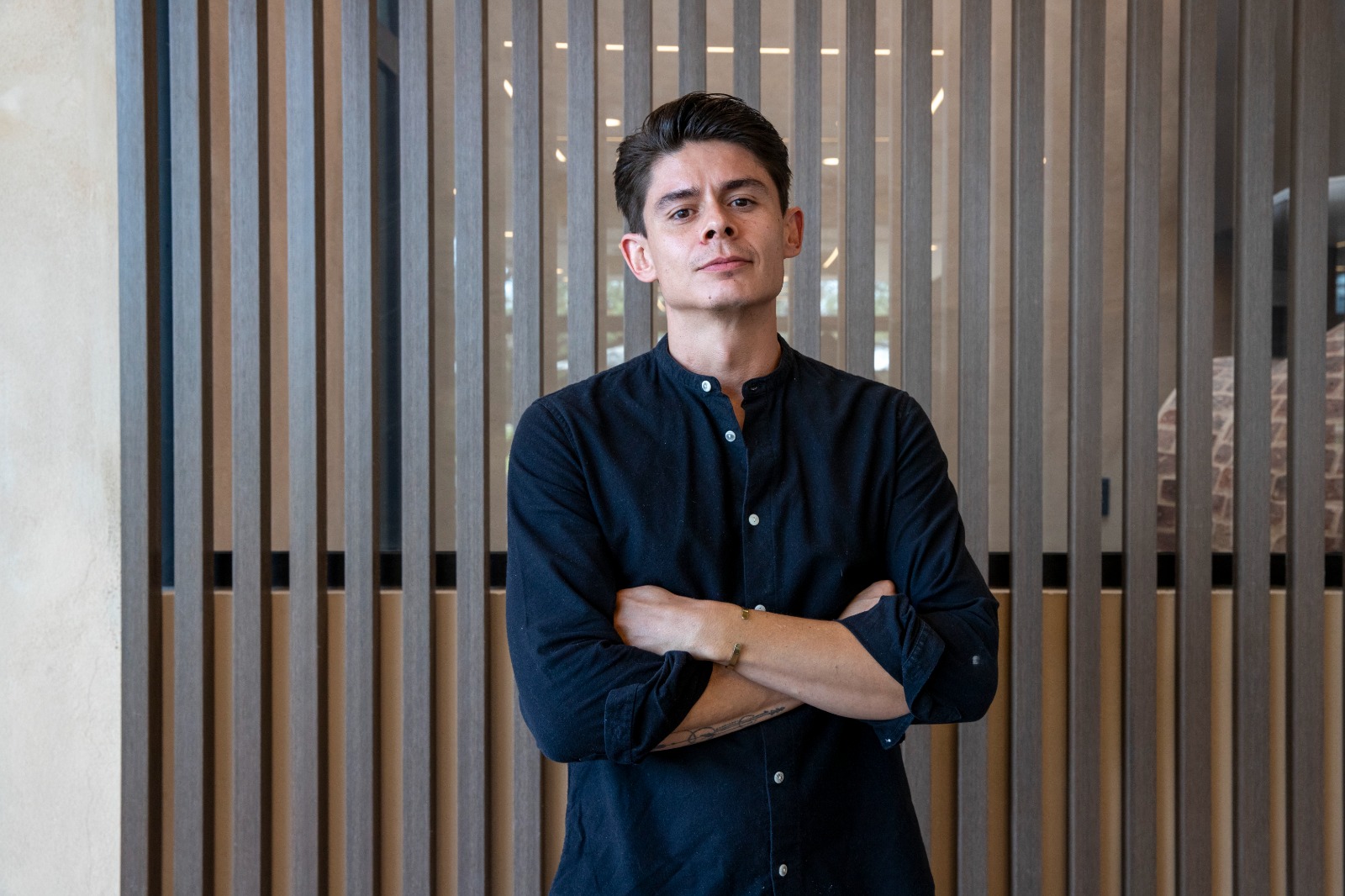
Mezquital, Sarmiento Winery's restaurant, offers a unique culinary journey rooted in local ingredients, cherished memories, and the chef's innovative vision.
Before it was a restaurant, Mezquital was an idea sown among memories. A shared aspiration to create more than just a culinary offering: an experience that spoke of the land, of corn, of wine, and of everything that doesn’t fit into a recipe but certainly fits onto a plate. In this space, the cuisine doesn’t merely accompany the wine; it celebrates it. Mezquital is the gastronomic voice of Sarmiento Winery, and its narrative—intense, intimate, sincere—is authored by Chef Daniel Estrada.
Cooking the Land, Recounting Childhood
Daniel Estrada didn’t arrive at Mezquital by chance or by trend. He arrived through a human connection. “I liked them; they are very simple and very human people,” he says of Claudia Vázquez and Alberto Sarmiento, founders of the winery. That affinity was the starting point for creating a cuisine where affections, local ingredients, and seasonality naturally intertwine.
Originally from Aguascalientes, Dani—as everyone calls him—trained at the Mexican European Culinary Institute and then worked in kitchens in Oaxaca, Ensenada, Barcelona, the State of Mexico, and Mexico City. Each place left its mark: “From Ensenada and Oaxaca, the product; from Barcelona, the creativity,” he summarizes. This itinerant training translates into a clear philosophy: respect for traditional cuisine, without sacrificing innovation. For him, it’s not about inventing for the sake of inventing, but about transforming without betraying.
This conviction is evident in his autumn menu, which features both subtle and explicit homages. His dish “Huertos Brasa” (Grilled Orchards), for example, blends an herb pipián with chintextle butter, uniting Oaxacan tradition with French technique. “People underestimate vegetables, but they have so much flavor,” he asserts.
Another favorite is the rigatoni with stewed oxtail (rabo de toro entomatado), a nod to the ropa vieja they cooked at home with leftovers from Sunday broth. “It’s a dish that tastes like childhood to me, but with a twist,” he says.
And to conclude, the Plantains Dominicos: a dessert that combines cream, sweet corn tostadas, and almond ice cream, a recreation of his father’s mealtime ritual. Because if anything defines Mezquital, it is this capacity to evoke through the senses.
A Cuisine Rooted in Aguascalientes
But memory is not enough without the land. At Mezquital, origin matters. Vegetables come from local gardens; cheeses, from artisan producers in the state; fish, from Ensenada, brought with the utmost care. “Traceability is incredibly important to us,” the chef affirms. It’s not a trend; it’s consistency.
Corn also holds a central place, not just as an ingredient, but as a symbol. Claudia Vázquez, co-founder of Sarmiento, summarizes it with emotion: “I grew up eating many corn-based foods. I love what the land gives us; I love the memories certain foods evoke in me.” This personal connection permeates the menu, where corn appears in sopes, sweet tostadas, and reinvented gremolatas.
The 12-dish menu is designed to change every six months, following the rhythm of the climate and the harvest. In autumn, standout dishes include milk-fed chicken with almond mole and purslane, Ensenada catch of the day, and rib eye with guava ranchero mole and grilled Swiss chard. There are also pizzas with unusual ingredients (such as pork jowl and quelites), snack boards with sourdough bread, and a curated selection of cold cuts and cheeses that harmonize with the house wines: Thomas Chardonnay, Clarete, and Cabernet Sauvignon.
Catering to all guests, the restaurant also offers a children’s menu with options such as pepperoni pizza, cheeseburger with adobera cheese, and pasta in butter and parmesan sauce.
Harvest of Senses, Sowing of Memories
Beyond the menu, Mezquital is designed as a cyclical experience. From the welcome at the entrance to dessert on the terrace overlooking the mesquite garden, everything is conceived to stimulate the senses and leave an emotional imprint. “We want you to come, discover something new, but also recognize flavors that left a mark on you,” says Dani.
Seasonality is not just an aesthetic inspiration; it is a guiding principle. “The menu changes every six months to align with the climate, with what the land provides,” Dani explains. It’s a way to listen to the land, to adapt to its rhythm. Therefore, the autumn menu features warmer, spicier, more intense nuances; and in spring, the offerings will be fresher, lighter. This respect for the natural cycle reinforces the authenticity of each dish.
Claudia synthesizes it precisely: “Mezquital is about creating memories.”
And if the winery has a soul, as its founders proclaim, Mezquital is its heart: one that beats to the rhythm of fire, corn, the land… and memory. The entry
appears first in Líder Empresarial.
More Articles

Can Nuevo León Become North America's New Semiconductor Hub?
Mar 12, 2026

Instances Where the World Cup Was Affected by Political and Security Conflicts
Feb 22, 2026

Biometric CURP 2026: The Latest You Need to Know
Feb 14, 2026

Dollar and Oil Prices Surge Due to Middle East Conflict: How it Impacts Jalisco
Mar 9, 2026

Mexico-Canada Economic Plan Announced: What Does It Entail?
Feb 17, 2026

CANACAR Warns of Economic Impact from Highway Insecurity, Calls for Safeguarding Operations
Feb 22, 2026