
Nubarium Enhances Cybersecurity and Digital Identity via Open Finance 2050
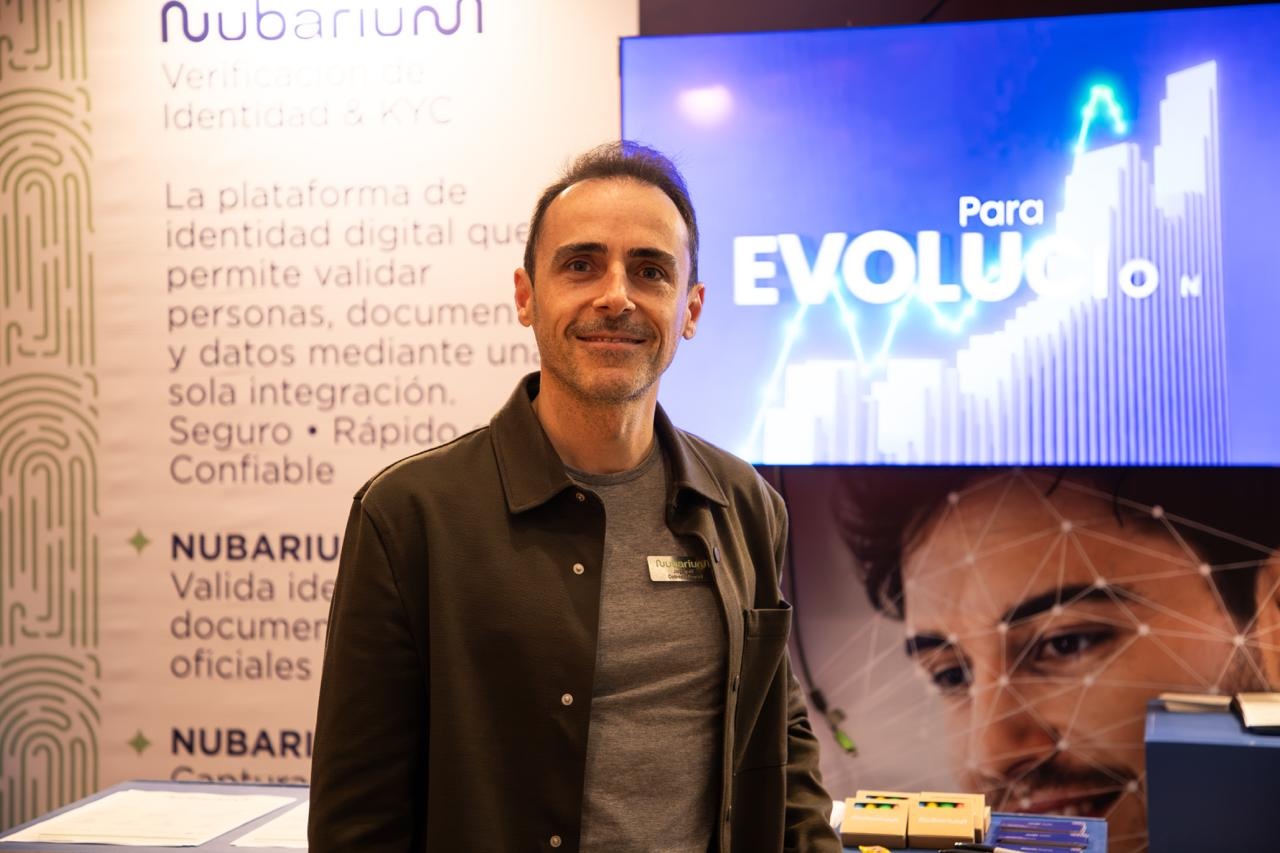
Nubarium positions itself as a key technology partner for digital trust, showcasing its identity validation solutions at Open Finance 2050.
Nubarium Enhances Cybersecurity and Digital Identity from Open Finance 2050
The rapid digital transformation has reshaped how businesses interact with their customers. From opening bank accounts to taking university exams, purchasing concert tickets, or requesting mobility services, an increasing number of processes are now conducted entirely online. However, this advancement has also amplified risks related to identity theft, digital fraud, and cyberattacks. In this context, Nubarium aims to establish itself as a leading technological ally in ensuring digital trust for public and private organizations.
During Open Finance 2050, an event that convenes leaders from Latin America’s financial and technological ecosystems, the company participated as a sponsor and shared its vision for the future of identity validation. In an exclusive interview with Líder Empresarial, Jorge Todd Souza, CEO of Nubarium, explained that while the company initially developed solutions for the financial sector, its technology now safeguards digital processes across diverse industries such as retail, healthcare, education, logistics, manufacturing, insurance, mobility, tourism, entertainment, and government.
The executive asserted that digital identity has become a cornerstone of the digital economy, and cybersecurity has transitioned from being an expense to an indispensable element for ensuring operational continuity and user trust.
His participation occurred within the framework of the eighth edition of
, held on July 21st and 22nd at The St. Regis Mexico City. The event brought together over 1,200 specialists, FinTech companies, financial institutions, investors, and technology firms to analyze the challenges that will define the future of digital finance in Latin America.
Nubarium Takes Identity Validation Beyond the Financial Sector
According to Jorge Todd Souza, the growth of digitalization has led virtually all industries to face a common challenge: verifying that the person conducting an online transaction is indeed who they claim to be. What was once an exclusive necessity for banks and financial entities has now extended to nearly any organization maintaining a digital relationship with its clients.
The CEO explained that the company began by developing solutions for financial onboarding processes; however, market demand spurred the evolution of its technology into new sectors.
Currently, Nubarium develops tools to validate user identity in processes such as:
- E-commerce platforms.
- Retail companies.
- Healthcare institutions.
- Private universities.
- Mobility platforms.
- Food delivery services.
- Insurance companies.
- Travel agencies.
- Concert and festival organizers.
- Sporting events.
- Government agencies.
One particularly relevant case is in the educational sector, where the technology verifies that the student taking an exam or professional certification is genuinely the registered individual, significantly reducing the risk of academic fraud. Similarly, the company collaborates with digital platforms that require the validation of millions of users without compromising the customer experience.
Todd Souza explained that the mission is to make digitalization secure without sacrificing speed.
“There are increasingly more completely digital processes. We provide certainty that the individual behind the mobile device is truly the person conducting the transaction,” he stated.
Continuous Innovation: The Best Defense Against Cybercriminals
One of the greatest challenges businesses face is that technological advancements also benefit those seeking to breach digital systems. The proliferation of artificial intelligence tools, deepfakes, voice cloning, 3D masks, and counterfeit IDs has considerably elevated the sophistication of attacks.
In this landscape, Jorge Todd Souza explained that innovation at Nubarium never ceases. The company has a specialized Research and Development (R&D) division where engineers constantly analyze new fraud methods and develop mechanisms to detect them before they pose a risk to clients.
The CEO acknowledged that cybersecurity is a continuous race. As organizations strengthen their protection systems, criminals develop new strategies to exploit them. Therefore, he affirmed that the laboratories’ work involves acting as their own adversaries, identifying potential vulnerabilities before attackers do.
Among the risks currently monitored are:
- AI-generated deepfakes.
- Voice impersonation.
- Three-dimensional biometric masks.
- Forged official documents.
- Credential theft.
- Attacks against authentication processes.
- Identity impersonation during digital processes.
The specialist emphasized that no system is currently completely infallible.
“It would be irresponsible to claim that any platform is impossible to breach. The important thing is to maintain continuous innovation to stay ahead of threats,” he pointed out.
As part of this strategy, Nubarium also continuously participates in international cybersecurity forums where specialists share new fraud modalities, which are then used to strengthen their solutions.
International Certifications Bolster Digital Trust
In addition to its proprietary technological development, Nubarium invests in international certifications to validate its platforms’ performance. Among these, the iBeta Level 2 certification for biometric solutions stands out, considered one of the most important international standards in identity validation.
According to Jorge Todd Souza, these types of evaluations are conducted by independent organizations that subject the software to rigorous testing to measure its ability to detect fraud attempts. The executive explained that some of these evaluations achieve effectiveness rates close to 99.99%, and even 100% in certain test scenarios. However, he stressed that these figures do not mean the work is complete. Instead, they represent a permanent commitment to continue developing new technologies as digital threats evolve.
Digital Identity is Now a Prerequisite for Competition
During the conversation, Jorge Todd Souza emphasized that many companies still view cybersecurity as an operational expense. From his perspective, that viewpoint is completely outdated. Today, he stated, any organization offering digital services needs to ensure that the individuals using their platforms are authentic.
The cost of fraud can extend far beyond financial losses. It can also damage corporate reputation, lead to regulatory penalties, erode customer trust, and even jeopardize business continuity.
Therefore, he recommended that companies integrate identity validation from the design phase of their digital platforms, rather than as an afterthought. Protecting digital identity, he said, should be understood as an enabler of growth.
Mexican Technology with Regional Presence
One aspect that Jorge Todd Souza highlighted with particular pride during the interview was the company’s origin. Nubarium develops entirely proprietary technology created by Mexican engineers, without relying on external platforms for its solutions to function. This model, he explained, allows for a faster response to new threats and technology adaptation as industry needs evolve.
Furthermore, the company maintains operations in various Latin American countries, where it promotes secure digital identity processes for private companies and institutions. The objective is to contribute to the democratization of digital identity and enable millions of people to securely access financial, educational, commercial, and governmental services.
Nubarium’s participation in Open Finance 2050 precisely reflects this vision: demonstrating that technological innovation not only drives financial transformation but also strengthens digital trust across virtually any industry.
For Jorge Todd Souza, the future of the digital economy will depend on a balance between innovation and security. As opportunities to operate entirely online increase, so does the responsibility to protect individuals’ identities. In this scenario, he concluded, cybersecurity will cease to be a competitive advantage and become an indispensable requirement for any organization aspiring to grow in the new digital economy.
You may also be interested in:
The entry
first appeared on Líder Empresarial.
More Articles

San Luis Potosí Suburban Train to Streamline North-to-Industrial Zone Commutes in the Capital
Oct 19, 2026

Most In-Demand Medical Specialties in Querétaro
Sep 22, 2026

CLAUGTO Outlines Five Key Principles for Implementing Artificial Intelligence in Industry
Sep 22, 2026

Tequila: Why Was It Cheaper to Toast in September?
Oct 8, 2026

Why the Dollar is Strengthening Against the Mexican Peso: Factors Influencing Exchange Rates
Sep 23, 2026

How Did the Employed Population of San Luis Potosí Change Between 2020 and 2025?
Sep 30, 2026