
Tariff Law Reform to Shield Industry and Jobs in Aguascalientes: Ministry of Economy
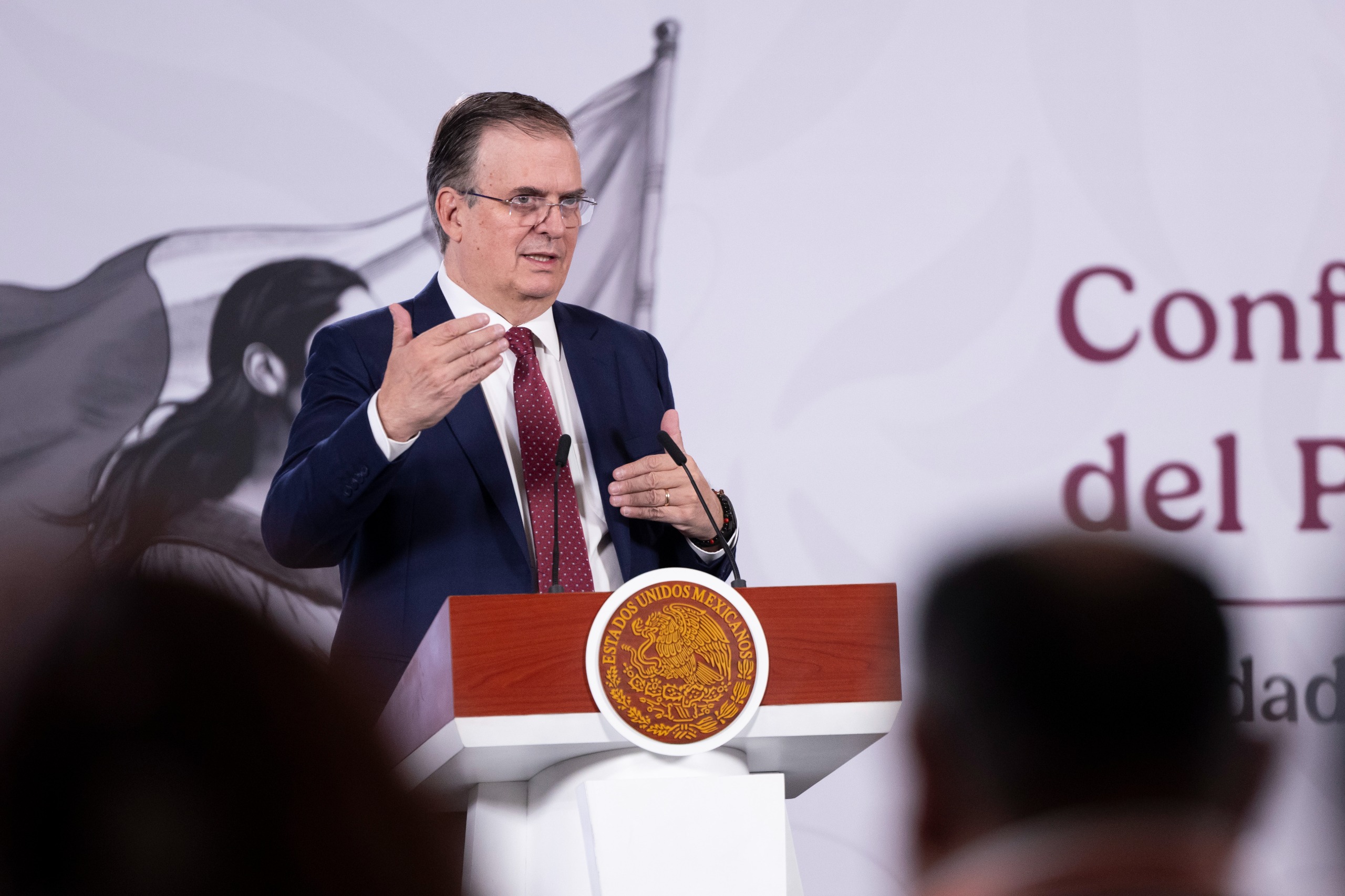
Mexico's Ministry of Economy defends tariff reform as an economic emergency measure to protect 350,000 jobs in Aguascalientes and other states from unfair Asian competition.
The Mexican government this morning defended the recent approval of the Tariff Law reform, asserting that it is an “economic emergency” measure designed to protect 350,000 jobs at risk from unfair competition from Asian products. During President Claudia Sheinbaum Pardo’s morning press conference, the Minister of Economy,
detailed that this trade barrier is a strategic shield for states with a strong manufacturing focus. In his presentation, the official explicitly named Aguascalientes as one of the priority entities to protect, alongside Baja California, Guanajuato, Coahuila, and Nuevo León. Ebrard explained that the central objective is to curb the massive influx of goods entering the country at prices below their real cost (dumping practices), which threatens to dismantle national industry in key sectors such as
, textile, apparel, footwear, and steel. The figures presented by the Ministry of Economy reveal an alarming trend in the growth of imports from countries with which Mexico does not have a trade agreement (primarily China and other Asian nations): -Automotive: 34% growth in imports. -Footwear: 22.3%. -Apparel: 20.8%. -Steel: 12.4%. «If this continues, by the end of 2026 we would be losing 350,000 jobs,» Ebrard warned. «Not because [Mexican companies] cannot compete, but because products are being received at prices below international reference prices. There is no level playing field.»
Aguascalientes in the Spotlight of Protection
Breaking down the risk map, the Minister underscored that the jobs sought to be saved are concentrated in specific industrial corridors. Aguascalientes, a key part of the automotive and textile cluster of the Bajío region, is on the list of states that would suffer the greatest impact if these tariffs were not applied. «Where are these jobs? They are primarily in Aguascalientes, Baja California, Chihuahua, Coahuila, State of Mexico, Guanajuato, Jalisco, Nuevo León, Puebla, and Querétaro,» the head of the Ministry of Economy pointed out. In this context, President Sheinbaum and the Minister confirmed that the new tariffs will come into effect starting January 1, 2026. Addressing questions about a possible increase in consumer prices, Ebrard minimized the risk, estimating an inflationary impact of merely 0.2%. He argued that Asian companies have such wide profit margins (derived from subsidies or predatory practices) that they will absorb the tariff cost to avoid losing market share in Mexico. «This is a preventive and sensible measure. We are going to protect 350,000 jobs; we do not seek to harm any specific country, it has no geopolitical design, it is an economic design,» Ebrard concluded.
You May Also Be Interested In
The post
first appeared on Líder Empresarial.
More Articles

The Trophy Tour Arrives in Monterrey: The 2026 World Cup Trophy Exhibited at BBVA Stadium
Mar 15, 2026
Golden Pension Reform Approved by 18 State Congresses: What's Next?
Mar 31, 2026

Organized Crime: A Parallel Economy (Part II)
Mar 24, 2026

Querétaro Boosts its IMMEX Industry: Over 119,000 Jobs
Mar 24, 2026

One in Three Companies Prioritizes Emotional Compensation to Attract Talent
Mar 18, 2026

E-commerce in Mexico Exceeds 67 Million Buyers, Raising Demands on Technological Infrastructure
Mar 24, 2026