
The Bajío Region Excels in IMCO's Regional Competitiveness Index: Key Findings
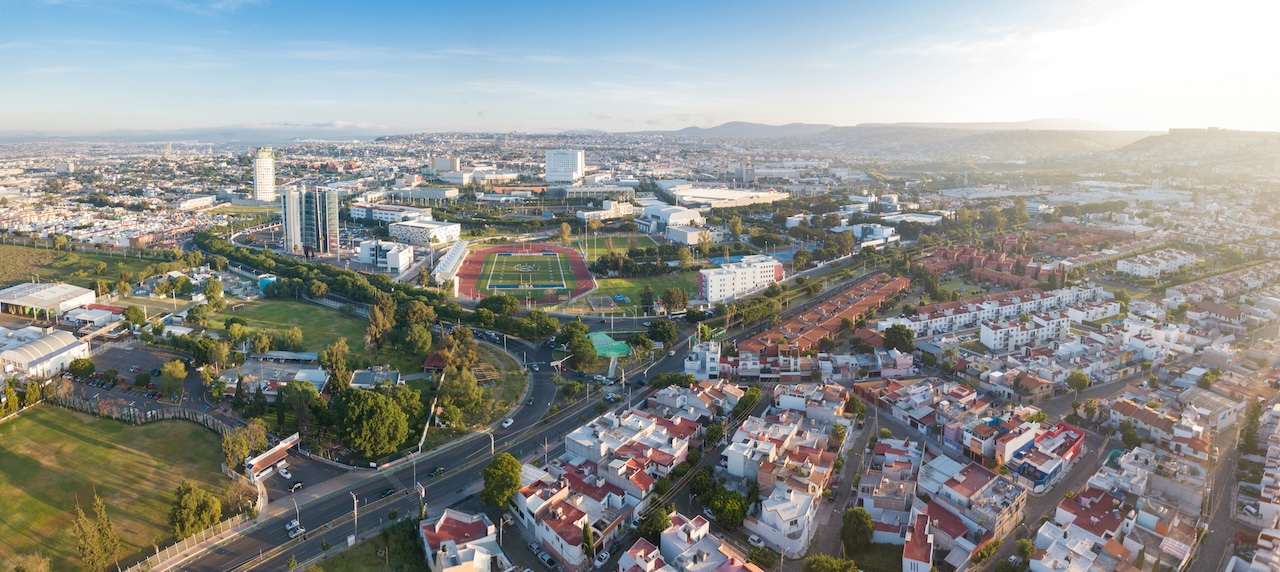
IMCO's Regional Competitiveness Index highlights the Bajío region's strengths in innovation, manufacturing, and strategic value chains, positioning it as a top investment destination.
The 2026 Regional Competitiveness Index (RCI) by the Mexican Institute for Competitiveness (IMCO) positions regions as the true engine for attracting and retaining investment and talent. In this new economic landscape, the Bajío region solidifies its position as one of the country’s best-performing regions, particularly due to its capacity for innovation, productive specialization, and integration into strategic value chains. Furthermore, along with the Northeast, it leads the group of regions most attractive for business operations and expansion in an increasingly competitive global environment.
The analysis by
Network-Based Competitiveness
One of the main findings of the 2026 RCI is that competitiveness functions as a network good. That is, an isolated improvement in infrastructure, security, or human capital does not guarantee sustained development if the regional environment presents structural lags. The index operates on the premise that labor markets, logistical infrastructure, urban services, security, and supply chains transcend administrative borders. Therefore, what happens in one entity directly impacts its neighboring states, either by boosting their growth or increasing operational costs.
From this perspective, IMCO introduces the concept of an internal “border cost,” which refers to the barriers, redundancies, and bottlenecks that arise when there is a lack of inter-state coordination. These costs reduce regional efficiency, limit investment attraction, and diminish competitiveness compared to other international markets.
Northeast and Bajío: The Best-Positioned Regions
The study confirms that no region in the country yet possesses optimal conditions in infrastructure and security; however, some have managed to build integrated productive ecosystems that allow them to sustain business operations and expansion, even in adverse contexts.
In this scenario, the Northeast holds the first overall position in the 2026 RCI, leading three of the four sub-indices evaluated. Its performance positions it as the most attractive region for investment and the mobility of skilled human capital.
For its part, the Bajío region remains among the most competitive regions, driven by its capacity for innovation, its industrial profile, and its key role in the country’s advanced manufacturing.
The Bajío Region: Innovation as a Competitive Advantage
The Bajío region stands out in the index for registering the highest number of patent applications per 100,000 economically active individuals, an indicator that reflects an industrial base capable of generating applied knowledge and added value.
This strength is significant. Companies seek regions capable of offering labor, innovation, technology transfer, and productive specialization, positioning the Bajío region as a strategic hub for sectors such as: -Automotive and auto parts -Advanced manufacturing -Agro-industry -Medical devices -Logistics and industrial supply
States such as Guanajuato, Querétaro, Aguascalientes, and San Luis Potosí have successfully articulated industrial parks, research centers, and business clusters that strengthen regional competitiveness.
However, IMCO warns of a structural challenge, as the proportion of skilled labor in the Bajío region is lower compared to other leading regions. This implies that, while innovation is a clear advantage, its reach is still concentrated within a limited segment of the population.
If not addressed, this gap could become a hindrance to long-term growth and the broader distribution of economic benefits.
Two Key Headings Explaining Regional Performance
1. The Bajío Region as a Strategic Manufacturing and Innovation Corridor
Beyond individual indicators, the Bajío region has succeeded in consolidating itself as an integrated productive corridor, where geographical proximity between states allows for: -Reduction of logistical costs -Greater efficiency in supply chains -Complementary specialization among entities -Attraction of national and foreign investment
2. Talent: The Pending Challenge to Sustain Competitiveness
The index underscores that innovation is not sustainable without a robust talent development strategy. In the case of the Bajío region, the challenge is not only to attract qualified profiles but also to expand the base of technical and professional training that allows for: -Increased regional productivity -Higher real wages -Reduced informality -Facilitated social mobility.
Regions Evaluated by the 2026 RCI
The Regional Competitiveness Index groups the country’s states into six regions: -Northeast: Coahuila, Chihuahua, Durango, Nuevo León, and Tamaulipas -Northwest: Baja California, Baja California Sur, Chihuahua, Sinaloa, and Sonora -Bajío: Guanajuato, Querétaro, Michoacán, Jalisco, Aguascalientes, San Luis Potosí, Zacatecas, and Colima -Center: Mexico City, State of Mexico, Guerrero, Hidalgo, Morelos, Puebla, and Tlaxcala -Maya: Campeche, Chiapas, Quintana Roo, Tabasco, and Yucatán -Isthmus: Oaxaca and Veracruz
Read also:
The post
More Articles

Today's Top Business News for Mexico's Business Sector, February 23
Feb 23, 2026

Instances Where the World Cup Was Affected by Political and Security Conflicts
Feb 22, 2026
Nuevo León Leads Industrial Park Development in Mexico
Feb 24, 2026

Nuevo León Bolsters Highway Security Ahead of 2026 World Cup: How Much Was Invested in Security Reinforcement?
Feb 25, 2026

Most Important Business News for Tuesday, February 24, 2026
Feb 24, 2026

Business Sector Warns of Supply Chain and Employment Risks Following Violence from 'El Mencho's' Takedown
Feb 23, 2026