
Venezuela and the Possible Path to Recover its Oil Production
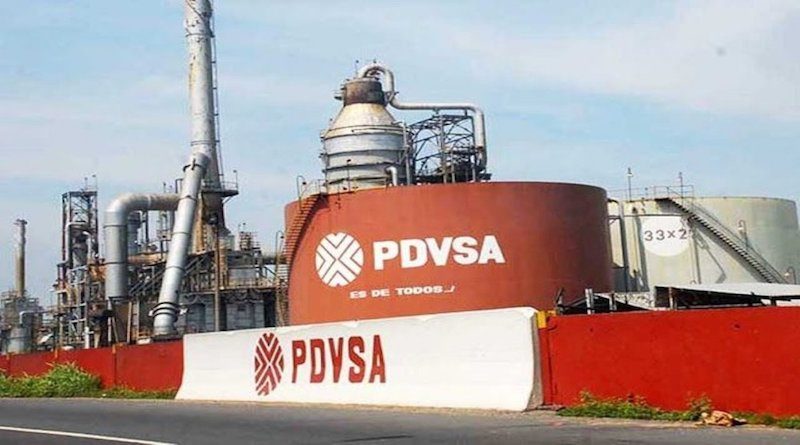
Analyzing Venezuela's severe oil production decline, this article explores the technical, financial, and human capital challenges and potential solutions required to revitalize its petroleum industry.
Opinion####
As entrepreneurs and business professionals, observing news outlets addressing the political aspects of the recent apprehension operation in Venezuela, I would like to address a technical topic concerning oil production in the country.## Venezuela and the Possible Path to Recover its Oil Production### Historic Highs and an Abrupt Decline Venezuela once produced oil at levels comparable to the world’s leading producers. In 1998, production reached a peak of approximately 3.5 million barrels per day (bpd). Today, that figure has plummeted by over 80%, with an average production of just 740 thousand bpd in 2023 and around 800 thousand bpd in 2024. This continuous decline since the late 1990s is attributed to a combination of operational inefficiencies, lack of investment, and international sanctions.### Exploration and Production Sector: No Rigs, No Rebound The collapse of the upstream sector (exploration and production) is alarming. Although Venezuela holds the world’s largest proven reserves (approximately 303 billion barrels), most consist of extra-heavy crude, which is high-cost and technically complex to extract. A lack of maintenance and new developments has paralyzed well drilling: in 2020, the number of active rigs dropped to zero, reflecting operational paralysis. Compounding this is the massive loss of human capital following the dismissal of thousands of specialized PDVSA workers starting in 2003, a talent drain that has left the industry without its technical foundation.### Bottlenecks in Transportation and Storage The midstream infrastructure (transportation and storage) is severely deteriorated. Many operational pipelines are over 50 years old and likely experience frequent leaks due to corrosion. Insufficient storage capacity also limits any production increase: at several recent points, onshore tanks and tanker vessels have been at their capacity limits, forcing improvised measures to prevent production shutdowns. Without logistical improvements, sustained growth will be difficult to achieve.### Paralyzed Refineries The downstream sector (refining and distribution) is also in crisis. Of an installed capacity close to 1.46 million bpd, less than 20% is operational. The Paraguaná refinery complex, once one of the largest in the world, operates at barely 10% of its capacity. The country, which once exported refined products, now has to import gasoline and diesel. Lack of maintenance, power failures, industrial accidents, and a shortage of catalysts have reduced the refineries to an intermittent system that relies on external assistance from allied countries.### What is Needed for Recovery Recovering production to 1999 levels would require investments ranging from 70 billion to 100 billion dollars over a decade. It is necessary to reactivate wells, repair equipment, modernize pipelines, and upgrade refineries. However, PDVSA, burdened by debt and lacking liquidity, cannot face this challenge alone. Attracting foreign capital is vital, which will necessitate legal reform to allow for more attractive terms and long-term legal security. The elimination or relaxation of international sanctions is also essential to restore access to markets, technology, and financing. Finally, human capital recovery will be as critical as infrastructure rehabilitation.### Outlook: Possible Return or Distant Ambition? Most analysts agree that, even under favorable conditions, reaching 3.5 million bpd again would take at least a decade. The most realistic strategy might be to first stabilize production between 1 and 1.5 million bpd, reducing reliance on fuel imports. The long-term goal is achievable, but only if the structural technical, regulatory, financial, and human challenges are addressed in parallel.
Venezuela possesses the resource; what is lacking is the political will and environment to convert it back into sustainable wealth. In this context, some experts believe that, in the short term, the import of Venezuelan heavy crude by refineries in the United States could be feasible if sanctions are eased, as this crude is well-suited to the configuration of several plants on the Gulf Coast, thereby improving their operational performance.
This article
More Articles
The Cost of Global Conflict for Mexico: High Energy Prices, Inflation, and Business Pressure
Mar 30, 2026
Will Olinia Electric Vehicles Launch Before the 2026 World Cup in Mexico?
Mar 18, 2026

Penalties for Not Filing the 2026 Annual Tax Return with the SAT
Mar 28, 2026

The Most Important Weekend News from Mexico and Around the World
Mar 17, 2026

State Financial Institution Drives Taxi Renewal in Guanajuato with Loans Up to 500,000 Pesos
Mar 20, 2026

Household Consumption in Mexico Projected to Continue Growth in Early 2026
Mar 20, 2026