
How the "Super Peso" Could Pressure San Luis Potosí's Agribusiness Exporters
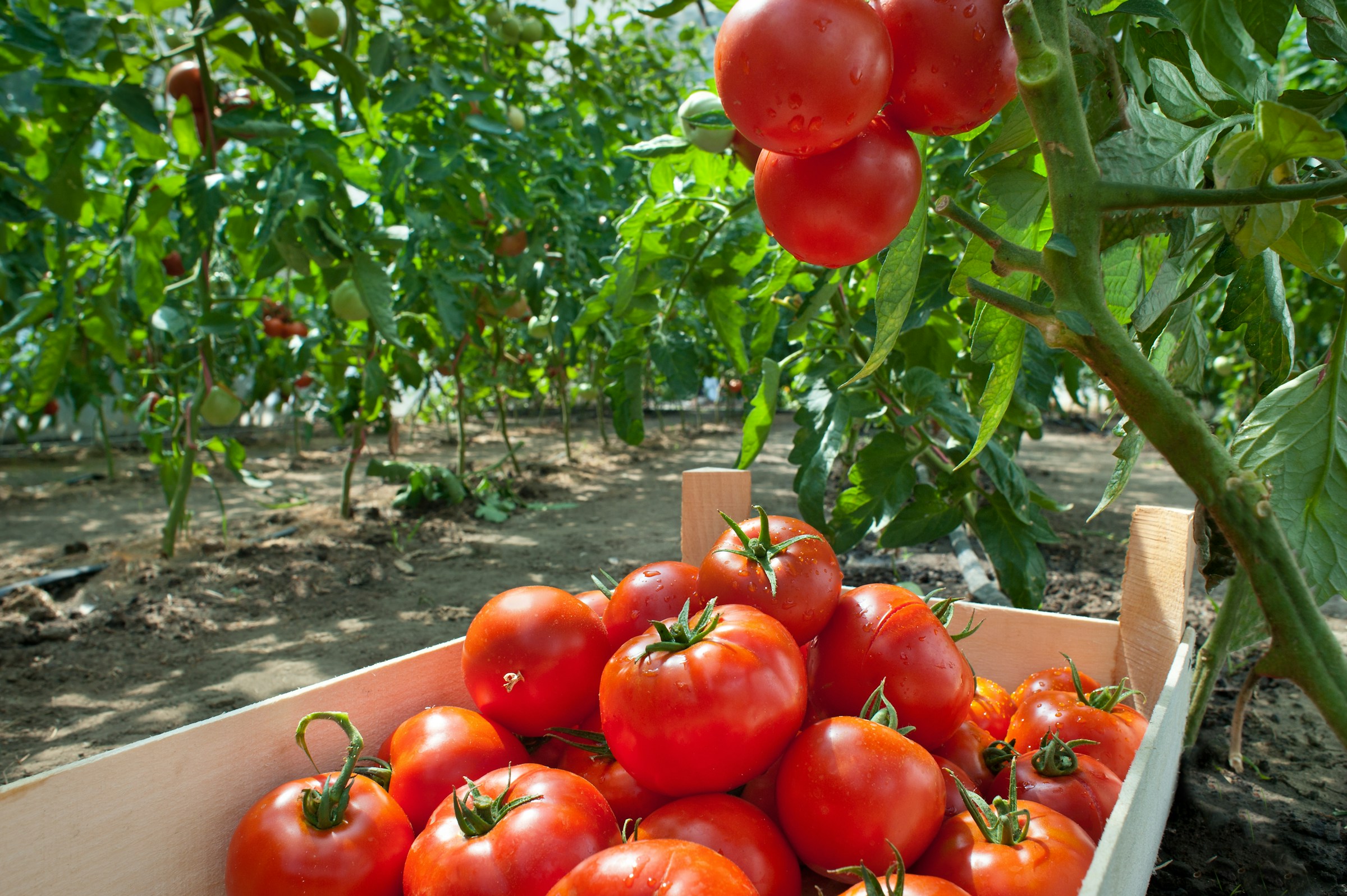
The strong Mexican peso presents a double-edged sword for agricultural exporters, impacting their revenue and operational margins.
The “Super Peso” Has Two Sides
The so-called “super peso” has two faces. For those importing machinery, inputs, or merchandise, it represents an opportunity to buy cheaper dollars. However, the downward trend against the peso could begin to pressure various sectors dependent on foreign trade in San Luis Potosí, such as agribusiness exporters.
A simple example: the price of tomatoes can be set in dollars before the trailer leaves San Luis Potosí en route to the United States. Nevertheless, most of the operation that made this sale possible—salaries, energy, maintenance, transportation, and services—is paid for in Mexican pesos. This is where the business cost of the so-called “super peso” begins.
Dollar Drops 18% Against the Peso in Just Under a Year
The exchange rate, as determined by the Bank of Mexico, went from 20.6917 pesos per dollar on January 2, 2025, to 16.97 pesos on August 27, 2026. This represents an 18% reduction in the pesos obtained for each dollar.
For an agribusiness exporter selling ten million dollars, the gross exchange rate difference can reach 37.3 million pesos.
This calculation does not automatically equate to a loss, but it shows how a strong currency can reduce the available funds for operations, investment, or hiring personnel.
Fewer Pesos for the Same Export Sale
A company invoicing ten million dollars would have converted that operation into 206.9 million pesos with the exchange rate recorded at the beginning of 2025. With the August 2026 exchange rate, it would receive approximately 169.7 million pesos.
Conversion Scenario
| Item | Calculation | Amount |
|---|---|---|
| Revenue | Ten million USD @ 20.6917 MXN/USD | 206.9 M MXN |
| Ten million USD @ 16.9660 MXN/USD | 169.7 M MXN | |
| Gross Exchange Difference | -37.3 M MXN |
The company does not necessarily lose this amount. It may have expenses in dollars, hedging strategies, or the ability to adjust its prices.
However, if it maintains the same international price and keeps most of its costs in Mexico, its profit margin comes under pressure.
The impact doesn’t necessarily manifest as a drop in exports. A company can sell more products, increase its dollar-denominated revenue, and still receive fewer pesos for each unit sold.
The “Super Peso” Begins to Affect Cash Flow
Agribusiness exporters need capital before receiving payment from their buyers. They finance seeds, labor, irrigation systems, fertilizers, energy, packaging, certifications, transportation, and product preservation.
When they finally collect the dollar-denominated sale, a lower exchange rate reduces the available amount to cover these domestic currency commitments.
The pressure increases when contracts fix prices for specific seasons or periods. A packing company cannot always modify its rates every time the parity changes. Nor can it indefinitely suspend sales to wait for a more favorable exchange rate.
The perishable nature of tomatoes, cucumbers, papayas, or chilies limits maneuverability. A manufacturer can store certain products; an agribusiness exporter must sell the harvest within a much shorter window.
Therefore, a strong peso can translate into additional financing needs, reduced liquidity, and a diminished capacity to absorb buyer payment delays.
Margins Face Initial Pressure
In the face of currency appreciation, an exporter has two main options. The first is to maintain their dollar price to remain competitive. In this case, they accept receiving fewer pesos.
The second is to increase the international price to recover revenue in national currency. However, this decision can lead buyers to seek suppliers in other countries or request discounts.
Companies with differentiated products, recognized brands, long-term contracts, or specialized certifications have greater negotiation power.
Conversely, those selling products with little differentiation or relying on a few clients face a more vulnerable position.
The greater the difference between dollar-denominated revenues and dollar-denominated expenses, the greater the impact of appreciation on operating margins.
Investment and Employment Could Suffer from a Prolonged Strong Peso
The effect of the “super peso” does not end with a single season’s profit. If the appreciation persists, companies may reconsider expansion projects, greenhouse renovations, irrigation systems, packing automation, or hiring additional workers.
This does not mean that all agribusiness exporters in San Luis Potosí are cutting back on investment or employment. Available public data does not allow for such a definitive statement.
The risk arises when lower peso revenue coincides with salary increases, higher energy costs, rising transportation expenses, or new commercial demands. For this reason, a company might postpone investments, reduce its cultivated area, or focus solely on products with better profit margins.
A strong peso can also offer an advantage. Imported machinery, certain technological components, and specific inputs priced in dollars become cheaper in national currency. This compensation will be greater for companies that import a significant portion of their equipment or materials.
Villa de Arista Concentrates San Luis Potosí’s Exposure to the U.S. Market
Villa de Arista offers the clearest example of how peso appreciation can impact San Luis Potosí’s agribusiness exporters.
During 2025, its main visible agricultural exports were:
- $57 million in fresh or chilled tomatoes.
- $43.8 million in cucumbers and gherkins.
- $3.3 million in other fresh vegetables.
These products totaled $104.1 million, according to Data México, a platform of the Secretariat of Economy.
The United States accounted for approximately $104 million in destinations, while Canada received about $462,000. This concentration shows that companies in the municipality depend not only on dollar performance but also on U.S. demand and commercial decisions.
If the $104.1 million were used for a conversion exercise, it would equate to 2,154 million pesos with the January 2025 exchange rate. With the August 2026 exchange rate, it would represent 1,766.2 million pesos. The difference would reach 387.8 million pesos.
Tomatoes Face Exchange Rate and Anti-Dumping Pressure
For tomato exporting companies, the exchange rate is compounded by an additional difficulty.
Since July 2025, the United States has maintained an anti-dumping order on fresh tomato imports from Mexico. The general rate for producers or exporters not individually identified is 17.09%, although specific companies have different percentages.
This measure includes round tomatoes, Roma, cherry, grape, and greenhouse-grown varieties. It excludes products intended for industrial processing, such as preserves, juices, sauces, and purees.
The anti-dumping duty remained in effect in 2026 after the U.S. International Trade Commission determined that there were insufficient conditions to revoke the order.
Although the deposit is formally made by the importer, its cost can be passed on to the Mexican company. The buyer may demand lower prices, request discounts, or tighten their contractual terms to offset the disbursement.
Not All Agribusiness Exporters Face the Same Cost
The “super peso” can affect three types of companies more intensely:
- Those that collect virtually all their sales in dollars but pay most of their operations in pesos.
- Small and medium-sized exporters that do not use currency hedging or lack specialized personnel to manage financial risk.
- Companies that depend on a single market or a few buyers. Their ability to renegotiate prices diminishes when they lack alternative destinations.
Large companies can offset some of the risk through forward contracts, currency options, dollar-denominated debt, or international purchases. Smaller companies often depend on the prevailing exchange rate at the time of receiving and converting payments.
Export Figures Don’t Show the Full Business Impact
During 2025, San Luis Potosí’s total exports reached $26,096.4 million, an annual growth of 11.7%, according to proprietary calculations using INEGI data.
The performance of agro-industrial activities differed. Agricultural exports decreased by 31.7%, falling from $165.7 million to $113.1 million. Meanwhile, the food industry grew by a mere 0.5%, reaching $700.9 million.
In the first quarter of 2026, agricultural exports dropped from $14.5 million to $2.2 million, an annual decrease of 84.8%. In contrast, food industry sales grew by 16.6%, reaching $189.6 million.
The exchange rate alone does not explain these variations. The data is expressed in dollars and also reflects production levels, prices, weather, agricultural cycles, and commercial conditions.
However, even a company that manages to increase its dollar sales can face financial deterioration if the conversion to pesos decreases faster than its costs.
The True Cost Lies Within Each Company
Thus, the “super peso” can make imported machinery and inputs cheaper. At the same time, it reduces the peso value of international sales.
For agribusiness exporters in San Luis Potosí who place their products in the United States, the outcome will depend on how much they can offset this difference before the strong currency impacts their margins, investments, and capacity for growth.
You Might Also Like
The post appears first on Líder Empresarial.
More Articles

Two Years into Sheinbaum's Administration: What Labor Reforms Have Been Approved?
Oct 1, 2026

Electronics and Petroleum Lead Manufacturing Growth in Mexico
Sep 17, 2026
Mexico's Exports Increase in August 2026: What Was the Trade Balance?
Sep 28, 2026

Nissan Extends Breast Cancer Screening to Soccer Matches
Oct 5, 2026

Tec de Monterrey Ranks as Mexico's #1 University in QS 2027 Rankings
Oct 5, 2026

Nuevo León and UNICEF: Why Childhood is Key to Economic Future
Sep 24, 2026