
How Does the Closure of the Strait of Hormuz Impact the Global Economy?
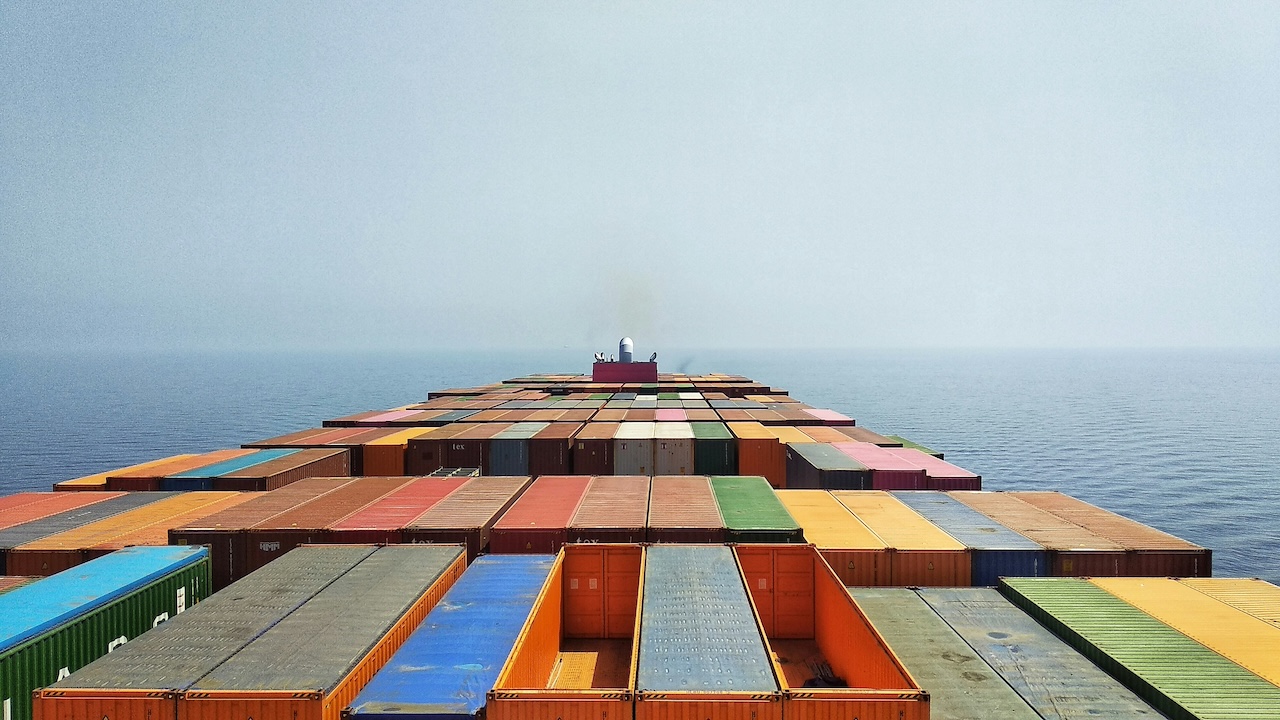
The closure of the Strait of Hormuz, a critical energy artery, poses immediate economic risks, impacting global oil and gas prices, logistics, and financial markets.
The closure of the Strait of Hormuz has ceased to be a recurring threat and has become a reality with immediate consequences for the global economy. Following the joint attack by the United States and Israel against Iran, several vessels reported a complete blockade of the passage since Saturday, February 28. The Iranian response not only escalated the military conflict but also triggered a global economic alert: approximately 20% of the world’s consumed oil and gas transits through this strait. More than a geographical point, Hormuz serves as the barometer for international energy trade. Its closure impacts prices, logistics chains, financial markets, and political decisions within hours. In a world highly dependent on fossil fuels, the interruption of this maritime artery redefines the global economic balance.
Why is the Strait of Hormuz So Strategic for the Global Economy?
Located between the coasts of
and Oman, the Strait of Hormuz is the sole maritime route connecting the Persian Gulf with the Gulf of Oman and the Arabian Sea. At its narrowest point, it is merely 33 kilometers wide, with navigation channels of only three kilometers per direction. Nevertheless, its depth accommodates the transit of the world’s largest oil tankers.
Approximately 20 million barrels of oil, along with liquefied natural gas (LNG), circulate daily through this corridor, representing an annual energy trade exceeding 500 billion dollars. Countries such as Saudi Arabia, United Arab Emirates, Qatar, Kuwait, and Iraq rely on this route to transport their production to Asia, Europe, and North America.
From an economic perspective, its significance is attributed to three key factors: -Energy Concentration: One-fifth of global consumption relies on this passage. -Logistical Efficiency: It is the shortest and most economical route to connect the Middle East with Asia. -Geopolitical Sensitivity: Any tension immediately translates into price volatility.
The Announcement That Shook the Markets
On the Monday following the attack, Ebrahim Jabari, advisor to the commander-in-chief of Iran’s Revolutionary Guard, officially declared the Strait closed and threatened to attack any vessel attempting to cross it. The message was clear: the closure serves as a tool for global economic pressure.
The declaration followed an air offensive which, according to official Iranian accounts, resulted in the deaths of dozens of high-ranking regime officials, including Ayatollah Ali Khamenei. Iran responded with missiles and drones against Israeli and American targets in the region, triggering a regional war with immediate economic repercussions.
The Immediate Impact on the Energy Market
The closure of the strait jeopardized approximately 20% of global crude oil production. Even before the blockade was confirmed, markets reacted sharply: -Oil prices surged nearly 10%, exceeding $80 per barrel, their highest level since June. -Natural gas prices soared by more than 26%, driven by uncertainty in exports from Qatar and the United Arab Emirates. -European stock exchanges opened with declines of nearly 2%, with Madrid leading losses at over 3%. -In Asia, Tokyo’s Nikkei and Hong Kong’s Hang Seng closed in the red; Wall Street anticipated a negative session.
Asia at the Center of the Impact: China, the Major Player
The greatest impact is concentrated in Asia. China is the primary buyer of Saudi crude and one of the largest importers of discounted Iranian oil. In 2024 alone, the Asian giant invested nearly 47.9 billion dollars in Saudi Arabia’s energy market, significantly more than South Korea.
Although Beijing has increased its strategic reserves, according to the International Energy Agency’s July 2025 report, a prolonged closure of the strait threatens to: -Disrupt up to half of its crude oil imports. -Increase refining costs. -Put pressure on its short-term economic growth.
Are There Alternative Routes to the Strait of Hormuz?
Yes, they exist, but none offer the efficiency of the Strait. Saudi Arabia and the United Arab Emirates possess land-based infrastructure to divert some of their production, albeit with significant limitations.
Key alternatives include: -East-West Pipeline (Saudi Arabia): Connects Abqaiq to the port of Yanbu on the Red Sea, with a capacity of nearly five million barrels per day. -Land routes to the Red Sea: Slower and more costly. -Long maritime detours: Increase transit times, insurance costs, and logistical risks.
The U.S. Energy Information Administration warns that these pipelines do not operate at full capacity, which reduces their effectiveness as a structural solution.
Spain, for its part, faces a relatively limited impact due to the diversification of its suppliers. In 2025, it imported 61.4 million tons of crude oil, with the United States as the main supplier, followed by Brazil and Mexico. For gas, Algeria accounts for nearly 40% of imports.
Nevertheless, the global price increase translates into higher energy costs for industry, leading to imported inflation and exerting pressure on consumption and business competitiveness.
You may also read:
The post
first appeared on Líder Empresarial.
More Articles

Guanajuato Brand Drives Over 147 Million MXN in Sales at the León State Fair 2026
Feb 9, 2026

Innovation in the Automotive Industry in Querétaro
Feb 17, 2026

Aguascalientes Inaugurates New Nixtamalization Laboratory; Aims to Revolutionize the Corn Industry
Feb 20, 2026

How Does Sheinbaum's Infrastructure Investment Plan Benefit Jalisco?
Feb 5, 2026
BYD, Geely, and VinFast Emerge as Finalists for COMPAS Aguascalientes Plant Acquisition
Feb 12, 2026

Is There Equality in Mexico?
Mar 2, 2026