
Student-Centric Focus: Juan Carlos Arredondo's Strategy to Reorder UAA
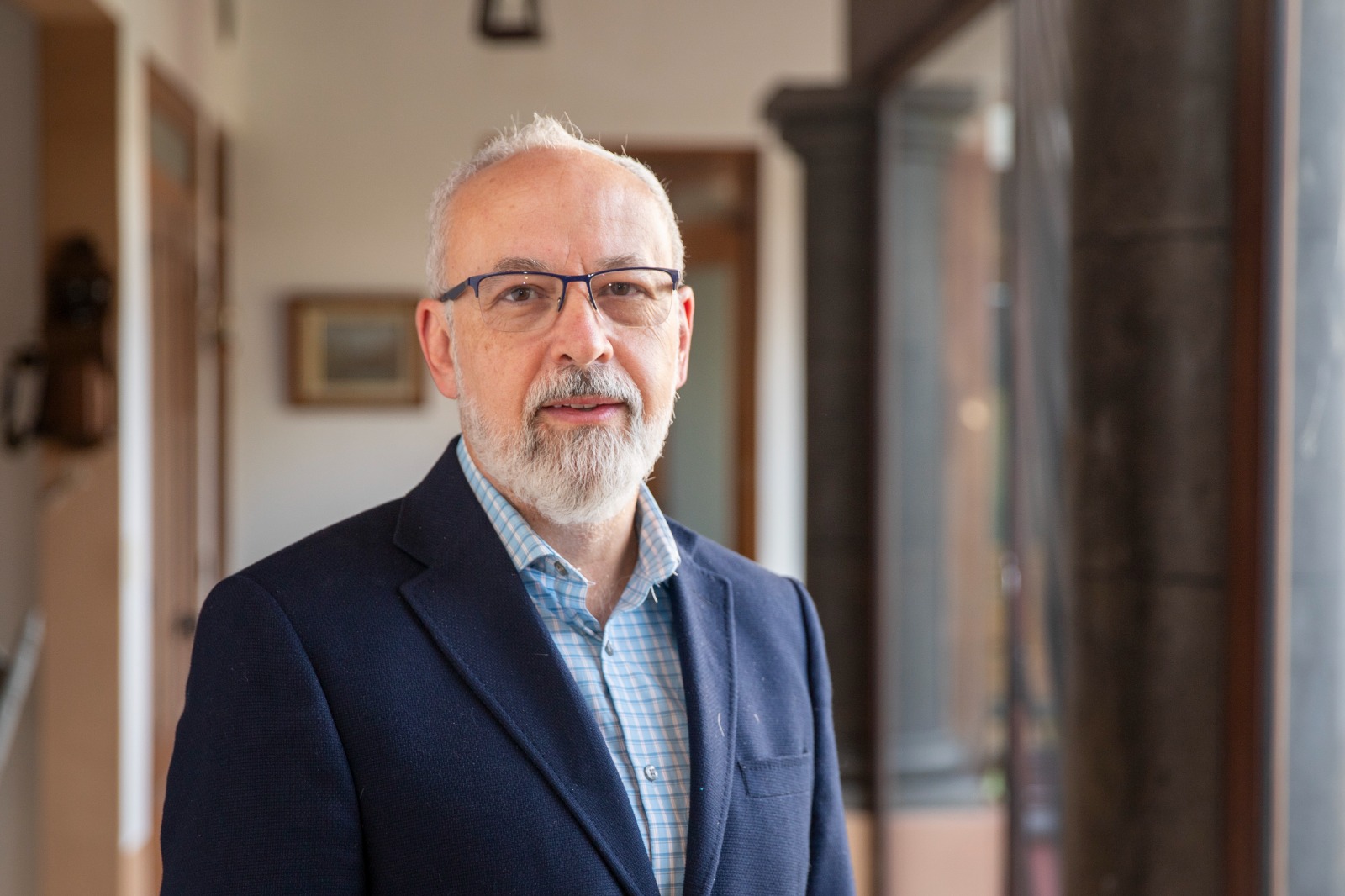
New UAA rector, Juan Carlos Arredondo, outlines his vision to place students at the core of the institution, tackle financial hurdles, and restore academic excellence, marking a significant shift for the university.
The Autonomous University of Aguascalientes (UAA) is undergoing a change that breaks inertia. Following an election described by many as “atypical”, Juan Carlos Arredondo assumes the rectorship for the 2026-2028 period with a singular objective: to return the student to the place he asserts they should never have lost – at the center of all institutional interests and decisions. “My vision as rector is to once again place the student as the core, the foundation of our work,” he affirms. In an exclusive interview with Líder Empresarial, the academic indicates that this premise entails reordering priorities: ahead of conferences, events, or internal dynamics, the university must ensure that young people entering from high school and completing an undergraduate degree can improve their family’s living conditions and quickly secure employment in the labor market. Arredondo highlights a reality he knows well: for many, UAA remains the vehicle for the first professional in a family to forge a new chapter at home. With this logic, he proposes accompanying students “from the moment they settle into the university”: transport, scholarships, meals, safe spaces, sports, and culture. The ideal is simple but demanding: that students only have to worry about their studies. Concurrently, he acknowledges a generational characteristic the institution cannot ignore: a Generation Z that has shed apathy and is now mobilizing, marching, and demanding change. He interprets the vote that brought him to office, with approximately 6,000 student ballots, as a clear message of both discontent and hope.
Recovering Academic Environment and Financial Stability: The Major Challenges
Arredondo arrives with a critical assessment of the recent period. He notes that UAA began losing ground in the academic sphere, and concurrently, the so-called “university environment” deteriorated. He asserts it was common to hear faculty, administrative staff, and students say they could do nothing for fear of retaliation. Breaking this perception and rebuilding internal trust will be one of his initial challenges. In parallel, comes
. The rector acknowledges that the university faces the repercussions of complex investment decisions, leading it to operate today with an “extremely tight budget”. Nevertheless, he emphasizes that UAA remains financially sound and the task will be to recover revenue under a familiar model: approximately 50% from the federal budget, 25% from the state, and 25% from tuition and proprietary income.
The strategy, he explains, involves increasing enrollment through the creation of new programs aligned with the state’s productive sector, particularly the automotive industry. His self-criticism is direct: the university has been “somewhat slow” in responding to industry needs. He also identifies an overlooked opportunity in postgraduate programs, which currently focus on “high-quality” programs dictated by federal guidelines, but could expand with a more professionalizing offering, designed for undergraduate graduates to make an immediate leap to a postgraduate degree. To this, he adds a front he deems strategic: dissemination, innovation, and outreach. From centers such as Basic Sciences, Agricultural Sciences, or Engineering, UAA generates knowledge and potential patents that must be converted into value, whether through consulting, projects, training, or collaboration with government and the private sector. Outreach, extension, planning, and finance will be, he anticipates, areas that must be “closely aligned with the community’s needs”.
A Hybrid Team: Trust and Institutional Experience
Unlike traditional figures in university politics, Arredondo entered the race “without a structure”, lacking established groups behind him. Now, as rector, he knows that building his team will be key to translating discourse into decisions. His approach is an “amalgam”: individuals of absolute trust by his side, and simultaneously, continuity in several areas where there is proven experience and whose appointments do not solely depend on the rector. “We cannot improvise”, he warns. The criterion, he insists, will be to recognize profiles of high professional quality and “consummate honesty”. In support positions and general directorates, he will seek to avoid “major overhauls”, while also opening opportunities for those who have demonstrated trajectory and capability within the institution.
Certainty, Transparency, and Dialogue
The vote presented a contrast: he overwhelmingly won among students but did not receive the same support from the faculty. He addresses this sector directly. His central message is one of certainty: there will be no persecutions or reprisals. On the contrary, he proposes creating stable work environments and moving towards a more transparent model for position assignments. One of his proposals is to restructure the committees that evaluate competitive examinations, to prevent the university from being “judge and jury”. Among the options he is exploring are the participation of external review boards from nearby universities or other schemes that strengthen the credibility of the processes. The commitment, he stresses, also extends to administrative staff, whom he describes as one of the most vulnerable sectors in terms of salaries. He anticipates close dialogue with unions regarding beginning-of-year negotiations, with the objective that all members of the university community envision gradual improvement in their working conditions.
Ultimately, Juan Carlos Arredondo’s project can be summarized as a virtuous cycle: restoring student centrality, strengthening faculty, caring for administrative staff, and reconnecting UAA with the real needs of society and the economy of Aguascalientes. The atypical election has already occurred; now it’s time to demonstrate that there can also be an atypical period in terms of its results.
You can also read
The post
first appeared in Líder Empresarial.
More Articles
President Claudia Sheinbaum Faces First Rejection: Deputies Vote Down Electoral Reform; Morena Announces 'Plan B'
Mar 11, 2026

BMW Production in San Luis Potosí Falls Over 50% in First Bimester of 2026
Mar 9, 2026

Zero Simulation: Women in Industry (Part I)
Mar 11, 2026

Sheinbaum Meets with Nordic Business Leaders: Key Discussions
Mar 10, 2026

What Challenges Does Jalisco's Economy Face in 2026?
Mar 20, 2026

E-commerce in Mexico Exceeds 67 Million Buyers, Raising Demands on Technological Infrastructure
Mar 24, 2026