
Why Trump Seeks to Control Greenland: The Importance of its Resources
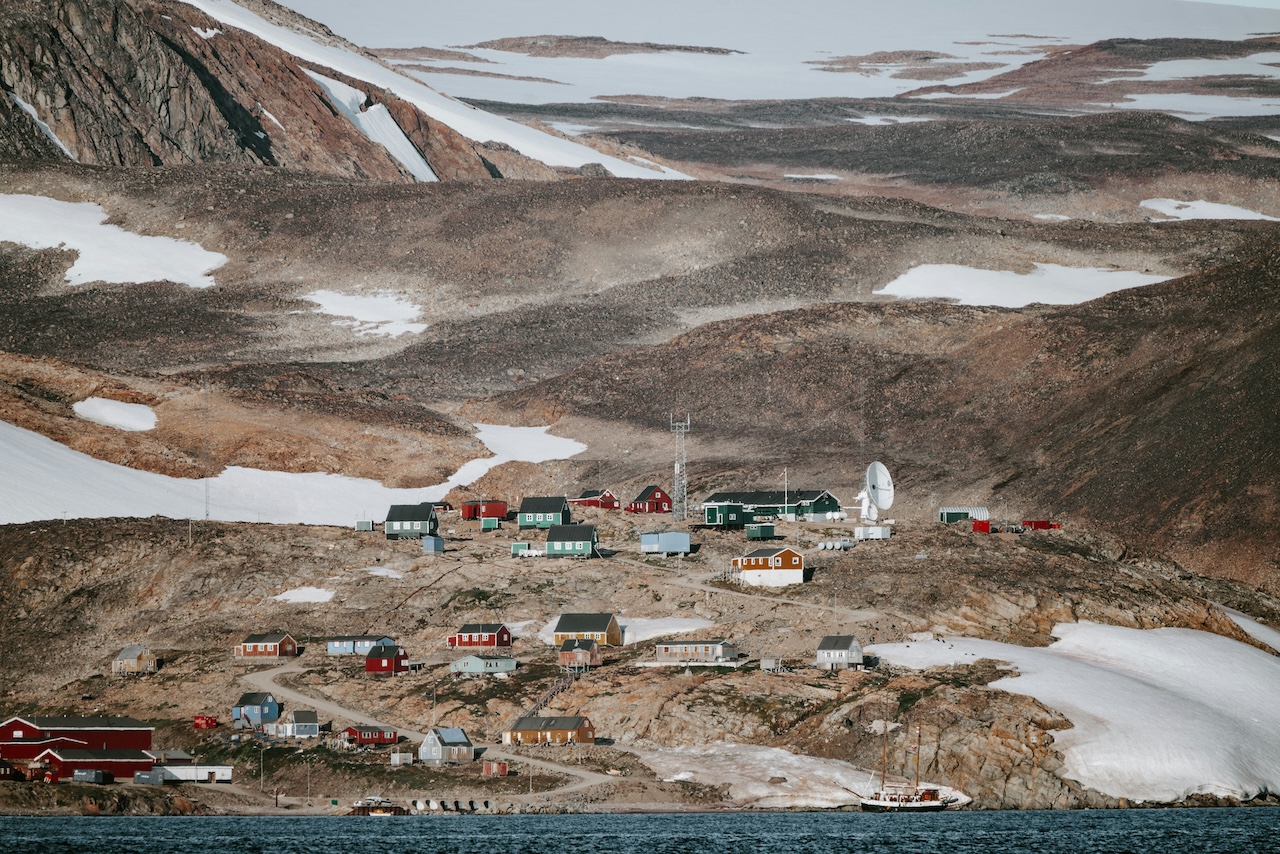
Donald Trump's ambition for Greenland stems from its critical geopolitical location and vast untapped natural resources, amid escalating global competition in the Arctic.
Statements by U.S. President Donald Trump regarding Greenland have once again shaken the global geopolitical landscape. “One way or another,” he warned, Washington will ultimately gain control of the world’s largest island. The central argument is that if the United States does not act, powers such as Russia or
will occupy that strategic space in the Arctic. Although Greenland is an autonomous territory of Denmark and neither of these countries has presented a formal claim over the island, Trump’s insistence has heightened tensions with Europe and reopened a debate combining national security, critical natural resources, and the future of global trade in a region that until recently seemed remote.
Greenland: A Remote Island with Global Geopolitical Significance
With an area of 2.16 million square kilometers, Greenland is a vast, inhospitable, and sparsely populated territory. Barely 56,000 people inhabit the island, most of Inuit origin, distributed mainly along the western coast. Nuuk, its capital, encapsulates the contrast between modernity and isolation: brightly colored houses facing fjords, ice, and mountains.
81% of the territory is covered by ice, and for decades its economy has relied on fishing. However, beneath this frozen layer lies one of the most coveted assets in the contemporary world: strategic natural resources.
Politically, Greenland is an autonomous territory within the Kingdom of Denmark. It has its own government and has repeatedly stated that it does not wish to be part of the United States, a stance supported by polls showing that 85% of Greenlanders reject any annexation.
National Security: The Central Argument for Why Trump Wants Greenland
From Washington’s perspective, Greenland occupies a critical geographical position. The island lies between the United States and Europe, forming part of the so-called GIUK Gap (Greenland–Iceland–United Kingdom), a key maritime corridor connecting the Arctic with the Atlantic Ocean.
This passage is fundamental for monitoring Russian naval movements in the North Atlantic, protecting strategic maritime routes, and strengthening North American defense. This is not a new issue. During World War II, the United States occupied Greenland to prevent it from falling into Nazi Germany’s hands. Later, during the Cold War, the island became a key surveillance point against the Soviet Union.
Today, the scenario is changing again. The melting of the Arctic, driven by the climate crisis, is transforming the region into a new front of global competition.
U.S. Military Presence on the Island
The United States already maintains a significant military presence in Greenland. The Department of Defense operates Pituffik Space Base in the northwest of the territory, under the Defense Treaty signed with Denmark in 1951. From this facility, the following are coordinated:
- Missile early warning systems
- Missile defense
- Space surveillance for the United States and NATO
Trump has insisted that Denmark “cannot adequately protect” the island, reinforcing his narrative that U.S. control is a strategic necessity rather than a territorial ambition.
Natural Resources: A Treasure Beneath Greenland’s Ice
Although Trump has publicly stated that “it’s not about minerals,” his own advisors have indicated otherwise. Greenland is rich in:
- Oil and gas
- Uranium
- Rare earth minerals
The latter are particularly sensitive. Rare earths are essential inputs for the manufacturing of:
- Electric vehicles
- Wind turbines
- Batteries
- Mobile phones and computers
- Advanced military equipment
Currently, China dominates a large portion of the global market for these minerals, granting it a powerful tool for economic and geopolitical leverage. Reducing this dependency is a strategic priority for the United States and its allies. As Arctic ice melts, access to these resources becomes more viable, increasing Western powers’ interest in the region.
New Maritime Routes and the Redesign of Global Trade
Climate change is also reconfiguring international trade routes. The melting ice is making northern maritime routes navigable for more months of the year, which could:
- Reduce transport times and costs between Asia, Europe, and America
- Displace traditional routes like the Suez Canal
- Transform the Arctic into a new global logistics hub
Controlling Greenland would mean a privileged position for the United States on this new commercial map, a strategic advantage that transcends the military.
China and Russia: The Other Players in the Arctic
In 2018, China declared itself a “near-Arctic state” and announced its intention to develop a Polar Silk Road, as an extension of its ambitious Belt and Road Initiative. Since then, it has sought to increase its economic and scientific influence in the region. Russia, for its part, has reinforced its military presence in the Arctic, modernizing bases and fleets, and consolidating its control over strategic routes.
This context explains why Trump has reiterated that if the United States does not act, others will. However, Trump’s statements have not gone unnoticed in Copenhagen. Danish Prime Minister Mette Frederiksen has been clear that Greenland is not for sale. Far from ceding ground, Denmark announced in 2025 an investment plan of 14.6 billion DKK (approximately 2.3 billion USD) together with Greenland and the Faroe Islands to reinforce security in the Arctic. The agreement includes:
- Three new Arctic naval vessels
- Long-range surveillance drones
- Advanced satellite capabilities
The Joint Arctic Command, based in Nuuk, coordinates these operations, supported by specialized units such as the Sirius Dog Sled Patrol, responsible for patrols in the territory’s most remote areas.
You might also be interested in:
La entrada
aparece primero en Líder Empresarial.
More Articles
Top Workplaces in Mexico's Construction Sector for 2026: GPTW Rankings
Jul 24, 2026

Farmacias Similares and Stori Launch Card to Include Millions
Jul 13, 2026
Will Mexico Impose Tariffs on Chinese Steel? The U.S. Request
Jul 27, 2026

DIVEX B2B 2026: León to Host Business Gathering Featuring Over 600 Scheduled Meetings
Jul 29, 2026
Aguascalientes Ranks Fifth in Grape Production in Mexico, Confirms Viticulture Council
Jul 27, 2026

How Much Will FIFA Pay the Winner of the 2026 World Cup?
Jul 18, 2026